The Relationship Funnel is Broken: Why Founders Date Like They Build Startups (and What to Do Instead)
Introduction
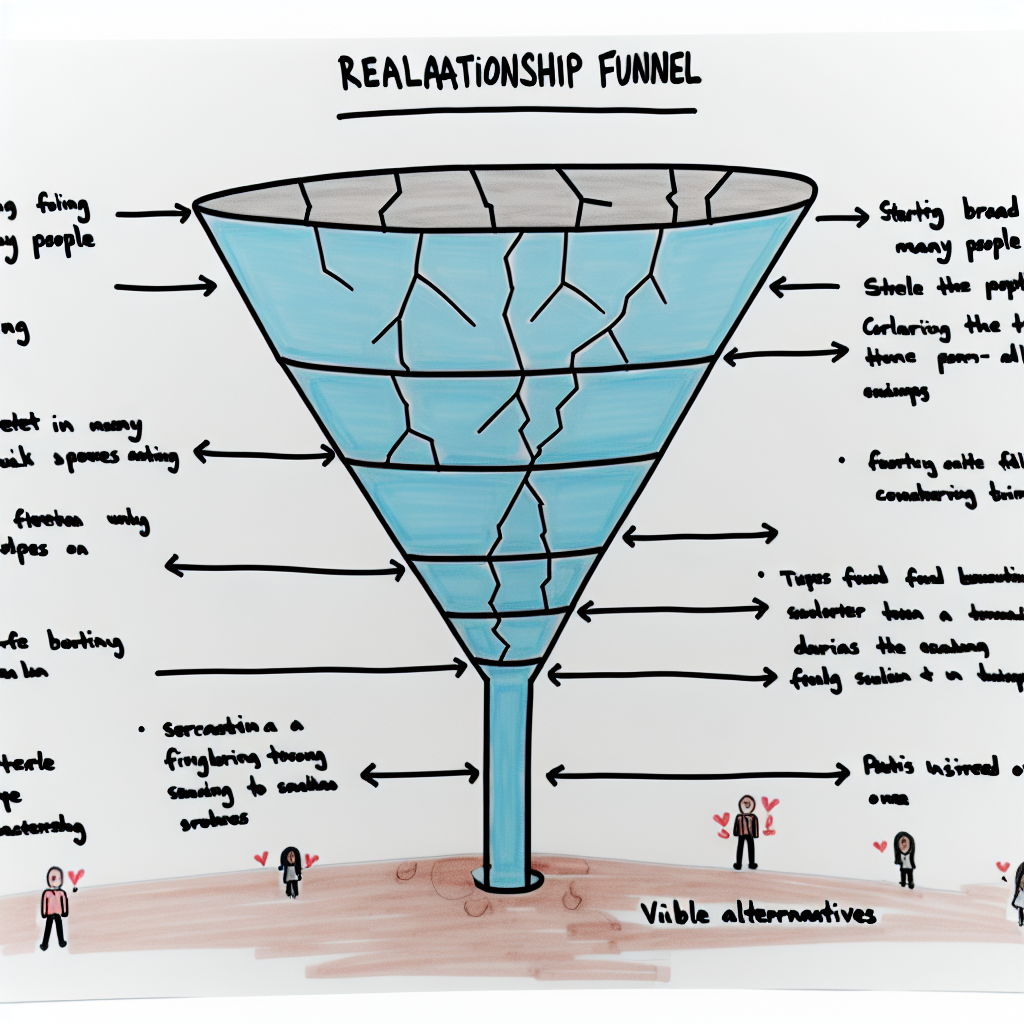
In the fast-paced world of startups, founders are known for their tenacity and vision. However, many apply their analytical approach to dating, leading to a “relationship funnel” that results in burnout and misaligned priorities. This concept mimics the business model of a sales funnel, attempting to attract and commit potential partners in a linear way. While effective in business, this strategy can be counterproductive in romantic relationships, where human emotions are less predictable.
Dating treated like a startup can lead to disillusionment. Founders may feel frustrated when relationships don’t progress predictably. Similarly, setting targets on relationships puts undue pressure, leading to rushed decisions and unrealistic expectations.
Recognizing that relationships aren’t transactions, founders need a shift. Developing attributes like empathy, patience, and vulnerability is vital for building meaningful relationships. Instead of a checklist approach, focus on organic interaction and connection to avoid the pitfalls of a broken relationship funnel.
Features
Professional and psychological studies highlight why a business strategy in relationships can be counterproductive. Research from [Harvard Business Review](https://hbr.org/) indicates that skills making entrepreneurs successful, such as risk-taking, can hinder deep personal connections.
Additionally, research by John Gothals and Barry Staw in the [Journal of Personality and Social Psychology](https://www.apa.org/pubs/journals/psp) suggests “success scripts” in companies don’t translate into relationships based on mutual respect. Successful relationships require stepping back from evaluations and embracing vulnerability.
Moreover, Dr. Helen Fisher explained in her [TED Talk](https://www.ted.com/talks/helen_fisher_the_brain_in_love) that the neural and emotional landscape that governs human attraction is not suited for linear processes, highlighting the need for spontaneity.
Adopting emotional intelligence frameworks as suggested by [Daniel Goleman](https://www.danielgoleman.info/) in *Emotional Intelligence: Why It Can Matter More Than IQ*, can enhance empathy and social skills, aiding fulfilling connections.
Conclusion
While founders may apply business acumen to all aspects of life, it’s vital to understand the limits of these strategies in human relationships. By redefining dating strategies to include empathy, patience, and genuine connection, founders can foster relationships that grow beyond a business mindset. Moving away from a broken relationship funnel leads to richer, more authentic experiences, enhancing personal happiness and work-life balance.
Concise Summary
In the startup world, founders often apply their business acumen to personal relationships, using a “relationship funnel” approach. However, this strategy can lead to burnout and unrealistic expectations when applied to dating. Instead of treating personal relationships as transactions, founders should focus on organic interaction, empathy, and genuine connections. Research shows that skills making entrepreneurs successful can hinder deep personal connections in relationships. By embracing emotional intelligence and stepping away from systematic evaluations, founders can build meaningful relationships that flourish beyond their business mindset.

Dominic E. is a passionate filmmaker navigating the exciting intersection of art and science. By day, he delves into the complexities of the human body as a full-time medical writer, meticulously translating intricate medical concepts into accessible and engaging narratives. By night, he explores the boundless realm of cinematic storytelling, crafting narratives that evoke emotion and challenge perspectives. Film Student and Full-time Medical Writer for ContentVendor.com