The Neuroscience Behind First Impressions: Crafting Unforgettable Connections in High-Stakes Dating
In the high-pressure world of modern dating, where swipes and matches can make or break your love life, understanding the intricacies of first impressions is crucial. From the moment we lay eyes on someone, our brains engage in complex neural processes that influence how we perceive and connect with potential partners. This awareness can be a powerful tool in crafting unforgettable connections that awaken genuine chemistry and understanding.
When we meet someone new, our brains immediately begin to process a myriad of signals—facial expressions, body language, tone of voice, and even pheromones. This initial encounter sets a precedent, filtering through past experiences, cultural norms, and innate biases to form an impression in mere seconds. Snap judgments might seem superficial, but they are deeply rooted in evolutionary psychology, designed to help us quickly assess threats and potential mating partners.
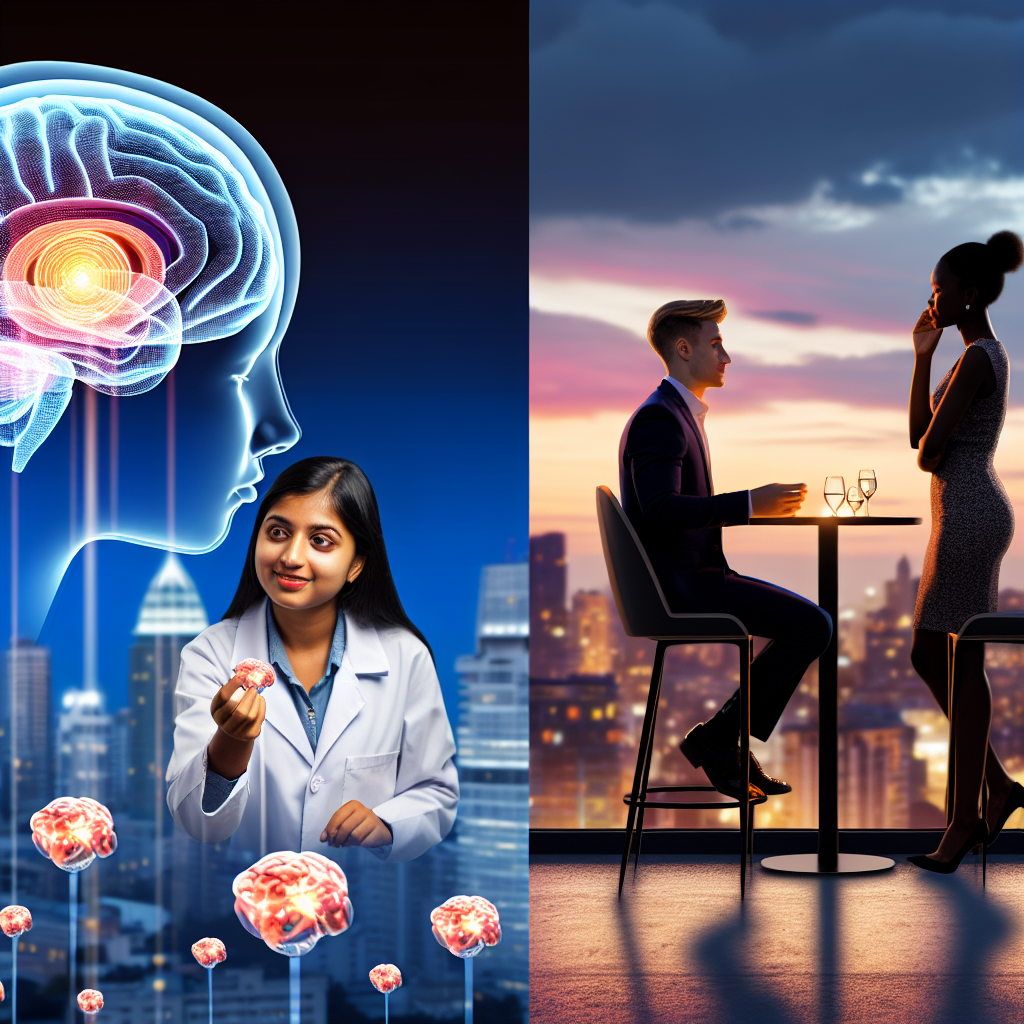
Understanding the brain’s role during these encounters can empower singles in their dating endeavors. First impressions are largely dictated by the amygdala, the brain region responsible for emotion processing. This area triggers immediate reactions based on perceived cues, which can be either positive or negative. For instance, a genuine smile can evoke feelings of warmth and approachability, activating the brain’s reward circuitry, while a frown or furrowed brow may activate the brain’s threat response.
Furthermore, the prefrontal cortex, which handles decision-making and social interactions, plays a crucial part in interpreting these impressions. This part of the brain helps to analyze and weigh the initial emotional reactions triggered by the amygdala. Understanding this process highlights the importance of mindfulness and authenticity in initial meetings. Being conscious of your body language and non-verbal cues can enrich interactions, setting the stage for a lasting impression.
Features:
Studies in social neuroscience reveal significant insights into how first impressions are formed and their lasting impact on interpersonal relationships. A pivotal research study conducted by Princeton psychologist Alex Todorov found that people make judgments on a face’s trustworthiness in just a tenth of a second. The study highlights how quickly and unconsciously these evaluations occur, influenced heavily by facial cues that communicate emotions and intentions.
Moreover, research by [Harvard Medical School](https://hms.harvard.edu/news/mirror-neurons-applying-new-knowledge-05-01-05) brings to light the role of mirror neurons in the human brain during first encounters. These neurons activate both when we perform an action and when we observe the same action performed by another. This mirroring mechanism facilitates empathy and understanding, forming the foundation for emotional bonds and rapport, crucial elements in successful romantic connections.
In another study published in the [Journal of Nonverbal Behavior](https://link.springer.com/journal/10919), researchers showed that nonverbal cues play a more significant role in impression formation than verbal communication. Nonverbal signals like eye contact, gestures, and posture were central to positive evaluations, emphasizing the importance of these unspoken forms of communication in dating scenarios.
Furthermore, various studies underscore the neurological basis of attraction and bonding. For instance, research on the neurotransmitter dopamine reveals its role in the pleasure and reward pathways of the brain. The release of dopamine during positive encounters accounts for the rush of attraction or that “spark” often described in successful first meetings.
By acknowledging these findings, singles can better navigate their dating experiences. Being aware of the profound impact that initial visual and emotional impressions have can rejuvenate efforts in crafting genuine connections, setting the stage for deeper relationships.
Conclusion:
Harnessing the neuroscience behind first impressions offers a strategic advantage in dating. By understanding the brain’s rapid processing and reliance on nonverbal cues, singles from all age groups can transform their dating experiences into opportunities for authentic connection. Embracing this knowledge empowers daters to create memorable interactions that pave the way for meaningful and lasting relationships.
References:
1. [Princeton Study on Face Trustworthiness](https://www.princeton.edu/~aclivens/personal/PrincetonPsychJudgment.pdf)
2. [Harvard Medical School on Mirror Neurons](https://hms.harvard.edu/news/mirror-neurons-applying-new-knowledge-05-01-05)
3. [Journal of Nonverbal Behavior](https://link.springer.com/journal/10919)
4. [Research on Dopamine](https://www.ncbi.nlm.nih.gov/pmc/articles/PMC4956570/)
Concise Summary:
Understanding the neuroscience behind first impressions offers a strategic advantage in dating, revealing how brain regions like the amygdala and prefrontal cortex process nonverbal cues rapidly. Key studies underscore the impact of facial expressions and mirror neurons on forming connections, highlighting the role of dopamine in attraction. By utilizing this knowledge, individuals can craft genuine connections and meaningful relationships in high-stakes dating scenarios.