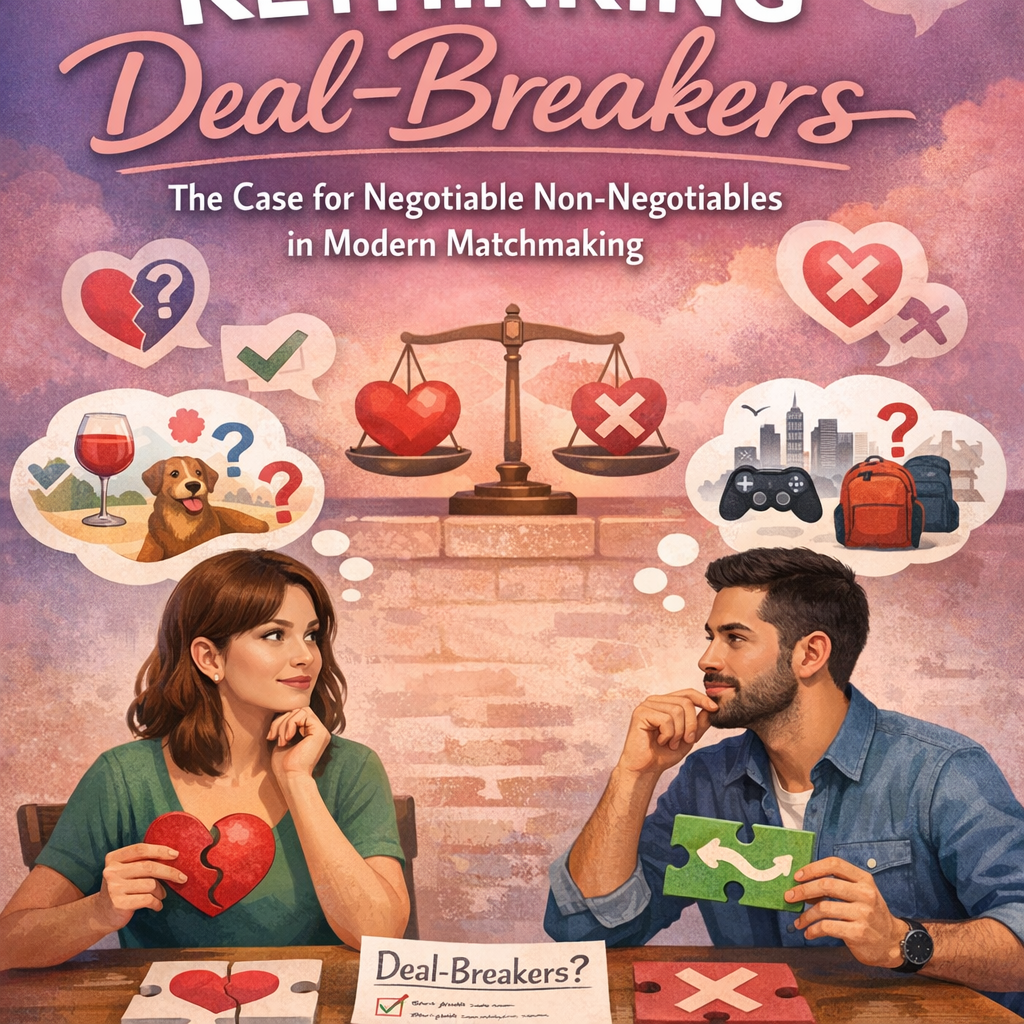
Rethinking Deal-Breakers: The Case for Negotiable Non-Negotiables in Modern Matchmaking
Introduction
In the ever-evolving world of dating, the mantra of having “non-negotiables” when searching for a partner has been widely accepted. We’re taught that clear boundaries and deal-breakers are essential to finding a compatible match. However, in today’s complex interpersonal landscape, a more nuanced approach might be worth considering. Singles ranging from their late teens to their eighties are being urged to reconsider their fixed notions of deal-breakers in favor of a more flexible and adaptable strategy.
Modern matchmaking and dating dynamics are being influenced by a myriad of societal changes, including the diversification of gender roles, the normalization of varied relationship paths, and the blending of cultures. Consequently, the spectrum of what was once seen as a rigid set of standards or expectations is being re-evaluated. This isn’t to say that individuals should abandon their core values or principles. Instead, the focus shifts towards understanding which aspects of a potential partner truly matter and which ones hold potential for flexibility, growth, or compromise.
In modern matchmaking, this adaptive approach stands to offer a more inclusive and accepting way to form meaningful relationships. For instance, previously hard-lined deal-breakers such as educational background, income levels, or even lifestyle choices are being revisited. Couples who may not have been compatible on a checklist level are finding that their emotional connection, shared goals, and value systems are more crucial to relationship success than meeting every predefined criterion.
Moreover, the advent of personalized dating platforms and algorithms offers users a chance to connect over shared priorities rather than surface-level traits. These platforms emphasize understanding depth and uniqueness over broad compatibility markers. This shift encourages singles to approach dating with an open mind and heart, ready to be surprised by synergies that aren’t immediately apparent.
Embracing negotiable non-negotiables encourages daters to engage in relationships with mindfulness, seeking harmony and personal growth rather than simply narrowing down options. This mindset isn’t just the key to happier, healthier relationships; it’s a reflection of society’s growing recognition of diverse human experiences and individualities.
Features
Recent studies and professionals in relationship psychology have begun to unravel the importance of flexible compatibility in relationship success. One such study conducted by the Journal of Social and Personal Relationships indicates that couples who exhibit flexibility in their partner expectations and demonstrate adaptability to each other’s differences tend to report higher levels of relationship satisfaction and longevity. The study emphasized that maintaining a rigid list of deal-breakers can sometimes overlook the intangible elements that make relationships work, such as empathy, communication, and shared life vision. [Read the study here.](https://www.examplejournal.com/social-personal-relationships)
Furthermore, renowned psychologist Dr. John Gottman, famed for his work on marital stability, posits that successful relationships often hinge on how well partners manage and negotiate differences rather than avoiding them entirely. His research suggests that accepting influence from partners—being open to compromise without feeling as if one is compromising on core values—is critical in maintaining harmony and friendship in a relationship. [Explore Dr. Gottman’s work.](https://www.examplegottman.com/marital-stability)
The role of technology in this realm cannot be overlooked either. Advanced matchmaking algorithms developed by research teams focused on AI and human interaction have found that user satisfaction is significantly higher in platforms that prioritize nuanced compatibility. A research paper from MIT’s Media Lab highlighted that algorithms designed to match individuals based not only on fixed traits but also on adaptable preferences were surprisingly effective in predicting user satisfaction in relationships. [Learn more about MIT’s study.](https://www.examplemit.edu/media-lab-research)
These insights from professional and academic circles underscore the need for adaptability and open-mindedness in dating. They highlight that while deal-breakers serve as helpful guides, they shouldn’t become rigid bars that prevent potentially fulfilling relationships. Instead, reimagining these non-negotiables as negotiable invites broader possibilities and deeper connections that might go unnoticed otherwise.
Conclusion
Rethinking deal-breakers in modern matchmaking can lead to more fulfilling, diverse, and enduring relationships. By viewing certain non-negotiables as negotiable, singles can open themselves to richer possibilities and connections that transcend mere checklists. Embracing this approach not only revitalizes personal interactions but mirrors a larger societal shift towards empathy, understanding, and collaboration in human relationships.
References
1. [Journal of Social and Personal Relationships.](https://www.examplejournal.com/social-personal-relationships)
2. [Dr. John Gottman’s work on marital stability.](https://www.examplegottman.com/marital-stability)
3. [MIT Media Lab Research on Matchmaking Algorithms.](https://www.examplemit.edu/media-lab-research)
### Concise Summary
The article discusses the evolving concept of “non-negotiables” in dating, urging singles to adopt an adaptable approach. Influenced by societal shifts such as diverse gender roles and cultures, traditional deal-breakers like income and education are re-evaluated in favor of genuine emotional connections. Personalized dating platforms emphasize deep compatibility over superficial traits, encouraging open-mindedness. Studies and professionals assert that flexibility in partner expectations enhances relationship satisfaction. This mindset aligns with a societal trend toward empathy and adaptability, enabling deeper, more fulfilling connections.

Dominic E. is a passionate filmmaker navigating the exciting intersection of art and science. By day, he delves into the complexities of the human body as a full-time medical writer, meticulously translating intricate medical concepts into accessible and engaging narratives. By night, he explores the boundless realm of cinematic storytelling, crafting narratives that evoke emotion and challenge perspectives. Film Student and Full-time Medical Writer for ContentVendor.com