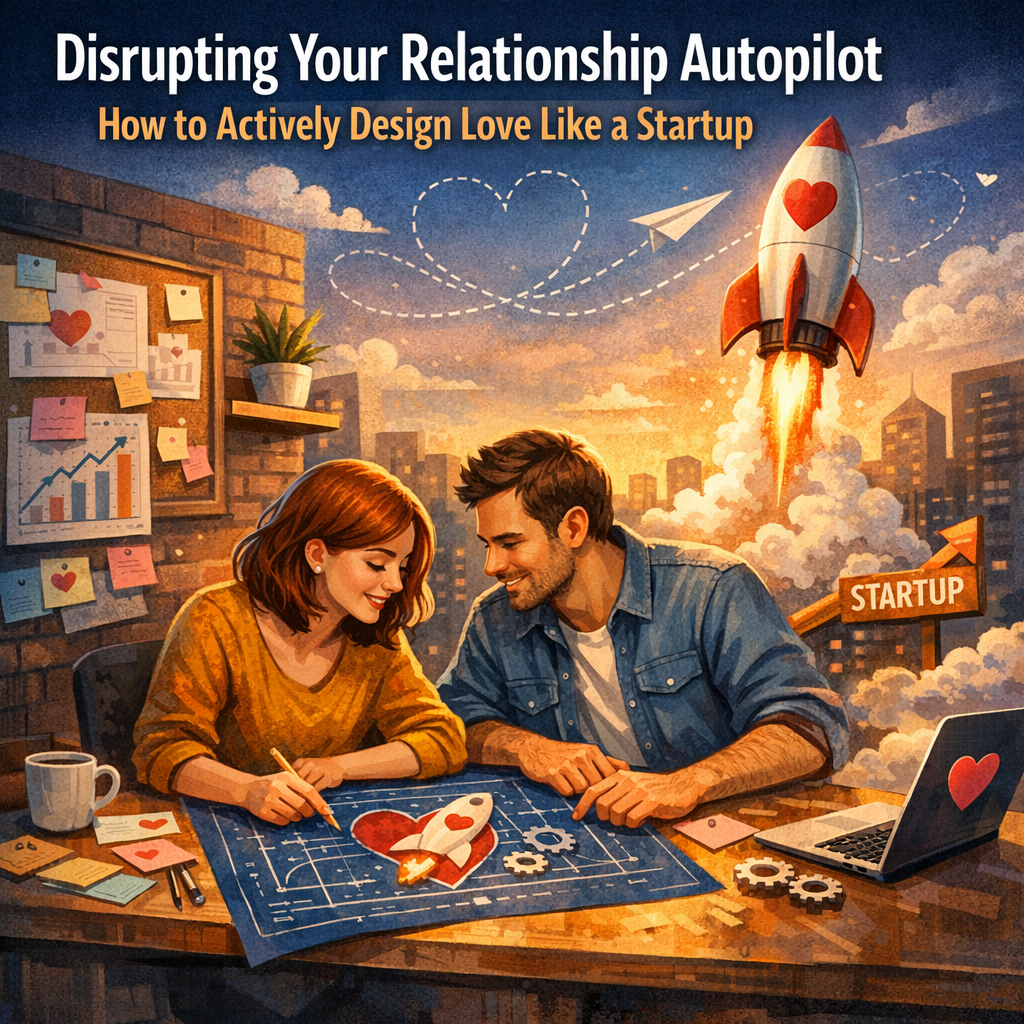
Disrupting Your Relationship Autopilot: How to Actively Design Love Like a Startup
In the hustle and bustle of modern life, it’s easy to slip into autopilot, especially in long-term relationships. We often start with fiery passion and intense commitment, yet somewhere along the line, familiarity breeds complacency. It’s as if relationships transition into the comfort of old routines, just like driving a well-worn path without actively choosing each turn. Yet, what if we could disrupt this autopilot setting and actively design our love lives with intentionality? Imagine treating your relationship like a startup, where innovation, strategy, and adaptability are central to success.
The dating landscape has changed dramatically in recent years. With the advent of dating apps and online matchmaking, singles are presented with endless opportunities yet also face unprecedented challenges. This requires a shift in perspective—viewing relationships not just as romantic journeys to be undertaken but as ventures that require strategic planning, continual assessment, and dynamic iteration. By adopting principles from the startup world, singles from age 18 to 80 can take control of their romantic destinies.
Startups thrive when their founders embrace a mindset of experimentation, resilience, and adaptability. They begin with a vision, iterate on their product, pivot when necessary, and respond swiftly to market feedback. Similarly, designing a love life demands clarity of goals, an openness to experience, and the willingness to adapt to changing circumstances. You wouldn’t launch a startup without a business plan; likewise, your relationship deserves a clear framework to thrive.
The first step is identifying your “product-market fit”—understanding what you desire in a partner and ensuring your relationship meets both parties’ needs. This requires honest communication and a shared vision. Just as a good startup finds consumers’ pain points and addresses them, an effective relationship involves identifying and tackling issues head-on.
Like an entrepreneur studying market trends, understanding the latest research in relationship science can offer valuable insights into what makes love last. By implementing these insights, singles can craft relationships that are not only sustainable but also fulfilling and adventurous.
Features: Insights from Research
To design love with the intentionality of a startup, it helps to ground our approach in empirical research. Several professional and medical studies provide valuable insights into building and maintaining healthy, dynamic relationships.
The [Gottman Institute](https://www.gottman.com/about/research/the-sound-relationship-house/), renowned for its work on marital stability and divorce prediction, identifies ”The Sound Relationship House” theory. This reflects the importance of building a solid foundational friendship, managing conflict effectively, and creating shared meaning. These principles can be thought of as your startup’s core mission and values. While technical skills are critical for startups, emotional skills serve the same purpose in relationships. Cultivating emotional intelligence enhances one’s ability to understand and manage emotions, a crucial component for relationship success.
Furthermore, a study published in the [“Journal of Marriage and Family”](https://www.ncfr.org/ncfr-jmf) emphasizes the importance of flexibility and resilience. The research indicates that couples who adapt to life’s inevitable challenges by readjusting their relationship’s structure or rules are more likely to thrive. Like a startup navigating market changes, a successful relationship requires partners to pivot and adapt when faced with adversity.
Additionally, a study in [”Psychological Science”](https://journals.sagepub.com/home/pss) highlights the ”growth mindset”—the belief that abilities can be developed through dedication and hard work. Applying this mindset to a relationship encourages individuals to see obstacles as opportunities for growth rather than threats, fostering a collaborative environment where both partners flourish.
Moreover, incorporating technology thoughtfully can be a game-changer. Just as startups leverage tech to streamline operations and enhance customer engagement, integrating tech in relationships can enhance communication and intimacy. Tools like shared calendars, relationship apps, or even virtual date nights can serve as catalysts for connection, especially in long-distance scenarios.
All these insights suggest that singles actively designing their love life with intentionality and strategy, much like a successful startup, can enhance the quality and longevity of their relationships. By understanding that love is not a static state but a dynamic process that requires continual effort and innovation, individuals can transform their romantic endeavors into fulfilling partnerships.
Conclusion
Designing love like a startup requires intention, creativity, and a willingness to adapt. By embracing a growth mindset, leveraging relationship science, and applying startup principles, singles can disrupt their relationship autopilot and actively cultivate fulfilling and dynamic partnerships. Transforming your love life into a successfully run venture isn’t just about the destination of a happy relationship but enjoying the dynamic and evolving journey along the way.
References
1. [The Gottman Institute’s Sound Relationship House Theory](https://www.gottman.com/about/research/the-sound-relationship-house/)
2. [Journal of Marriage and Family: Flexibility and Adaptability in Relationships](https://www.ncfr.org/ncfr-jmf)
3. [Psychological Science: Growth Mindset in Relationships](https://journals.sagepub.com/home/pss)
Concise Summary: In a world of constant change, designing relationships like startups involves strategic planning and continuous innovation. Treating love as a dynamic journey, informed by research and insights from relationship science, can transform relationships into meaningful partnerships. With a focus on adapting and evolving, couples can maintain connection and fulfillment, disrupting the autopilot of routine complacency.

Dominic E. is a passionate filmmaker navigating the exciting intersection of art and science. By day, he delves into the complexities of the human body as a full-time medical writer, meticulously translating intricate medical concepts into accessible and engaging narratives. By night, he explores the boundless realm of cinematic storytelling, crafting narratives that evoke emotion and challenge perspectives. Film Student and Full-time Medical Writer for ContentVendor.com