Applying Design Thinking to Revolutionize Long-Term Relationship Strategies
Introduction:
In the dynamic landscape of modern relationships, singles, ranging from their late teens to their golden years, face a common challenge: finding and maintaining a fulfilling long-term connection. As societal norms evolve and the digital age quickens interactions, traditional dating strategies may appear obsolete. Introducing a fresh approach, design thinking—a methodology primarily used in the business and technology sectors—offers groundbreaking solutions for long-term relationship building.
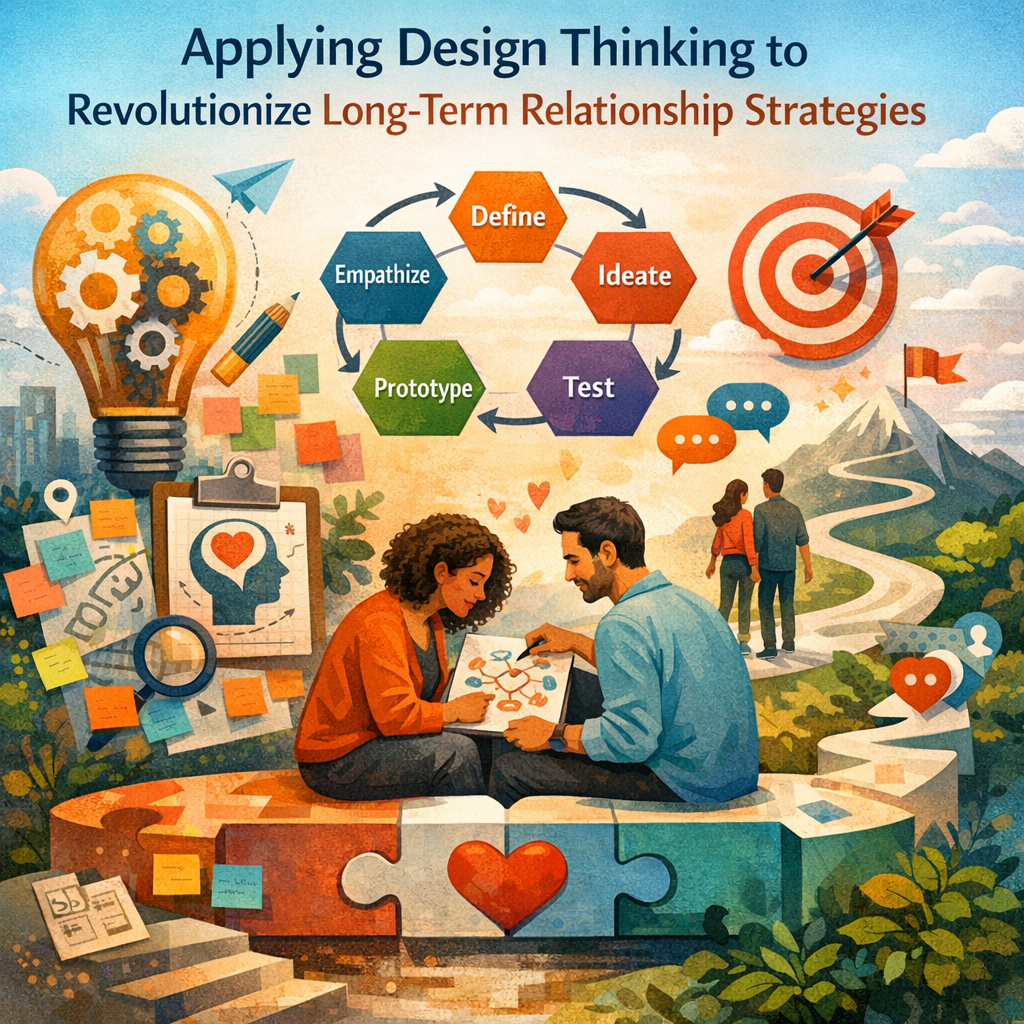
Design thinking is a human-centered, iterative process that focuses on understanding users’ needs, redefining problems insightfully, and creating innovative solutions to prototype and test. Originating from engineering and architecture, it has been adopted by the business world for creativity and problem-solving. How can this strategy be adapted for dating and relationships?
Primarily, design thinking encourages empathy and a deep understanding of needs, valuable traits in any meaningful relationship. Instead of viewing dating through rigid do’s and don’ts, adopting design thinking encourages singles to engage with potential partners with open-mindedness, curiosity, and the willingness to iterate. Imagine dating with an approach where you’re both the ‘designer’ of your relationship experience and the ‘end-user’.
The iterative nature of design thinking also emphasizes prototyping different approaches in dating scenarios, allowing singles to understand what works on a personal level. Initial dates can serve as prototypes—opportunities to explore compatibility, communication styles, and relationship dynamics without the pressure of perfection.
Furthermore, embracing failure as part of the design process offers a healthy perspective on dating missteps or relationship breaks. Just as a failed prototype leads to better design in business, a past relationship can be a learning experience informing future strategies.
Features:
Research shows relationship satisfaction significantly enhances when individuals adapt flexible strategies like those in design thinking. A study published in the Journal of Social and Personal Relationships highlights that couples deploying adaptive problem-solving report higher satisfaction over time. These findings resonate with design thinking principles, emphasizing adapting to circumstances and iterating strategies based on feedback.
The psychological aspect is supported by research in cognitive and behavioral sciences. According to Stanford University, empathy—a cornerstone of design thinking—is crucial for understanding others in business and deeply connecting in personal relationships. By fostering empathy, individuals better comprehend their partner’s needs and perspectives, navigating challenges collaboratively.
Medical studies on relationship health also affirm adaptive approaches’ benefits. Research in the Health Psychology Journal suggests individuals open to adaptive relationship strategies experience lower stress levels and higher resilience to relationship pressures. This aligns with design thinking’s iterative mindset, helping singles adjust expectations and solutions to fit evolving dynamics.
Moreover, the Harvard Business Review discusses how design thinking involves co-creating solutions and involving all stakeholders—an approach easily transitioning into relationship strategies, encouraging partners to develop their relationship trajectory. This collaborative approach ensures the needs of both individuals are incorporated into the relationship design, fostering equality and mutual satisfaction.
Conclusion:
Incorporating design thinking into long-term relationship strategies offers singles from 18 to 80 a structured yet flexible framework to approach dating journeys. By focusing on empathy, iterative learning, and collaborative problem-solving, individuals can move beyond outdated dating norms and cultivate meaningful, lasting connections. As design thinking continues to innovate industries, its principles promise to reshape relationship dynamics, offering a fresh lens to view love and companionship in the modern world.
Concise Summary:
Design thinking can revolutionize how singles approach long-term relationships by fostering empathy, promoting iterative learning, and encouraging collaborative problem-solving. By considering dating as an iterative process where individuals are both designers and end-users, singles can explore various approaches and learn from past missteps, enhancing satisfaction and resilience in relationships. Research supports this methodology, showing that adaptive, empathetic strategies lead to better relationship satisfaction and reduced stress. As design thinking continues to innovate other industries, it offers a promising framework for reshaping modern relationship dynamics.

Dominic E. is a passionate filmmaker navigating the exciting intersection of art and science. By day, he delves into the complexities of the human body as a full-time medical writer, meticulously translating intricate medical concepts into accessible and engaging narratives. By night, he explores the boundless realm of cinematic storytelling, crafting narratives that evoke emotion and challenge perspectives. Film Student and Full-time Medical Writer for ContentVendor.com