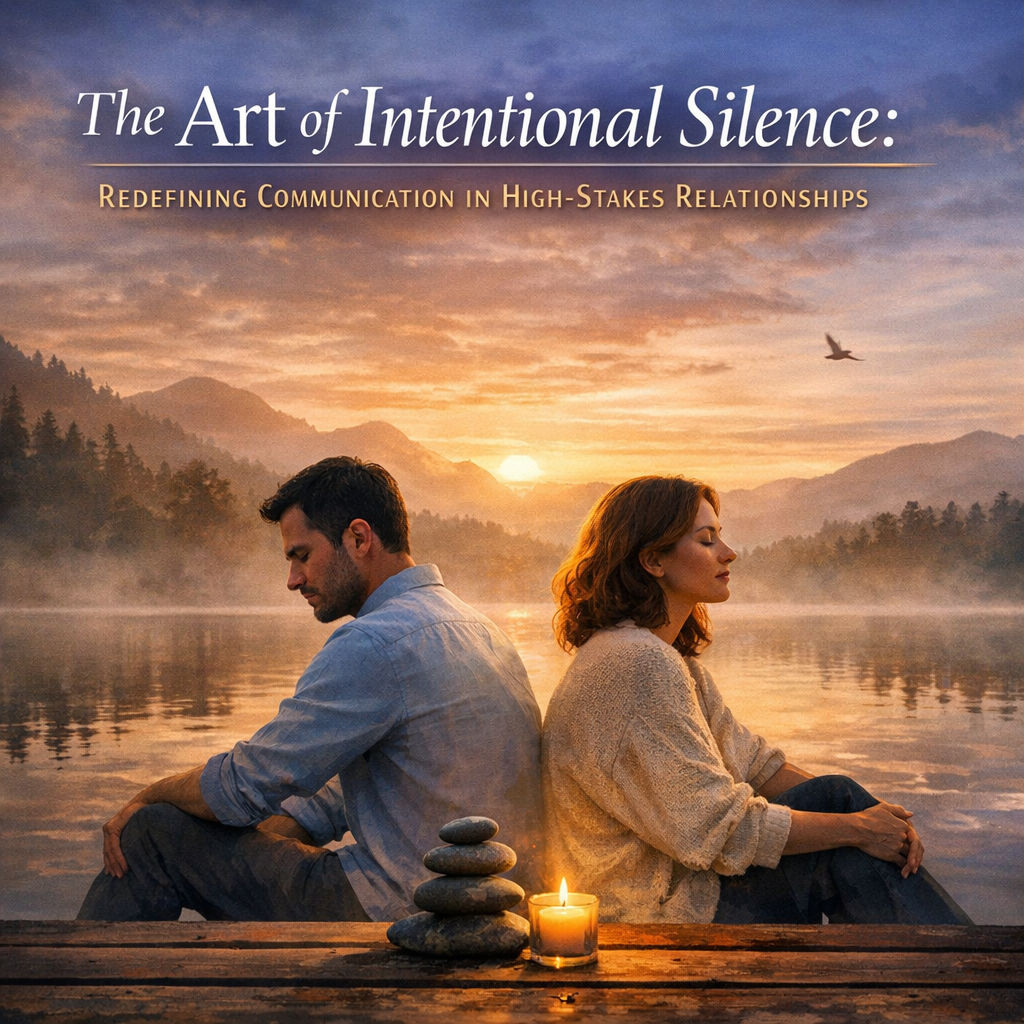
The Art of Intentional Silence: Redefining Communication in High-Stakes Relationships
In a world increasingly dominated by constant connection and ceaseless communication, the concept of silence may seem obsolete or even uncomfortable. Yet, silence, when employed purposefully, holds transformative power in high-stakes relationships. For singles navigating the complex web of dating—from blossoming infatuations to deep, meaningful connections—understanding and employing intentional silence can be an art form that fosters growth, introspection, and profound connection. At every stage of a relationship, silence can act as a catalyst for deeper understanding, if wielded mindfully.
Intentional silence differs from awkward pauses or avoidance; it is a deliberate choice to create space for reflection, understanding, and empathy. In the early stages of dating, silence can provide the necessary space to process emotions and evaluate compatibility without the distractions of constant dialogue. Recent trends among younger generations indicate a growing preference for clear boundaries, suggesting that today’s singles are increasingly valuing quality over quantity in communication. This is particularly relevant amidst the overload of digital connections competing for attention.
For older demographics re-entering the dating scene, perhaps after a divorce or the loss of a spouse, embracing intentional silence can be a revelation. It gives room for self-discovery and the recalibration of personal needs and desires before forming new bonds. Silence encourages patience and fosters resilience, key qualities needed to build meaningful, high-stakes relationships.
Furthermore, the physical presence of silence can communicate volumes. Eye contact held in silence, gestures, and the subtle, unspoken language of the body can convey emotions and understanding that words often fail to capture. Studies indicate that non-verbal communication, of which silence is a crucial part, contributes significantly to the depth of interpersonal connections. Thus, intentional silence is not about withholding communication but enhancing it by allowing the non-verbal elements to speak.
Features
Interestingly, the concept of silence as a communication tool has been studied across multiple disciplines, from psychology to neuroscience. A study conducted by psychologist Dr. Leanne ten Brinke at the [University of California, Berkeley](https://www.sciencedaily.com/releases/2018/07/180711101533.htm), found that “the absence of communication can speak in profound volumes.” Her research indicated that intentional silence can enhance decision-making abilities by allowing individuals critical time to process information outside the charged atmosphere of dialogues.
Moreover, a neuroscience study from the journal [*Frontiers in Human Neuroscience*](https://www.frontiersin.org/articles/10.3389/fnhum.2013.00594/full) revealed that silence can stimulate brain growth by fostering new cells in the brain’s hippocampus—a critical area for memory formation and emotional regulation. This reinforces how strategic pauses can profoundly impact our emotional wellbeing and cognitive function when cultivating new relationships.
Additionally, the importance of silence in building emotional intelligence cannot be overstated. According to Daniel Goleman, a renowned psychologist and author of [*”Emotional Intelligence”*](https://www.danielgoleman.info/topics/emotional-intelligence/), the ability to manage silence and listen actively is a hallmark of emotionally intelligent individuals. His research suggests that those who use silence as a tool are often better equipped to navigate complex emotional landscapes, making them more adept in handling high-stakes relationships.
Furthermore, physiological studies demonstrate that silence can reduce stress by lowering cortisol levels, thus creating a calm mental state conducive to clearer communication and empathetic listening. Embracing moments of quietude allows for improved emotional control, a vital asset when engaging in challenging conversations typical of high-stakes scenarios.
Conclusion
In high-stakes relationships, the art of intentional silence holds an unparalleled ability to redefine how we communicate and connect. Its considered application fosters understanding, emotional intelligence, and deeper bonds by allowing introspection and the beauty of non-verbal communication. By embracing the quiet and appreciating the power of intentional silence, singles from all walks of life can cultivate richer, more resilient relationships conducive to both personal growth and mutual understanding.
References:
1. [Dr. Leanne ten Brinke’s Study on Communication and Silence](https://www.sciencedaily.com/releases/2018/07/180711101533.htm)
2. [*Frontiers in Human Neuroscience* Study on Silence and Brain Growth](https://www.frontiersin.org/articles/10.3389/fnhum.2013.00594/full)
3. [Daniel Goleman’s Work on Emotional Intelligence](https://www.danielgoleman.info/topics/emotional-intelligence/)
4. [Silence and Stress Reduction](https://www.ncbi.nlm.nih.gov/pmc/articles/PMC2874788/)
Concise Summary:
Intentional silence in high-stakes relationships can transform communication by promoting growth and introspection. It’s a purposeful tool that allows reflection and empathy, enhancing non-verbal communication. Studies by Dr. Leanne ten Brinke suggest silence enhances decision-making, and research in neuroscience shows it promotes brain health. Daniel Goleman connects it to emotional intelligence, enabling better navigation of complex relationships. Silence lowers stress, fostering empathy and emotional control. By embracing this tool, singles can build deeper, more meaningful connections while promoting personal growth and mutual understanding.