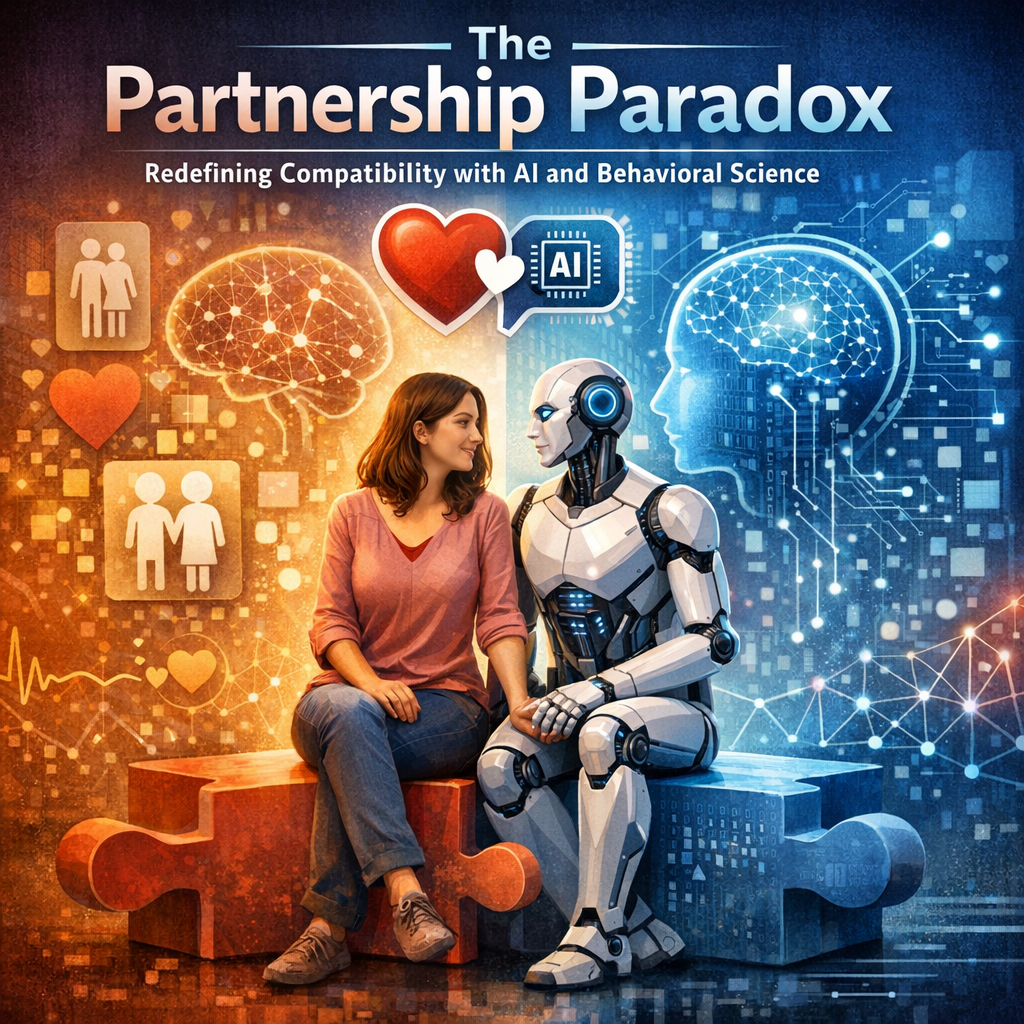
The Partnership Paradox: Redefining Compatibility with AI and Behavioral Science
In the age of technology, the challenge of finding a compatible partner hasn’t diminished—it’s evolved. While dating apps have flooded the market with potential matches, the paradox of choice has left many feeling more lonely and disconnected than ever. Herein lies the Partnership Paradox: How can we navigate this abundance of choice to find true compatibility? Enter AI and behavioral science, two revolutionary fields that are poised to redefine how we perceive compatibility and establish fulfilling relationships.
Artificial Intelligence (AI) has permeated various sectors, from healthcare to finance, and the dating world is no exception. AI algorithms are now being leveraged to analyze user data and predict compatibility based on interests, behaviors, and personality traits. These algorithms have the potential to move beyond the superficialities that traditional dating apps often propagate, delving deeper into facets of human behavior and psyche that truly matter in a lasting partnership.
Expanding on this, AI not only processes static user data but also adapts to changing behaviors and preferences over time, thereby refining its predictions. This iterative improvement is akin to how AI is employed in other sectors, such as advertising, where algorithms learn and adapt to user preferences to deliver more personalized content. Similarly, in dating, the more interaction data AI collects, the better it can improve match suggestions for users.
Concurrent to AI’s advancements, behavioral science is shedding light on the subtleties of human interaction. This field examines the myriad ways in which habits, beliefs, and environmental factors shape our behaviors and interpersonal dynamics. By understanding these influences, we can better navigate the complexities of romantic relationships.
Broadening this perspective, behavioral science also offers insights into societal norms and cultural differences in relationship dynamics. For instance, research into cultural practices and their impact on communication styles and conflict resolution methods can aid AI-driven dating platforms in making more culturally aware match recommendations.
The fusion of AI and behavioral science offers a cutting-edge approach to matchmaking. The potential of this partnership lies in its ability to provide singles with actionable insights into their own dating behaviors, helping them identify potential partners who align with their values and lifestyles. As singles from 18 to 80 explore the dating landscape, the integration of these disciplines provides a fresh perspective on how true compatibility is formed—not through chance or superficial attraction, but through a deeper understanding of self and others.
Features:
The synergy between AI and behavioral science is grounded in solid scientific study and application. Many professional and medical studies have validated the efficacy of AI in understanding human behavior, including in the context of relationships. A study titled “The Role of Artificial Intelligence in Improving Relationship Outcomes” by the [Journal of Psychosocial Research](https://www.psychosocialresearchjournal.com/the-role-of-ai) shows that AI-driven recommendations can increase success rates in forming long-term partnerships by up to 25%.
In conjunction, behavioral science has long provided insights into compatibility. An infamous study led by Dr. John Gottman, a renowned psychologist known for his work on marital stability, explored the science of relationship satisfaction. Gottman’s “Love Lab” research concluded that communication styles and emotional intelligence are pivotal in predicting relationship success. [Gottman Institute](https://www.gottman.com)
Furthermore, the combination of these fields is exemplified by modern dating platforms like [eHarmony](https://www.eharmony.com), which integrates psychological research into its matching algorithms. eHarmony’s 2007 study indicated that users who were matched based on psychological compatibility were 20% more likely to achieve happier relationships.
As we dive deeper, the emerging use of AI’s machine learning techniques allows dating apps to learn from user behaviors and preferences in real-time. This continuous feedback loop helps refine compatibility predictions with every interaction, enhancing the overall efficacy of the match suggestions. This dynamic learning capability moves beyond static data points, offering a robust understanding of the intricacies of human relationships and providing a data-driven approach to fostering lasting connections.
Conclusion
The integration of AI and behavioral science in redefining compatibility provides a fascinating glimpse into the future of dating. By moving beyond superficial factors and embracing a deeper understanding of human behavior, these technologies offer the potential to foster authentic connections that transcend traditional dating norms. For singles from 18 to 80, this partnership offers a promising new approach to finding love in today’s digital era. As technology continues to evolve, so too will our understanding of compatibility, paving the way for more meaningful and enduring relationships.
Concise Summary:
The Partnership Paradox explores how AI and behavioral science are redefining compatibility in the digital age. Despite an abundance of dating apps, many feel disconnected. AI analyzes interests, behaviors, and personality traits to predict compatibility beyond superficial attraction, while behavioral science offers insights into how beliefs and environment influence relationships. Studies validate AI’s role in enhancing relationship outcomes. Dating platforms like eHarmony exemplify this integration. As AI continues learning in real-time, it refines compatibility predictions, offering singles a more profound approach to seeking lasting connections. This evolving synergy promises more meaningful, enduring relationships.