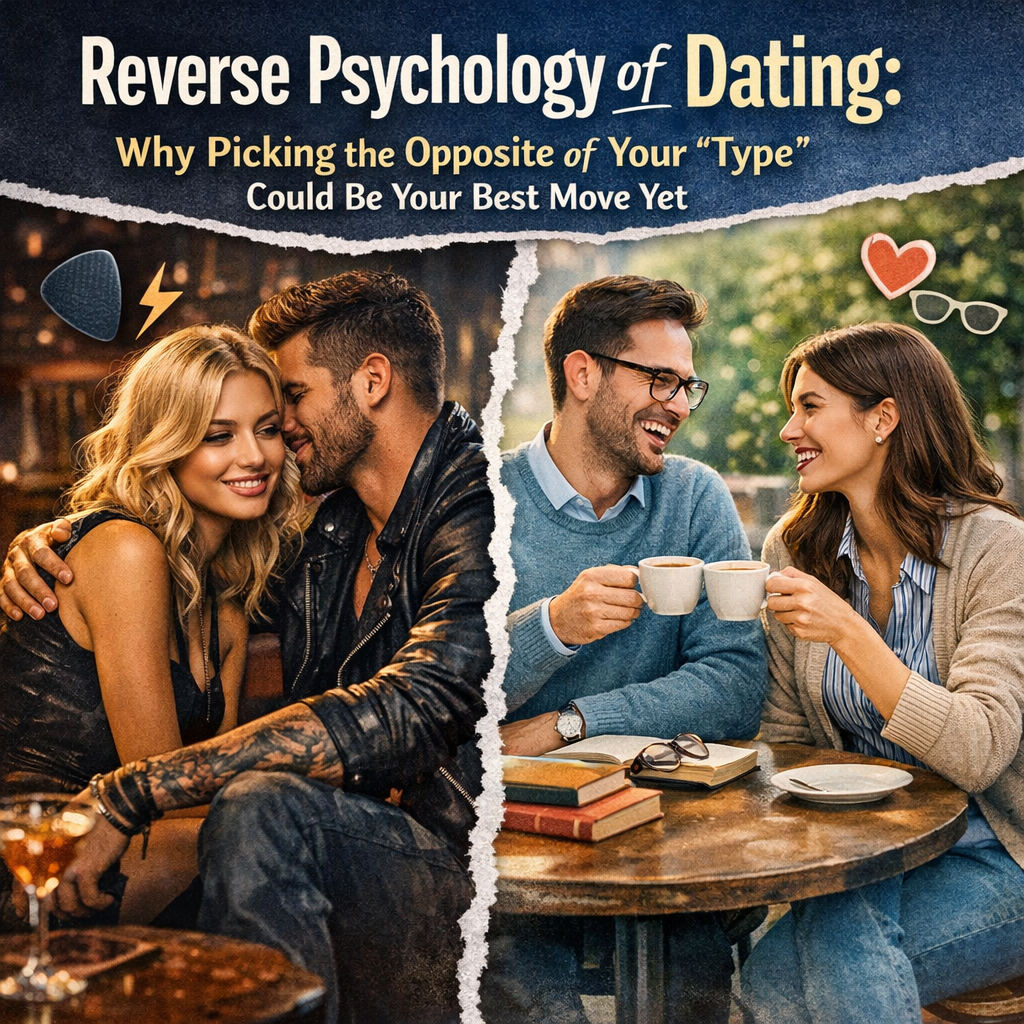
Reverse Psychology of Dating: Why Picking the Opposite of Your ‘Type’ Could Be Your Best Move Yet
Introduction
When it comes to dating, most people carry a certain image of their “ideal partner”—a predetermined set of traits they believe are essential for compatibility. Whether it’s a preference for someone with a specific physical appearance, shared interests, or a similar lifestyle, it’s common to have a “type.” But what if the key to finding true happiness and authentic connection lies in doing the exact opposite? The concept of dating outside your usual type is gaining traction as more individuals realize the benefits of exploring uncharted territories in the dating world. This method, often linked to the principles of reverse psychology, suggests that what we want and what we need might be two different things.
The idea of stepping outside one’s dating comfort zone can initially seem daunting, yet it offers a wide array of opportunities for personal growth and discovery. By exploring new dynamics and engaging with varied personalities, singles may find attributes they never knew they desired or valued. Venturing beyond the confines of your “type” challenges preconceived notions and prejudices, facilitating a deeper understanding of yourself and others. Moreover, this approach can help dismantle the stereotypes you unknowingly hold, making room for more genuine interactions based on personality rather than superficial traits.
The phenomenon is not without scientific backing. Psychologists suggest that we often gravitate towards familiarity in partners, as it mirrors comfort zones established in early life experiences. However, sticking to these familiar patterns may lead to repetitive conflicts and unfulfilled relationships. By considering the opposite of your type, you break free from these repetitive cycles, opening the door to possibilities that might align more closely with your core values and relationship goals. So, why keep perpetuating the same dating routine that yields the same results? It’s time to explore the unknown, redefine what you think you want, and discover what truly brings joy and fulfillment in a relationship.
Features
Scientific studies and psychological theories provide valuable insights into why dating outside your type might be more beneficial than adhering strictly to it. One prevailing theory is the notion of “complementarity,” which suggests that people with differing characteristics can form successful partnerships by balancing each other’s strengths and weaknesses. A [study published in Psychological Science](https://journals.sagepub.com/home/pss) highlighted that partners who complement each other often exhibit higher relationship satisfaction and stability. This indicates that divergent personalities can create synergies that foster growth and mutual understanding.
Another noteworthy area of research focuses directly on attachment styles formed during childhood. According to attachment theory, individuals with secure attachment types tend to be more adaptable, making them open to variety in partners. On the other hand, those with anxious or avoidant attachment styles might gravitate toward what feels familiar but could benefit from exposure to differing perspectives that challenge their attachment patterns. An [article from Scientific American](https://www.scientificamerican.com) suggests that by deliberately choosing partners who differ from our usual type, individuals can work through maladaptive patterns and grow emotionally.
Moreover, a study conducted at [Columbia University](https://www.columbia.edu) found that attraction often involves non-obvious traits such as intelligence, humor, and emotional resilience. Researchers discovered that when individuals focused on these deeper qualities rather than surface-level ones, they reported higher levels of satisfaction and happiness. This supports the idea that seeking partners outside one’s type can be rewarding, as it steers attention to more substantive compatibility markers.
Ultimately, choosing the opposite of your type creates a holistic approach to dating, encouraging introspection and broadening the criteria for what makes a partnership thrive. This shift not only enhances personal growth but also helps individuals cultivate diverse interpersonal skills, making them better equipped for long-term relationships.
Conclusion
Unraveling the complex psychological ties associated with our dating choices can enrich our relationship experiences and personal growth. While sticking to familiar patterns might seem comforting, stepping outside these self-imposed boundaries can lead to unexpected, and often profound, connections. By embracing the idea of dating the opposite of your type, you’re embarking on a journey of self-discovery and opening up to possibilities that align with your authentic self—potentially turning this unorthodox approach into your best move yet.
Concise Summary
This article explores the benefits of dating outside your usual type, highlighting how this approach can foster personal growth and lead to more authentic connections. Backed by psychological theories and scientific studies, the article argues that seeking partners with different traits can break repetitive patterns, encourage introspection, and focus on substantive qualities like intelligence and emotional resilience. The concept of “complementarity” suggests successful partnerships stem from balancing strengths, leading to higher satisfaction and stability. Ultimately, redefining your “ideal partner” might open the door to more fulfilling relationships aligned with your core values and authentic self.

Dominic E. is a passionate filmmaker navigating the exciting intersection of art and science. By day, he delves into the complexities of the human body as a full-time medical writer, meticulously translating intricate medical concepts into accessible and engaging narratives. By night, he explores the boundless realm of cinematic storytelling, crafting narratives that evoke emotion and challenge perspectives. Film Student and Full-time Medical Writer for ContentVendor.com