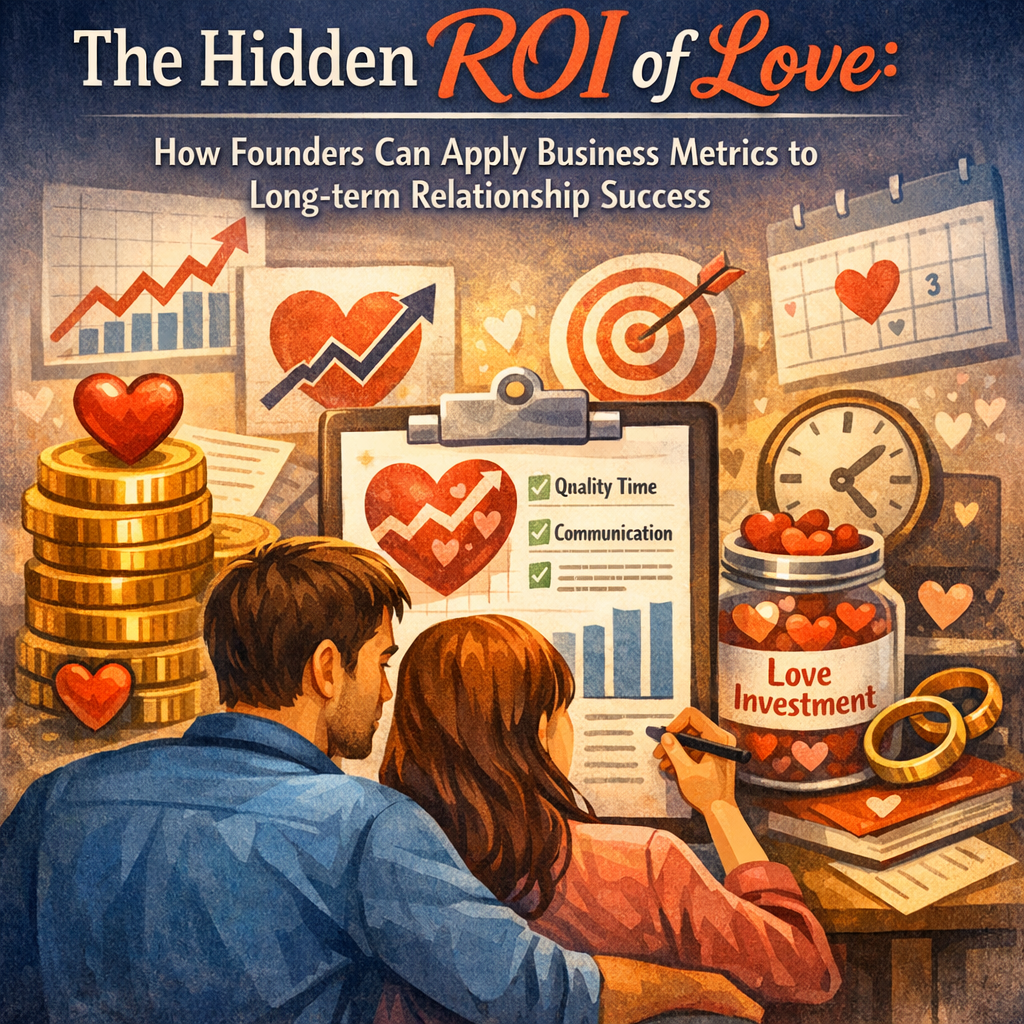
The Hidden ROI of Love: How Founders Can Apply Business Metrics to Long-term Relationship Success
In the dynamic world of business, founders often immerse themselves in the science of metrics and performance indicators to achieve success. However, these principles are not solely reserved for the boardroom and quarterly sales reports. What if entrepreneurs and leaders could harness their business acumen to enhance and sustain their personal relationships? Introducing the unique concept of blending the analytical world of business metrics with romantic relationships: the hidden return on investment (ROI) of love.
At its core, ROI is a measure of the efficiency or profitability of an investment, and love, in essence, can be approached as an investment of time, energy, and emotion. Many single individuals across all ages experience the complexities of dating and relationships, often without tangible metrics to navigate their journey. Founders and business-oriented individuals are adept at cultivating relationships in the professional realm, recognizing the importance of communication, collaboration, and feedback loops. So why not apply these principles to intimate relationships as well?
In today’s fast-paced digital age, relationships can often fall by the wayside, becoming neglected or deprioritized amid the hustle of career advancement and innovation. Yet, research has consistently shown that fulfilling relationships contribute positively to emotional wellbeing, productivity, and even longevity. For those at the helm of businesses, adopting strategic frameworks to nurture personal connections can unlock unforeseen levels of personal fulfillment and support.
What does applying business metrics to relationships look like in practice? The process begins by clearly identifying what a successful relationship looks like. For some, it may be constant communication and shared goals, while others may prioritize emotional support and personal growth. Utilizing goal-setting strategies, akin to OKRs (Objectives and Key Results), partners can articulate mutual aspirations, enabling tracking and adjustments over time. Couples who employ these strategic practices often experience a heightened sense of partnership and collaborative spirit, not dissimilar to successful business co-founders.
Features:
Numerous professional and medical studies have explored the intersection between relationship success and the application of strategic management principles. One such study published in the Journal of Family Psychology highlights the role of “relationship self-regulation,” which parallels business methodologies like self-assessment and performance reviews. [Couples who engaged in these evaluative conversations and set shared targets reported higher relationship satisfaction and resilience during conflicts](https://psycnet.apa.org/record/2006-22324-001).
Similarly, the use of emotional intelligence (EI), a pivotal component in leadership and team management, has been identified as a significant factor in relationship success. A [study conducted by the American Psychological Association](https://www.apa.org/news/press/releases/stress/2014/relationships) found that higher levels of EI correlated with better relationship satisfaction and communication skills. By cultivating emotional awareness and empathy, individuals can deepen their interpersonal relationships, mirroring the effective communication strategies found in successful businesses.
The Gottman Institute, renowned for its work in relationship research, emphasizes the importance of regular “check-ins” between partners. These scheduled interactions allow couples to discuss progress, address challenges, and align future plans, akin to performance reviews and feedback loops in the professional environment. [Such practices enable couples to remain agile and responsive to changes, ultimately promoting long-term relationship prosperity](https://www.gottman.com/).
By strategically approaching love with a business mindset, individuals can realize significant returns that extend beyond typical measures of financial success. These metrics offer a roadmap to building robust personal connections that withstand the test of time and tribulations.
Conclusion:
The concept of applying business metrics to romantic relationships offers a novel perspective on nurturing meaningful connections. While the parallels may seem unconventional, harnessing strategic mindsets can elevate personal fulfillment and relationship longevity. By aligning intentions, establishing shared goals, and committing to continued personal development, individuals can experience the hidden ROI of love—an investment that pays lifelong dividends.
References:
– [Journal of Family Psychology: Study on Relationship Self-Regulation](https://psycnet.apa.org/record/2006-22324-001)
– [American Psychological Association: Emotional Intelligence and Relationships](https://www.apa.org/news/press/releases/stress/2014/relationships)
– [The Gottman Institute: Research on Successful Relationships](https://www.gottman.com/)
Concise Summary: Blending business metrics with romantic relationships reveals a hidden ROI: sustained emotional connections enhance personal well-being. Founders can apply principles like communication, OKRs, and emotional intelligence to deepen romantic ties. Regular “check-ins,” akin to business meetings, help couples remain adaptable, fostering relationship resilience. The strategic approach elevates personal fulfillment and ensures relationships withstand challenges, giving lifelong returns.

Dominic E. is a passionate filmmaker navigating the exciting intersection of art and science. By day, he delves into the complexities of the human body as a full-time medical writer, meticulously translating intricate medical concepts into accessible and engaging narratives. By night, he explores the boundless realm of cinematic storytelling, crafting narratives that evoke emotion and challenge perspectives. Film Student and Full-time Medical Writer for ContentVendor.com