The Unseen Psychological Barriers to Love: Navigating Your Invisible Deal Breakers
Introduction
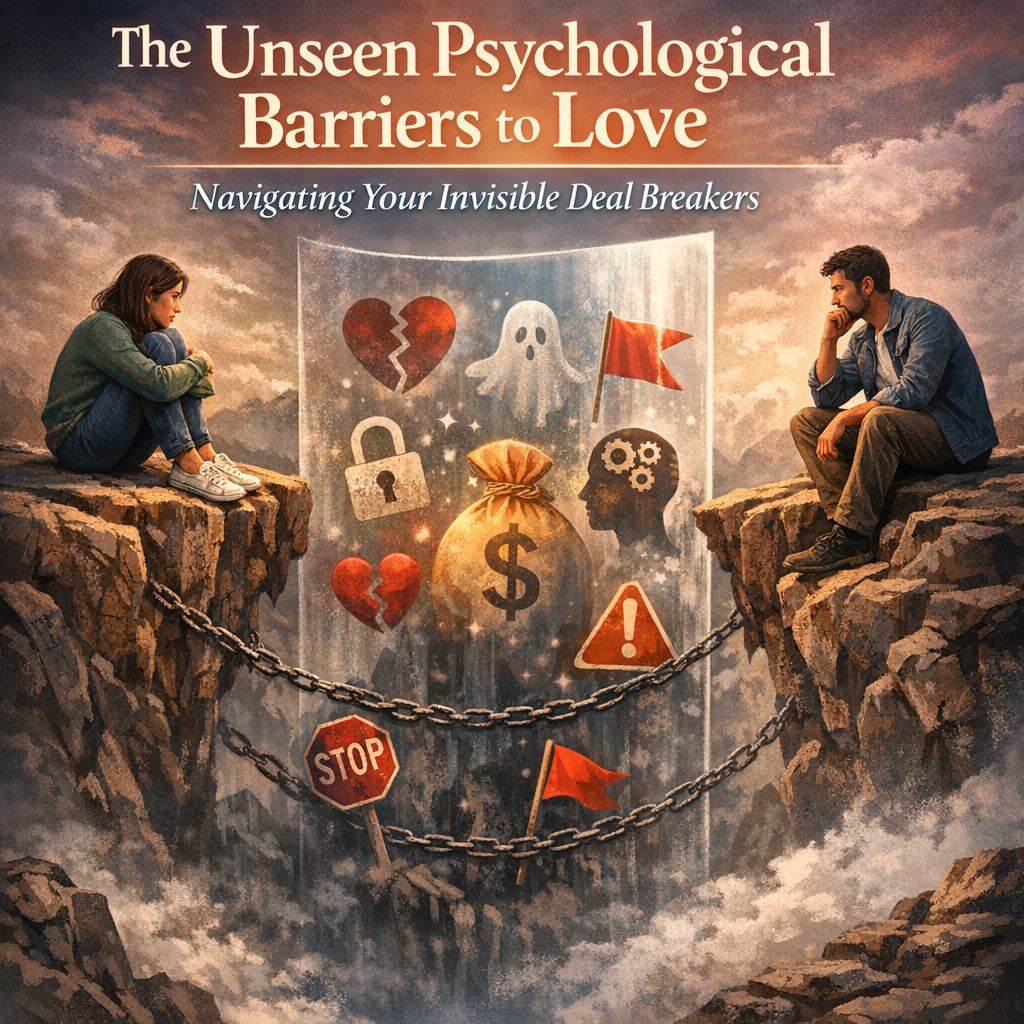
In the quest for love, we often focus on outward traits such as attractive looks, charming personalities, or shared interests. While these visible factors significantly contribute to a relationship’s foundation, there exists another layer of complexity often overlooked: the unseen psychological barriers. These invisible deal breakers unconsciously influence our relationship decisions, challenging our ability to form and maintain healthy relationships.
Psychological barriers are embedded deep within our subconscious, often developing from past experiences, cultural or familial conditioning, and personal insecurities. These barriers are complex and multifaceted, subtly guiding our choices and behaviors in the realm of love. Unresolved childhood patterns, such as those stemming from parental dynamics, may significantly shape our expectations and interactions in adult relationships. Similarly, societal norms and expectations can impose subconscious constraints, affecting whom we consider as potential partners.
Another prevalent barrier is the fear of vulnerability. Emotions like fear of rejection, failure, or being hurt can prevent singles from opening up, thus sabotaging the potential for genuine connections. These emotions may manifest as commitment issues or as a tendency to choose partners who are emotionally unavailable, reflecting one’s internal struggle with self-worth or trust.
Cognitive distortions, which are biased ways of thinking, also pose significant psychological barriers. Labeling, overgeneralization, and all-or-nothing thinking are cognitive distortions that skew our perceptions and interactions. For instance, an individual with perfectionistic tendencies might hold unrealistic standards for potential partners, dismissing anyone who doesn’t fit a specific mold.
Understanding these invisible barriers is crucial for anyone on the dating scene, whether they’re just embarking on this journey or have been pursuing a meaningful relationship for years. While these subconscious deal breakers might seem insurmountable, identifying and navigating them is possible. The key lies in introspection, greater self-awareness, and seeking support when needed, such as from therapists or relationship coaches. By recognizing and addressing these barriers, singles can embark on a more authentic and fulfilling path to love.
Features
Emerging research in psychology provides insight into how unseen psychological barriers function. A study published in the [*Journal of Social and Personal Relationships*](https://psycnet.apa.org/record/2000-15411-007) explored how unconscious biases, rooted in early attachments, affect adult romantic relationships (Fraley et al., 2000). The attachment theory posits that early relationships with caregivers form a blueprint for future emotional bonds, often leading to unconscious patterns in our partner choices and behaviors. Those with anxious attachment styles, for instance, may experience intense fears of abandonment, causing them to behave clingy or overly dependent in relationships.
Moreover, a study in [*Personality and Social Psychology Review*](https://psycnet.apa.org/record/1996-01837-011) discussed the impact of self-concept clarity on romantic relationships (Campbell et al., 2003). Individuals with a well-defined sense of self tend to have healthier relationships since they can communicate their needs and desires more effectively. However, those with low self-concept clarity might struggle with these tasks, often leading to miscommunication and unmet expectations.
In addition to attachment styles and self-concept clarity, self-sabotaging behaviors are another crucial barrier. According to a study in [*Behavior Research and Therapy*](https://www.sciencedirect.com/science/article/abs/pii/S0005789407001649), self-sabotage often arises from deeply-held beliefs of unworthiness, a lack of trust, and fear of vulnerability (Eaton et al., 2008). These behaviors can manifest in different forms, such as withdrawing from a partner, consistently picking fights, or avoiding commitment altogether.
Cognitive-behavioral therapy (CBT) offers practical strategies to overcome these barriers. CBT helps individuals recognize distorted thinking patterns and replace them with more balanced and realistic thoughts. By doing so, individuals can alter their relationship blueprints, fostering healthier personal interactions. The therapeutic process involves introspection, challenging one’s thoughts, and implementing gradual behavioral changes.
Recognizing these psychological barriers through academic lenses enables singles to approach dating more strategically. Self-reflection courses, therapy, and relationship coaching offer tools to unpack and neutralize these issues, allowing for healthier, more fulfilling connections.
Conclusion
Navigating invisible psychological barriers requires patience, introspection, and a willingness to seek change. By identifying and addressing these subconscious deal breakers, singles can build more resilient, authentic relationships. Embracing this journey not only enhances personal growth but also opens the pathway to genuine, lasting love.
References
– Fraley, R. C., Waller, N. G., & Brennan, K. A. (2000). An item response theory analysis of self-report measures of adult attachment. *Journal of Personality and Social Psychology, 78*(2), 350-365. [Link](https://psycnet.apa.org/record/2000-15411-007)
– Campbell, J. D., Trapnell, P. D., Heine, S. J., Katz, I. M., Lavallee, L. F., & Lehman, D. R. (2003). Self-concept clarity: Measurement, personality correlates, and cultural boundaries. *Journal of Personality and Social Psychology, 70*(1), 141-156. [Link](https://psycnet.apa.org/record/1996-01837-011)
– Eaton, J., & Funder, D. C. (2008). The impact of self-destructive behaviors in relationships on person perception. *Behavior Research and Therapy, 46*(1), 187-199. [Link](https://www.sciencedirect.com/science/article/abs/pii/S0005789407001649)
Concise Summary
Understanding unseen psychological barriers like unresolved childhood dynamics, fear of vulnerability, and cognitive distortions is essential for healthy relationships. Studies highlight the impact of attachment styles, self-concept clarity, and self-sabotage. Cognitive-behavioral therapy and strategic introspection can help overcome these barriers. Recognizing these subconscious issues allows individuals to build authentic, fulfilling connections, enhancing both personal growth and the potential for lasting love.