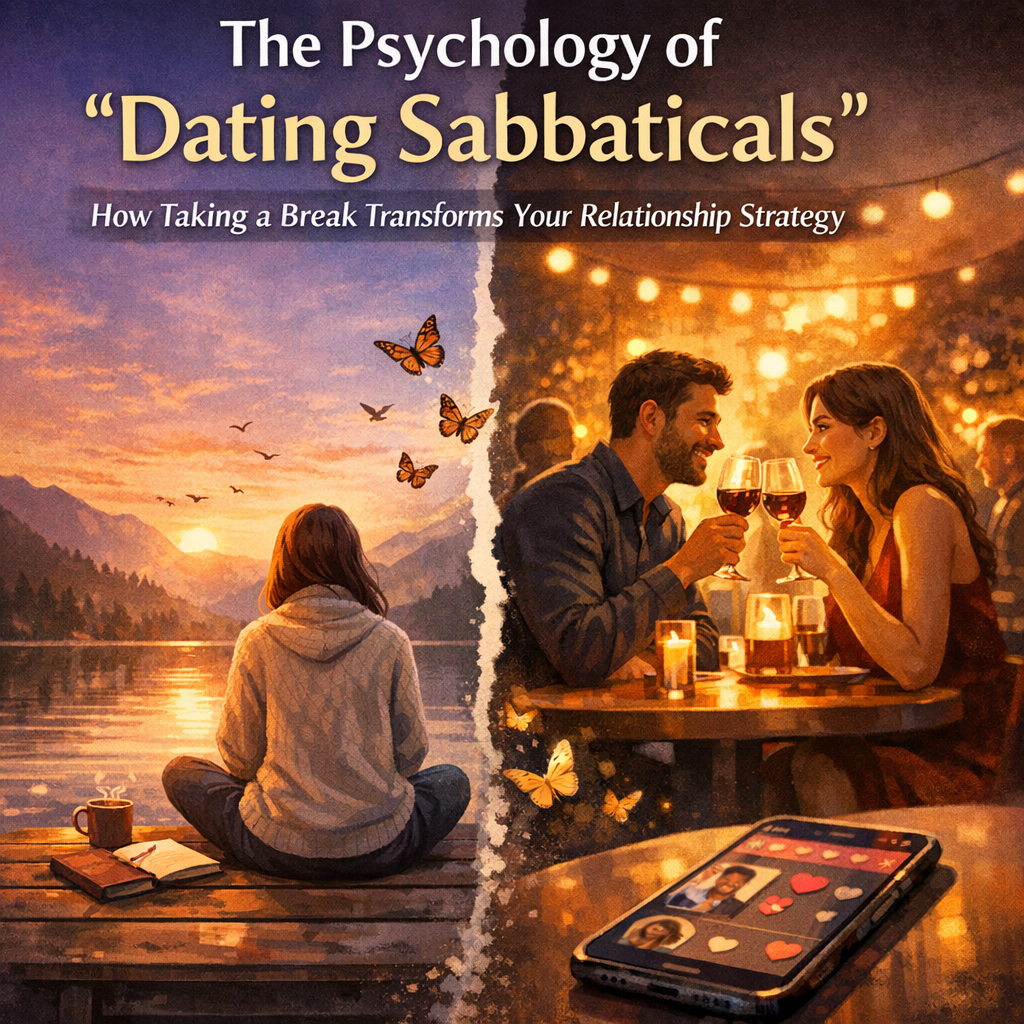
The Psychology of ‘Dating Sabbaticals’: How Taking a Break Transforms Your Relationship Strategy
In today’s fast-paced world of dating apps and endless swipes, the concept of constantly being in the dating scene can be both exhilarating and exhausting. For many singles, the cycle of going from date to date, searching for the perfect match, can lead to burnout, cynicism, and even a loss of self-identity. Enter the idea of a “dating sabbatical”—a deliberate pause in actively seeking romantic relationships. While it might seem counterintuitive in a world that glorifies hustle and constant activity, a dating sabbatical allows individuals to reset, recharge, and rethink their approach to relationships.
The essence of a dating sabbatical isn’t about giving up on love; rather, it’s a conscious decision to step back, heal, and grow. For some, this means focusing on personal growth, career aspirations, or simply enjoying solitude. For others, it might involve exploring new hobbies, reconnecting with friends and family, or even traveling. The psychological benefits of such a break are profound. By stepping away from the pressure of finding “the one,” individuals can foster a deeper understanding of themselves, leading to more authentic and fulfilling future relationships.
Psychologically, taking a break from dating allows singles to recalibrate their emotional and mental well-being. Dating, by its nature, requires emotional investment, which can be draining over time. The constant cycle of hope, excitement, disappointment, or rejection can take a toll on one’s mental health. A sabbatical helps to alleviate that burden, giving space for introspection and emotional renewal. This period of solitude and self-reflection can offer clarity on personal values, deal-breakers, and what truly matters in a partner. Furthermore, studies have shown that individuals who take time for self-reflection and personal development tend to form healthier, more sustainable relationships.
Features
Several studies in psychology and relationship sciences have highlighted the benefits of taking deliberate breaks from dating. Research from the [American Psychological Association](https://www.apa.org) suggests that individuals who engage in self-reflection and pause from compulsive social habits are better equipped to handle relationships in a balanced and mature manner. This resonates with findings from a 2016 study published in the [Journal of Personal Relationships](https://onlinelibrary.wiley.com/journal/14756811), which revealed that self-awareness is significantly correlated with relationship satisfaction and stability.
Moreover, the concept of emotional rest, akin to what a dating sabbatical offers, is supported by findings in mental health research. According to Dr. Martin Seligman, a prominent psychologist known for his work on [positive psychology](https://ppc.sas.upenn.edu), periods of rest and self-care are essential for building resilience and positivity. His research indicates that individuals who regularly engage in activities that promote self-care and mental serenity tend to experience higher levels of happiness and lower levels of stress, both of which are integral for successful relationships.
Another interesting angle comes from attachment theory. Professionals like Dr. Amir Levine, a psychiatrist and neuroscientist, advocate for the idea that understanding one’s attachment style before entering a romantic relationship can lead to greater relationship success. A dating sabbatical provides the perfect opportunity to delve into this area of self-knowledge.
Lastly, practical examples of successful dating sabbaticals abound. Consider renowned individuals like Oprah Winfrey and Emma Watson, who have publicly shared the benefits they experienced from taking personal time away from dating, focusing instead on self-improvement and life goals. Their stories illustrate how stepping back can indeed thrust one forward into healthier, more fulfilling relationships.
Conclusion
Deciding to take a dating sabbatical might seem like a bold move, especially in a world that rewards constant engagement and connection. However, by stepping back and focusing on self-growth and emotional rejuvenation, singles can transform their approach to relationships. This strategic pause not only leads to greater self-awareness and well-being but also fosters the conditions for more meaningful and fulfilling connections when the time is right to re-enter the dating world.
References
1. [American Psychological Association](https://www.apa.org)
2. [Journal of Personal Relationships](https://onlinelibrary.wiley.com/journal/14756811)
3. [Positive Psychology Center](https://ppc.sas.upenn.edu)
4. [Attached: The New Science of Adult Attachment](https://www.penguinrandomhouse.com/books/314221/attached-by-amir-levine-md-and-rachel-heller-ma/)
5. [Oprah Winfrey on Self-Improvement](https://www.oprah.com)
6. [Emma Watson on Personal Time](https://www.vogue.com/)
Concise Summary
In an age dominated by dating apps, the relentless pursuit of love can lead to burnout. A “dating sabbatical,” or a conscious break from seeking relationships, is gaining traction. This pause allows individuals to focus on personal growth, fostering self-awareness and emotional well-being, leading to healthier future relationships. Psychological studies, supported by experts like Dr. Martin Seligman and Dr. Amir Levine, validate this approach. Public figures such as Oprah Winfrey and Emma Watson exemplify its benefits. By stepping back, singles can transform their relationship strategies, leading to more meaningful connections later.