Rewiring Your “Type”: A Cognitive Behavioral Framework to Break Attraction Patterns That Lead to Dead Ends
Introduction
Have you ever reflected on your dating history and spotted a recurring pattern—one that left you heartbroken or stuck in relationships that never truly fulfilled your needs? Whether you’re 18 or in your 80s, many people find themselves drawn to the same “type.” These patterns may feel emotionally familiar but are not always healthy or sustainable.
In psychology, these recurring attractions often stem from ingrained cognitive and emotional patterns developed early in life. Our romantic “type” may be shaped by early attachment styles, self-esteem narratives, and even cultural or media influences. Sometimes, these patterns evolve into toxic repetitions—choosing unavailable partners, feeling the need to fix others, or chasing emotionally intense relationships.
So why do emotionally intelligent individuals keep getting caught in these cycles? Cognitive Behavioral Therapy (CBT) may offer the key. CBT helps reframe the interconnectedness of thoughts, emotions, and behaviors. By recognizing and reworking distorted thinking patterns, we can shift detrimental behaviors—especially in partner selection and relationship dynamics.
In this article, you’ll learn how a cognitive behavioral approach can help you break unhelpful attraction cycles. Whether you fall for the emotionally unavailable, endlessly try to rescue others, or seek intensity over balance, there’s a science-backed path to healthier love.
The great news? Change is possible at any age. Thanks to the brain’s neuroplasticity—its ability to rewire—we can recondition our understanding of love. With actionable strategies rooted in research, this guide will help you identify harmful sedimented patterns, challenge negative beliefs, and establish better romantic choices built on emotional health and clarity.
It’s time to stop romanticizing dysfunction. It’s time to get curious about what—and who—you’re really looking for. Love doesn’t need to be a painful cycle. Sometimes transformation begins by simply questioning your “type.”
The Science Behind Attraction Patterns and Cognitive Restructuring
Studies in psychology and neuroscience confirm that romantic attraction is more than just chemistry—it’s shaped by cognitive conditioning.
According to Dr. Helen Fisher, love activates brain systems related to reward and motivation—namely, the dopamine system. This leads us to feel compelled toward people who evoke emotional and neurochemical familiarity. It’s less about “spark” and more about conditioned emotional reactions linked to our past.
From a psychological lens, attachment theory (developed by John Bowlby and expanded by Mary Ainsworth) states that our earliest caregiving relationships shape our adult romantic behavior. For instance, someone with an anxious attachment style may unconsciously seek out emotionally unavailable partners to re-enact an unresolved emotional story.
This is where Cognitive Behavioral Therapy (CBT) offers transformation. The American Psychological Association describes CBT as a validated method for helping individuals understand how distorted thoughts create unhelpful behaviors. In a dating context, these faulty beliefs might include:
– “Stable love is boring.”
– “If I’m not chasing it, it’s not real.”
– “Being needed is the only way I earn love.”
Such thoughts fuel behavior that repeats negative results.
A 2017 study in Cognitive Therapy and Research demonstrated that individuals trained in CBT methods showed better awareness of maladaptive romantic patterns and were able to interrupt these cycles. A related 2020 meta-analysis in the Journal of Social and Personal Relationships further connected distorted romantic thoughts with unhappy or unstable outcomes.
How CBT Strategies Work in Dating
CBT employs a variety of powerful tools:
- Journaling: Track dating experiences and the thoughts, feelings, and behaviors associated with them.
- Cognitive restructuring: Identify negative core beliefs (e.g., “I’m not good enough”) and replace them with positive, grounded alternatives.
- Behavioral experiments: Test new actions and monitor their emotional outcomes. For instance, dating someone who respects boundaries—even if it seems “boring” at first—can lead to surprising emotional rewards over time.
Another powerful CBT-derived dating tool is implementing a values-based dating strategy. Here, you define non-negotiable relationship values such as:
– Mutual respect and kindness
– Emotional availability
– Shared life goals
– Consistent communication
When you use these values as your dating compass, you’re less likely to fall for purely emotional triggers and more likely to recognize red flags early—before deeper emotional entanglement.
The “ABC” Model of CBT in Relationships
CBT offers the ABC model to deconstruct emotional reactions:
– A – Activating Event: A crush doesn’t text back for two days.
– B – Belief: “They must be losing interest. I’m unlovable.”
– C – Consequence: Anxiety or feeling unworthy.
By identifying and challenging the underlying belief (“I’m only lovable when pursued”), you can replace it with a healthier truth (“Someone truly interested will communicate consistently”).
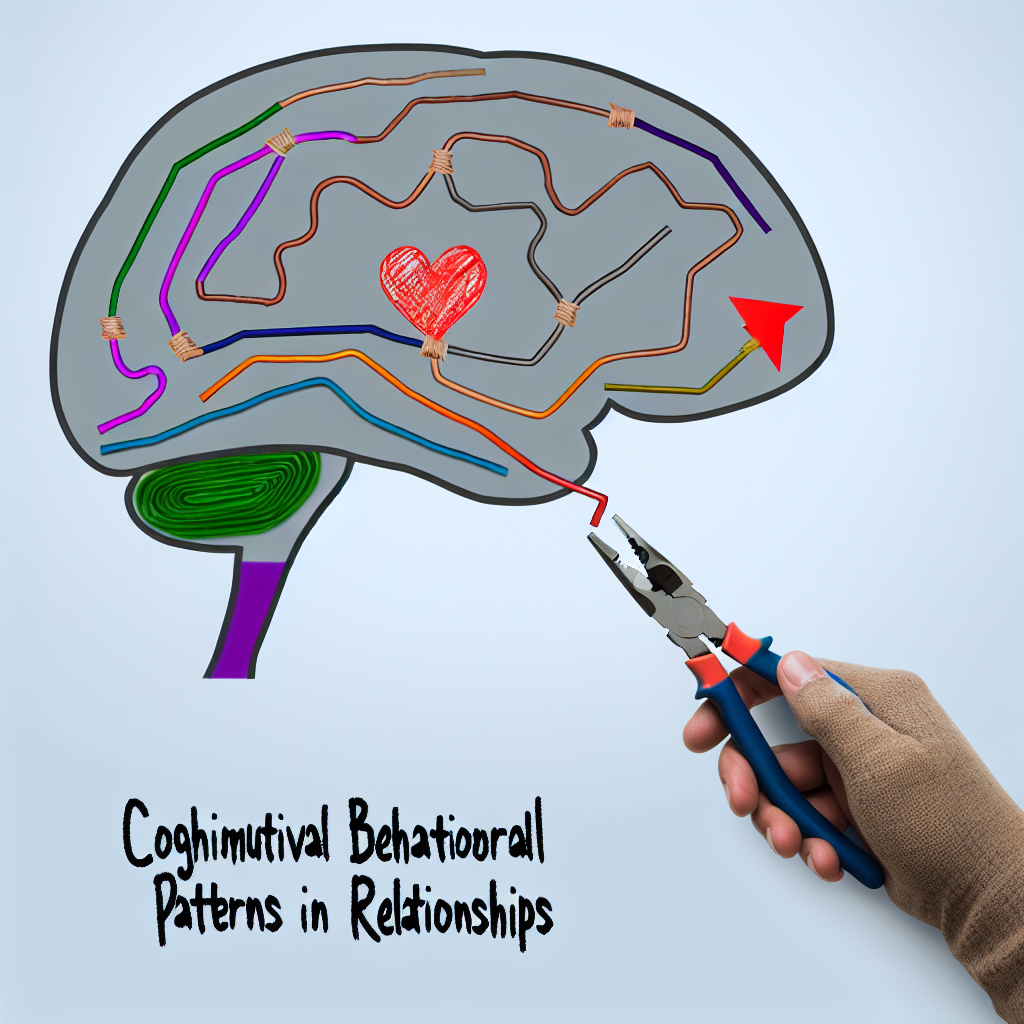
Repeating this technique over time strengthens new cognitive pathways. Neuroplasticity—the brain’s ability to change—means that better mental habits can reshape who and how you’re attracted to. Eventually, healthy attraction patterns become your new emotional default.
Conclusion
Breaking free from your destructive “type” isn’t about giving up on passion or settling. It’s about growing your understanding of what love should truly feel like—and taking control of your dating choices. With the tools of Cognitive Behavioral Therapy, evidence-backed strategies, and improved self-awareness, you can rewire your mind for love that feels safe, mutual, and fulfilling.
Whether you’re healing from heartbreak or starting fresh, your love story can evolve. Stop settling for emotional reruns—write a new, lasting chapter rooted in trust, respect, and emotional abundance.
Concise Summary
Many people unknowingly pursue romantic partners that reflect unhealthy early-life patterns. Using techniques from Cognitive Behavioral Therapy (CBT), this article guides readers through recognizing destructive attraction cycles, reframing negative beliefs, and forming more emotionally supportive relationships. Supported by studies in psychology and neuroscience, it emphasizes neuroplasticity—the brain’s ability to change—and offers practical tools like journaling, core values identification, and belief restructuring to help rewire your romantic “type” and foster long-term, fulfilling connections.
References
– American Psychological Association. (n.d.). Cognitive Behavioral Therapy.
HitchMe.com – Where connection meets insight.