The Authenticity Detector: How to Spot a Genuine, High-Value Profile Amidst the Curated Perfection of Dating Apps
Introduction
In an era dominated by dating apps and swipe culture, finding a truly authentic and high-value partner can feel like searching for a needle in a digital haystack. Platforms like Tinder, Bumble, Hinge, and others have revolutionized how we meet potential partners, expanding dating options beyond traditional norms. But with this digital convenience comes new challenges—primarily the overwhelming curation of profiles designed more to impress than to connect.
Today, curated perfection has become the norm. From filtered selfies to AI-generated enhancements and witty bios crafted with care, it’s increasingly difficult to distinguish between reality and performance. This problem spans across age groups—from Gen Z to Boomers—and presents a critical question: is there substance hidden behind the screen?
This obsession with digital “perfection” has birthed an ironic twist: some users invest more effort in building attractive profiles than in developing emotional maturity, good communication, or genuine relational capacity. As a result, the most emotionally available and relationship-ready individuals may not shine through in a space driven by optics rather than authenticity.
So how can you cut through the clutter? What signs suggest a profile is genuine? Which green flags indicate a sincere, high-value individual?
In this digital jungle, authenticity is the new dating currency. High-value doesn’t just mean high status or look-based appeal—it means integrity, emotional intelligence, empathy, and compatibility. Spotting these traits requires learning to read between the lines, decode subtleties, and prioritize substance over surface.
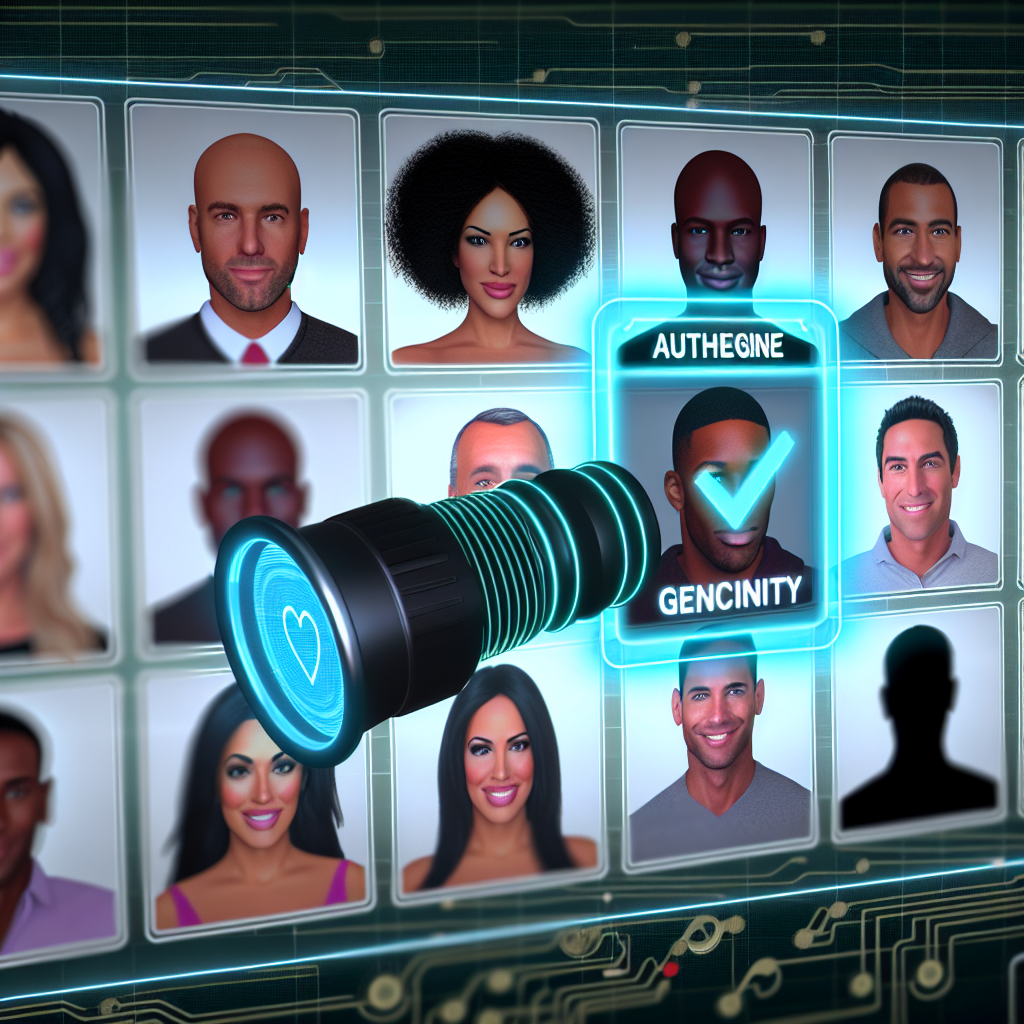
Backed by decades of psychological research, behavioral science, and modern matchmaking trends, you can develop an internal radar—an “authenticity detector.” Whether you’re newly single, a dating veteran, or re-entering the scene, this guide will help you navigate apps with renewed clarity and a better chance at finding meaningful love that lasts.
The Science Behind Authentic Connections
Scientific research consistently shows that authenticity is essential in forming meaningful relationships. A landmark study published in the journal Personality and Individual Differences found that individuals who scored high in authenticity—those who regularly behave in a manner that aligns with their core beliefs and values—tended to sustain deeper and more satisfying romantic connections. Authentic people are better at communicating openly, managing conflict compassionately, and building lasting trust ([Wood et al., 2008](https://www.sciencedirect.com/science/article/abs/pii/S0191886908000303)).
But while authenticity is easily understood in theory, recognizing it on dating profiles poses significant challenges. Psychologists from Stanford and UC observed that many users are overconfident in their ability to detect falsehoods in online profiles. In their [study](https://academic.oup.com/joc/article/62/1/78/4083008), they found people often fail to pick up on subtle linguistic cues that signal deception (Toma & Hancock, 2012). This means daters must be more educated and intentional in their efforts.
Further research emphasizes the value of emotional availability and secure attachment styles, which are the strongest predictors of relationship success. Evidence from the Journal of Social and Personal Relationships indicates these attributes contribute to healthier dynamics, resilience in conflict, and greater intimacy ([Feeney & Noller, 1990](https://psycnet.apa.org/record/1990-32179-001)).
So how can you identify these traits in an ocean of profiles?
- Consistency Across Profile Elements: Does the bio align with their photos? A person who says they love travel should have real travel photos, rather than just poses or studio-style glamour shots. Inconsistencies can indicate exaggeration or misrepresentation.
- Depth Over Decoration: Look for specific interests, values, and intentions in their bio. Generic phrases like “just living life” or “fun-loving” lack substance. Instead, seek profiles that reveal personality through details and storytelling.
- Engagement in Messaging: Once conversation begins, drastic shifts to surface topics, evasion of personal questions, or pre-scripted answers may indicate emotional unavailability. Paired with quick flattery or overly forward advances, this becomes a serious red flag.
- Self-Disclosure and “I” Statements: According to the Journal of Social and Clinical Psychology, individuals who use personal language and share vulnerabilities in conversation foster greater trust and emotional connection ([Sprecher & Hendrick, 2004](https://guilfordjournals.com/doi/10.1521/jscp.23.6.857.54803)). Look for those who use “I” over “you” and speak from experience rather than assumption.
Also, counterintuitively, a slightly awkward photo or a humorous confession can be green flags. These elements indicate a willingness to embrace imperfection—often a hallmark of true self-confidence. Rather than attempting to look flawless, authentic individuals demonstrate self-acceptance and emotional transparency.
In essence, authenticity is about congruence—the alignment of internal values with outward behavior. When someone’s messaging and presentation match up—and when they lead with depth over display—you’re far more likely to be interacting with a high-value individual.
Conclusion
In a digital dating world that often prizes appearances over authenticity, developing the ability to spot true connection is essential. High-value individuals shine through not by how flawless their photos are, but by how emotionally intelligent, open, and consistent they appear. With practice, psychological insight, and a refined lens for subtleties, you can navigate apps with confidence—filtering out the noise and zeroing in on what matters most: a real, meaningful connection. Your love life is worth nothing less than truth and transparency.
References
– Wood, A. M., Linley, P. A., Maltby, J., Baliousis, M., & Joseph, S. (2008). The authentic personality: A theoretical and empirical conceptualization and the development of the Authenticity Scale. Personality and Individual Differences. [Read here](https://www.sciencedirect.com/science/article/abs/pii/S0191886908000303)
– Toma, C. L., & Hancock, J. T. (2012). What Lies Beneath: The Linguistic Traces of Deception in Online Dating Profiles. Journal of Communication. [Read here](https://academic.oup.com/joc/article/62/1/78/4083008)
– Feeney, J. A., & Noller, P. (1990). Attachment style as a predictor of adult romantic relationships. Journal of Personality and Social Psychology. [Read here](https://psycnet.apa.org/record/1990-32179-001)
– Sprecher, S., & Hendrick, S. S. (2004). Self-disclosure in intimate relationships: Associations with individual and relationship characteristics over time. Journal of Social and Clinical Psychology. [Read here](https://guilfordjournals.com/doi/10.1521/jscp.23.6.857.54803)
Concise Summary
Dating apps have made connecting easier but filtering for authenticity harder. This guide explains how to identify a genuine, high-value profile amidst curated perfection. Based on behavioral science and psychological studies, key areas to evaluate include profile consistency, emotional availability, and depth of disclosure. Authentic individuals focus less on image and more on meaningful connections, often using specific language, showing imperfections, and presenting emotionally intelligent communication. By learning to detect these cues, users can improve success in online dating, fostering connections grounded in truth, empathy, and long-term potential. Authentic love starts with recognizing what’s real.

Dominic E. is a passionate filmmaker navigating the exciting intersection of art and science. By day, he delves into the complexities of the human body as a full-time medical writer, meticulously translating intricate medical concepts into accessible and engaging narratives. By night, he explores the boundless realm of cinematic storytelling, crafting narratives that evoke emotion and challenge perspectives. Film Student and Full-time Medical Writer for ContentVendor.com