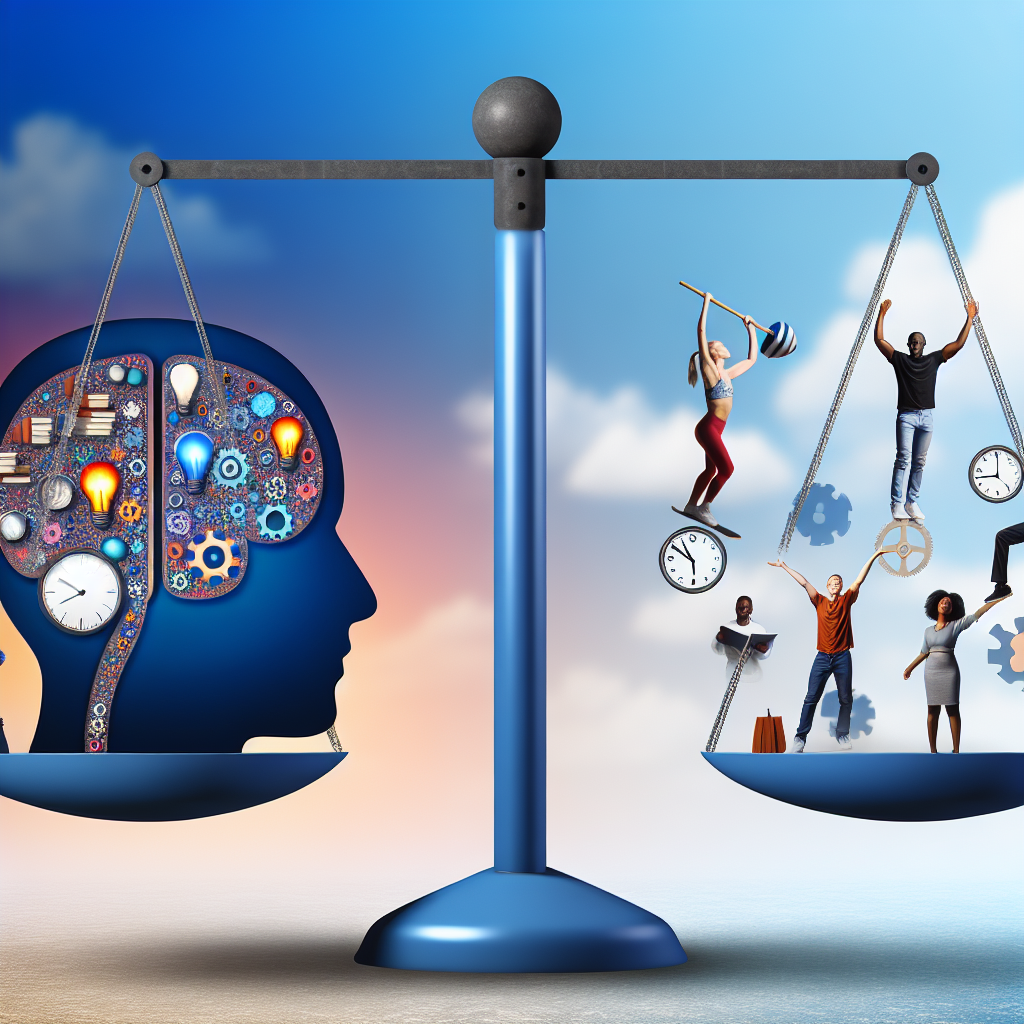
Cognitive Load Management for Relationship Building: How High-Achievers Can Optimize Their Energy for Meaningful Connections
In today’s fast-paced world, high-achievers are often celebrated for their productivity, efficiency, and ability to excel in their professional lives. However, this same drive can sometimes present challenges in personal relationships, particularly when it comes to forming and maintaining meaningful connections. For high-achievers, effectively managing cognitive load—the mental energy required to process information—is crucial to ensuring that their personal relationships are as fulfilling as their professional accomplishments.
Cognitive load refers to the total amount of mental effort being used in the working memory. When it is high, people can become mentally overwhelmed, which can adversely affect decision-making and interactions with others. For individuals prone to over-scheduling or multitasking, the constant demands can hinder their ability to connect authentically with a partner. This is why learning to manage cognitive load is essential for maintaining healthy relationships.
Understanding cognitive load and its impact on relationships first requires an appreciation for the balance between work and personal life. It’s easy for high-achievers to get caught up in their ambitions, often neglecting the personal aspects that require equal attention. Establishing boundaries and recognizing the need for mental space in personal interactions allows one to engage more earnestly and empathetically with others.
Introducing boundaries might mean setting explicit work hours or designated times for being present with family and friends. Moreover, in this era of digital connectivity, the challenge also lies in disconnecting from work-related digital interactions to foster real-world relationships. The aim is to shift from a focus on efficiency to cultivating the emotional intelligence needed for relationship building. Adding further, practicing mindfulness and engaging in activities that require minimal cognitive strain can help free mental space for more meaningful interpersonal interactions.
High-achievers can optimize their energy for meaningful connections by being mindful of where and how their cognitive resources are utilized. This requires deliberate practice of prioritizing personal time and reducing unnecessary mental burden. Achieving this equilibrium can greatly enhance one’s ability to engage in significant, rewarding relationships.
Features: Cognitive Load and Relationship Enrichment
Several professional and medical studies have explored the concept of cognitive load management and its relevance to interpersonal relationships. A study published in the journal *Frontiers in Psychology* examined the cognitive load theory and its implications for workplace productivity and personal life integration. The study highlighted that while cognitive load is integral to complex task completion, unmanaged cognitive demands can lead to stress and burnout, impacting personal relationships negatively. [Frontiers in Psychology](https://www.frontiersin.org/articles).
Moreover, research from the [University of California, Berkeley](https://greatergood.berkeley.edu) found that individuals with high cognitive load often face difficulties in situations that require emotional regulation, such as intimate relationships. The study revealed that emotional intelligence, such as active listening and empathy, is often compromised under high cognitive strain, affecting how individuals connect with their partners. The findings suggest that managing cognitive load can improve emotional functioning, thereby enhancing relationship satisfaction.
Additionally, a report in the *Journal of Social and Personal Relationships* underscores the importance of cognitive resource allocation in relationship building. This paper discusses how high cognitive demands can detract from one’s ability to engage consistently and genuinely with partners, asserting that a strategic allocation of mental energy is essential for relationship success. By being mindful of cognitive load, individuals can foster deeper, more authentic connections, contributing to long-term relationship stability. [Journal of Social and Personal Relationships](https://journals.sagepub.com/home/spr).
These studies collectively emphasize the role that cognitive load management plays in maintaining and enriching personal connections. Understanding and implementing strategies to optimize cognitive resources can empower high-achievers to form more lasting and meaningful relationships.
Conclusion
For high-achievers, managing cognitive load is not just beneficial for professional efficiency but is also vital for nurturing personal relationships. By recognizing the cognitive demands present in their lives and actively managing them, high-achievers can ensure they have the capacity to engage in fulfilling connections. Understanding the balance between work and personal life is essential; only then can they be truly available for meaningful interactions with their loved ones, leading to enriched relationships and a more balanced life.
Concise Summary
High-achievers must manage cognitive load to thrive both professionally and personally. Excessive cognitive demands can impair decision-making and emotional connection, vital for meaningful relationships. Research highlights that setting boundaries, disconnecting digitally, and prioritizing personal time can mitigate cognitive overload. By being deliberate about how cognitive resources are allocated, high-achievers can enhance relationship satisfaction. Emphasizing emotional intelligence, they can engage more authentically with loved ones, leading to fulfilling, balanced lives. Managing cognitive load is essential not only for efficiency in work but also for nurturing lasting personal connections.

Dominic E. is a passionate filmmaker navigating the exciting intersection of art and science. By day, he delves into the complexities of the human body as a full-time medical writer, meticulously translating intricate medical concepts into accessible and engaging narratives. By night, he explores the boundless realm of cinematic storytelling, crafting narratives that evoke emotion and challenge perspectives. Film Student and Full-time Medical Writer for ContentVendor.com