### Redefining Relationship Goals: Harnessing AI and Behavioral Science for Your Ultimate Love Strategy
Introduction
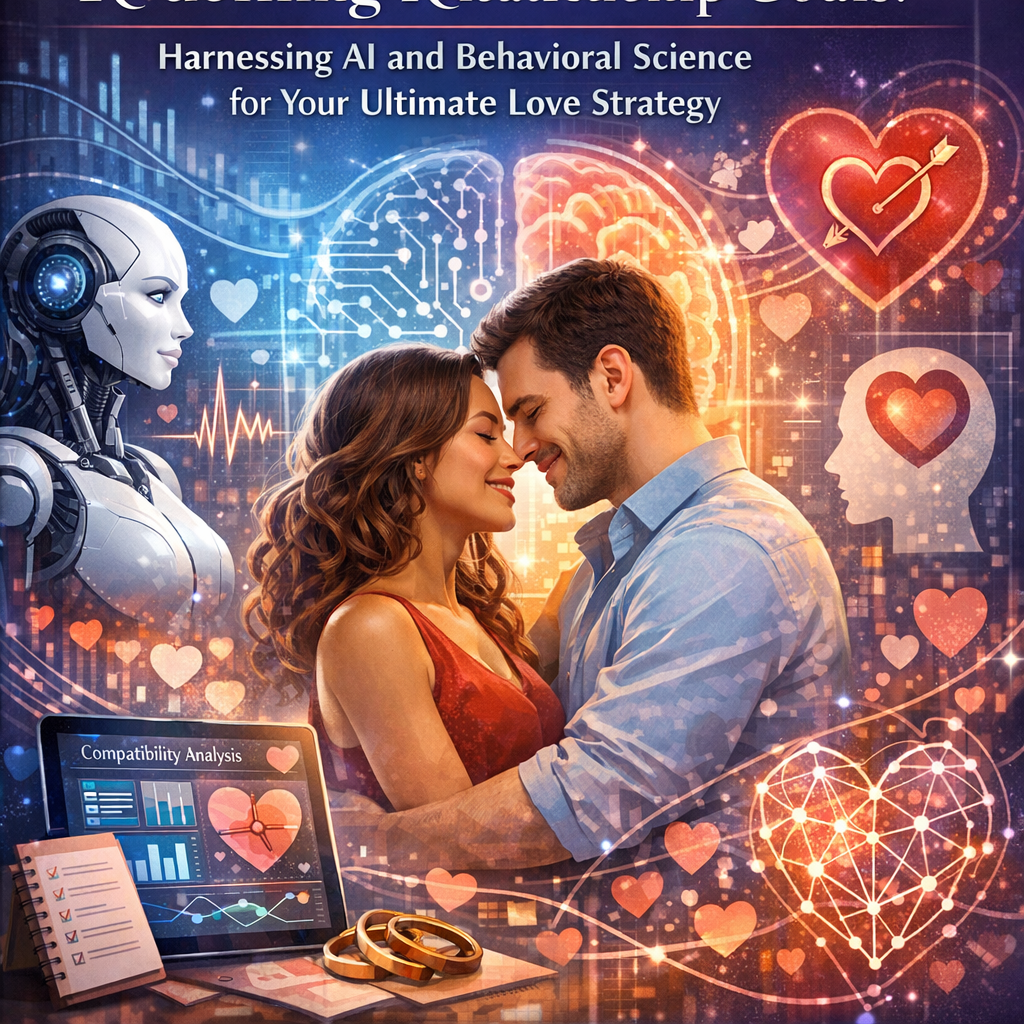
In the ever-evolving landscape of modern dating, singles from their early 20s to their late 80s are finding themselves navigating a world rich with technological advancement and scientific insight. Dating has transcended the traditional methods of meeting prospective partners through friends or social events. Today, the burgeoning fields of Artificial Intelligence (AI) and Behavioral Science are making it possible to devise a more personalized and effective love strategy.
AI, encompassing vast branches like machine learning and natural language processing, is effectively reshaping how couples meet and connect. Dating apps powered by AI are no longer matching based solely on location or superficial interests; they’re diving deeper into users’ personalities, values, and behaviors. With these technological advancements, individuals can refine their search criteria to align more closely with long-term compatibility indicators.
Behavioral science, on the other hand, explores the intricacies of human actions and thought processes, offering insights into how individuals form, maintain, and end relationships. By understanding behavioral patterns and psychological triggers, singles can adopt more informed strategies in their pursuit of a meaningful connection. It’s no longer just about ‘finding’ love; it’s about understanding what love means for you and how you’re conditioned to seek it.
As technology and science converge, redefining relationship goals becomes not only a possibility but a necessity. Tailoring love strategies that utilize both AI and behavioral science can help mitigate common dating challenges. For instance, AI makes it easier to bypass misleading profiles or misaligned expectations, while behavioral science can reduce the chance of falling into toxic relationship patterns. Thus, the integration of these fields provides a dual advantage: the precision of technology combined with the nuances of human psychology.
This article will delve into the substantial impact of AI and behavioral science on modern dating, shedding light on groundbreaking studies and offering practical advice on leveraging these tools for a fruitful romantic life.
### Features
Several professional and medical studies lend credence to the influence of AI and behavioral science in romantic relationships. A study published in the [*Journal of Social and Personal Relationships*](https://journals.sagepub.com/home/spr) found that algorithm-based dating apps, which utilize AI to match individuals, tend to create longer-lasting connections. The research highlighted that by examining users’ interactions and preferences, AI can predict compatibility with a remarkable degree of accuracy, thus facilitating more durable relationships.
In the realm of behavioral science, a paper from the [*International Association for Relationship Research*](https://www.iarr.org/) elaborated on how understanding attachment styles—secure, anxious, avoidant—can significantly impact one’s approach to relationships. The study suggests that individuals who understand their attachment style are more likely to select partners who match their emotional and psychological needs, therefore enhancing relationship satisfaction.
Furthermore, the integration of AI in behavioral interventions has shown promise in real-world applications. A pilot program conducted by [Stanford University](https://www.stanford.edu/) incorporated machine learning algorithms to provide personalized dating advice based on user data, such as communication styles and reaction patterns. Participants reported a higher satisfaction rate in their dating experiences following the advice tailored by AI analysis.
Additionally, a [World Economic Forum](https://www.weforum.org/) article emphasized the importance of digital empathy, an element AI can help foster by analyzing and learning from large datasets of interpersonal interactions. This novel capability allows for a nuanced understanding of emotional intelligence in digital communication, potentially reducing misunderstandings or miscommunications often found in online dating scenarios.
### Conclusion
As dating continues to evolve, integrating AI and behavioral science into our relationship strategies offers profound benefits. By harnessing the potential of these fields, singles across all age groups can redefine their relationship goals with precision and insight. While technology provides the tools, it is ultimately the human heart and mind that shape meaningful connections, promising a future where love is not only found but truly understood and cultivated.
Concise Summary:
Modern dating is being transformed by AI and behavioral science, providing personalized and effective love strategies. AI delves deeper into personalities and behaviors for better compatibility, while behavioral science helps understand human actions and thought processes, reducing unhealthy patterns. Studies demonstrate AI’s accuracy in predicting compatibility and behavioral science’s influence on attachment styles, improving relationship satisfaction. AI’s role in digital empathy and personalized dating advice is also highlighted. Ultimately, technology complements human intuition, helping individuals of all ages refine their relationship goals and cultivate meaningful connections.