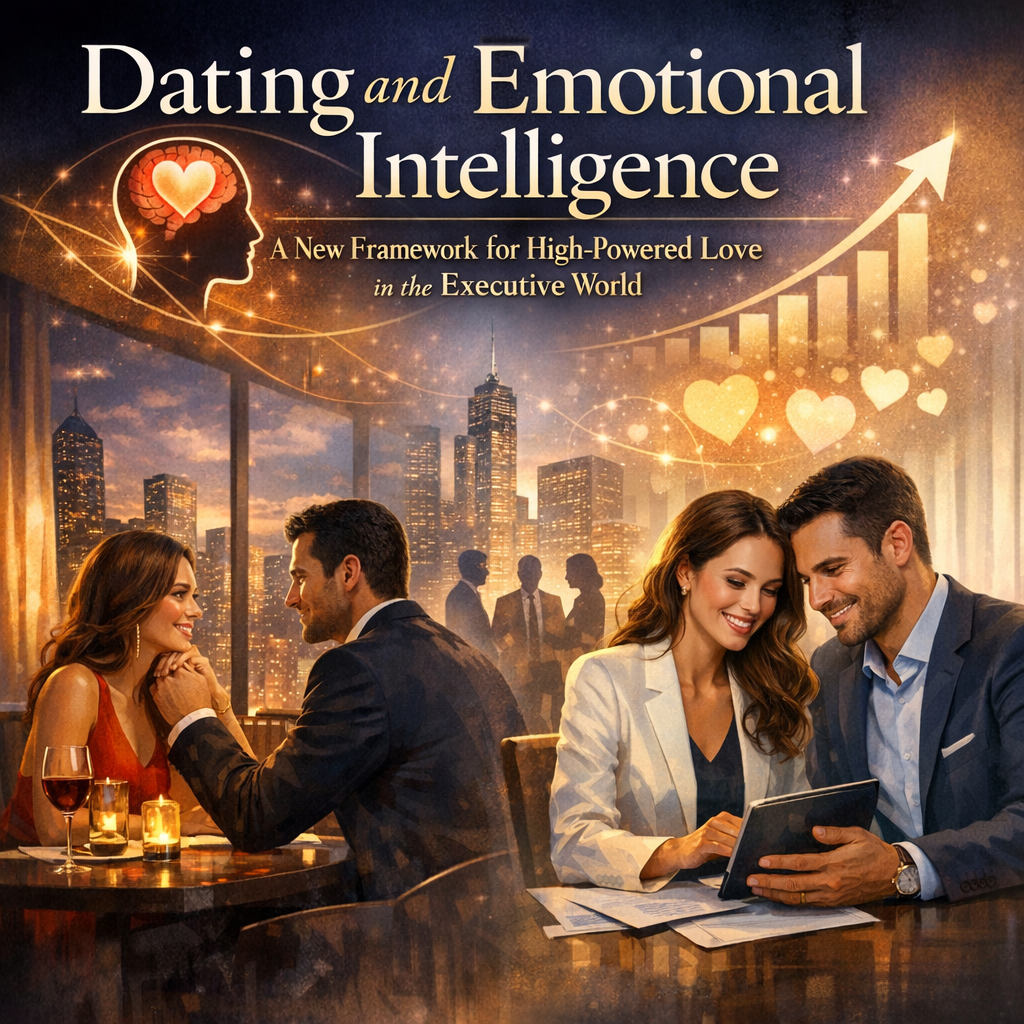
Dating and Emotional Intelligence: A New Framework for High-Powered Love in the Executive World
Introduction
In the fast-paced world of business, where executives navigate through a gauntlet of responsibilities and high-stakes decisions, finding time for personal connection can often seem daunting. However, integrating emotional intelligence (EI) into the dating framework offers a promising solution for high-powered individuals seeking meaningful relationships. Emotional intelligence, a blend of self-awareness, empathy, and social skills, is not just a catalyst for professional success but a key ingredient for personal happiness and fulfilling relationships.
The modern executive is inundated with challenges affecting both work and personal lives. With demanding schedules and the pressure to maintain peak performance, fostering intimate connections that thrive on emotional depth and understanding becomes increasingly difficult. Here, the concept of emotional intelligence transforms the dating landscape for executives—a group that can greatly benefit from honing these skills to enhance their love lives.
Understanding and leveraging emotional intelligence provides executives with the tools to navigate romantic relationships, much like they do boardroom negotiations. An emotionally intelligent individual is better equipped to manage stress, recognize both their and their partner’s emotions, and effectively communicate to build strong, lasting relationships. Integrating EI into dating is not just about softness or sensitivity, but about understanding and mastering the complex dynamics of human emotions to foster high-quality connections.
For singles from their 20s to their 80s, developing emotional intelligence can enhance not only personal relationships but also overall life satisfaction. As more professionals discover the power of EI, it’s clear this framework is invaluable for generating high-powered love in the corporate world. This new approach empowers individuals to better manage the intersection of their intense professional lives and personal desires, allowing them to cultivate deep, sustaining partnerships.
Features
Studies in psychology and emotional intelligence offer compelling evidence on how these skills influence personal and professional relationships. According to a study published in the journal “[Social and Personality Psychology Compass](https://onlinelibrary.wiley.com/journal/17519004),” emotional intelligence is a significant predictor of interpersonal sensitivity and social behavior. Individuals with higher levels of EI are better at reading emotional cues, responding empathetically, and maintaining healthier, more satisfying relationships.
Furthermore, research from the “[Journal of Career Assessment](https://journals.sagepub.com/home/jca)” supports that emotional intelligence contributes positively to leadership abilities, team effectiveness, and overall job performance. Executives who possess high emotional intelligence are often more effective in managing and interacting with others, skills directly transferable to dating. Emotional intelligence equips individuals with the ability to handle conflicts maturely and with greater understanding, leading to stronger romantic relationships.
Goleman’s research in his groundbreaking book, “[Emotional Intelligence: Why It Can Matter More Than IQ](https://www.danielgoleman.info/topics/emotional-intelligence/),” provides insights into the biology of emotions and their impact on personal connections. He argues that emotional intelligence is the strongest predictor of success in both professional and personal life, emphasizing that technical skills and cognitive intelligence (IQ) are important, but not sufficient, for personal fulfillment and effective relationship management.
Developing emotional intelligence involves honing key skills such as self-awareness, self-regulation, motivation, empathy, and social skills—aptitudes that empower executives to manage their own emotions and understand those of their partners. By applying these keen insights, executives can cultivate relationships that mirror the complexity and intensity of their professional endeavors, fostering a personal life as gratifying and successful as their careers.
Conclusion
Emotional intelligence is the cornerstone of meaningful connections, transforming how executives approach dating in today’s complex world. By integrating EI into their romantic lives, individuals can achieve harmonious balance between work and personal fulfillment. Engaging with emotional intelligence offers a new framework for dating, allowing high-powered professionals to forge deep, impactful relationships that complement their high-impact careers.
Concise Summary: In today’s corporate world, emotional intelligence (EI) is crucial for high-powered executives seeking meaningful relationships. By integrating EI—comprising empathy, self-awareness, and social skills—into dating, individuals can balance their demanding careers with fulfilling personal connections. Studies show that EI enhances interpersonal sensitivity and social behavior, contributing positively to leadership and relationship management. Goleman’s work underscores EI’s significance over IQ in personal success. Thus, developing EI helps executives build strong romantic relationships, offering a framework for harmonious, impactful partnerships alongside professional achievements.