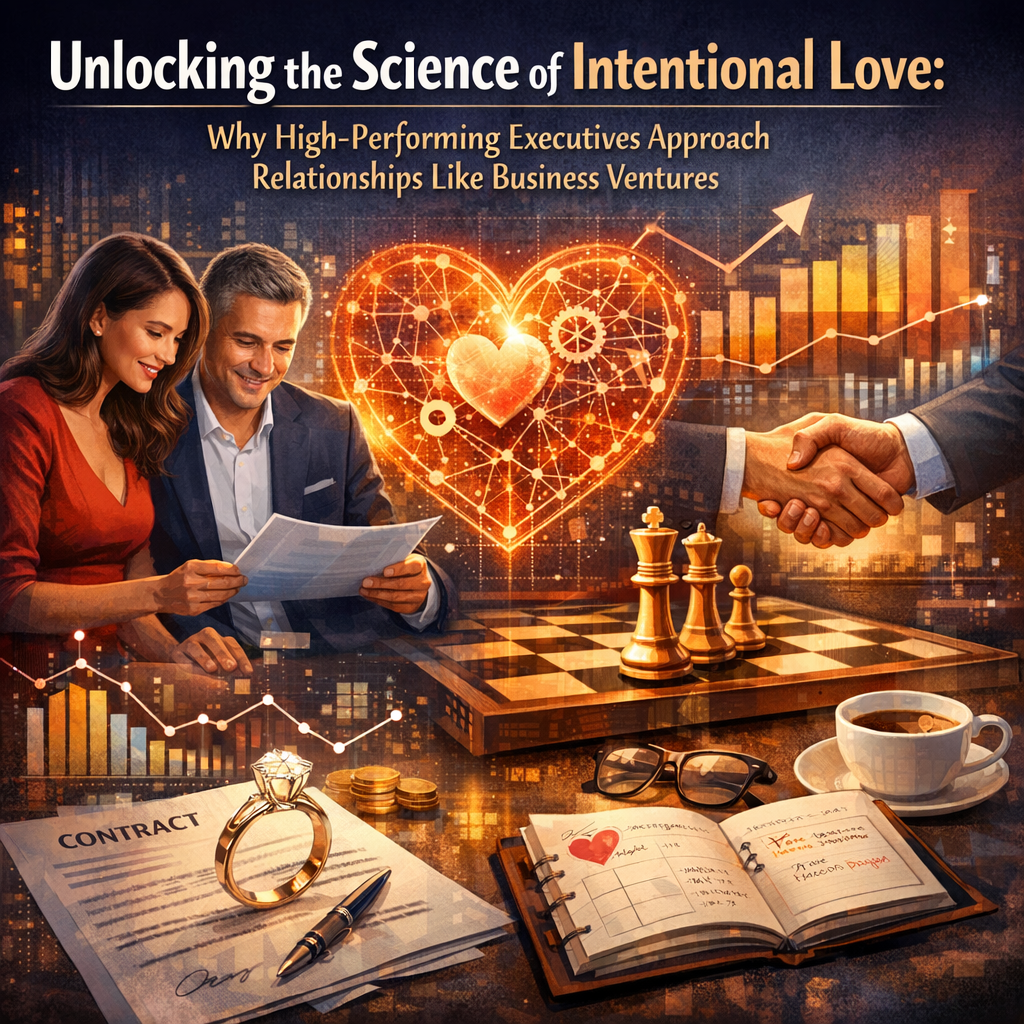
Unlocking the Science of Intentional Love: Why High-Performing Executives Approach Relationships Like Business Ventures
In the high-stakes world of corporate decision-making, successful executives thrive due to their ability to strategize, analyze, and execute plans. These skills, vital in boardroom negotiations, also extend into their personal lives, notably in romantic relationships. Many corporate leaders are leveraging their professional expertise to navigate the complexities of modern romance. This approach allows individuals to make informed decisions, prioritize emotional investments, and ultimately craft more fulfilling partnerships. By integrating the precision of business strategies, they combine rational decision-making with the emotional richness of love.
The concept of looking at relationships through a professional lens may initially appear transactional. However, this method, known as “intentional love,” is rooted in clear communication, well-defined goals, and a structured yet flexible approach to long-term partnership building. Intentional love shares a fundamental resemblance with business ventures where clarity, transparency, and accountability are paramount. By establishing shared goals and analyzing potential challenges, couples can create strong foundations built on mutual understanding and trust. This method ensures that both partners are aware of each other’s aspirations, leading to a deeper connection.
The advantages of this mindset are numerous. High-performing executives are skilled at planning strategically, taking calculated risks, and adapting to change—traits that lead to more resilient and dynamic relationships. Additionally, their ability to handle high-stress situations with calm and decisiveness translates into smoother conflict resolution with partners. Just like in the business world, where performance metrics and regular progress evaluations are critical, a relationship can also benefit from periodic assessments to ensure both partners are aligned on their path together. This alignment fosters growth and encourages couples to focus on their shared goals.
Underlying this intentional approach is a scientific understanding of human behavior. Executives applying business strategies to love lives often utilize studies from psychology and behavioral economics. These fields provide insights into human motivation, emotional intelligence, and relationship dynamics, offering a unique advantage in fostering a loving, supportive, and productive relationship environment. By embracing this methodology, high-performing professionals not only enhance the emotional aspect of a relationship with structure and purpose but also contribute to long-term fulfillment and satisfaction.
Features:
At the heart of approaching love like a business venture is the application of strategic thinking and decision-making. Studies in behavioral science support this approach, suggesting that intentionality can significantly impact relationship satisfaction. A study published in the Journal of Marriage and Family demonstrated that couples who set clear goals and communicated effectively reported higher relationship satisfaction [Source](https://onlinelibrary.wiley.com/journal/17413729).
The theory of emotional intelligence, popularized by psychologists like Daniel Goleman, is particularly relevant here. Emotional intelligence involves the ability to recognize, understand, and manage our own emotions and those of others. High emotional intelligence is frequently linked to better relationship outcomes. Executives who apply emotional intelligence in their interactions are often more adept at empathizing with partners, leading to deeper emotional connections and healthier, more fulfilling relationships [Source](https://www.sciencedirect.com/science/article/abs/pii/S0191886903000839).
Moreover, the integration of risk management principles commonly used in business can also be beneficial. According to research published in Psychological Science, understanding risk and managing it effectively in personal relationships can prevent misunderstandings and conflicts. This risk management perspective provides couples with tools to foresee potential challenges proactively [Source](https://journals.sagepub.com/home/pss).
Additionally, the concept of the growth mindset, highly regarded in the corporate world, can be extended to personal relationships. This mindset, detailed in Mindset: The New Psychology of Success by Carol S. Dweck, Ph.D., encourages individuals to view challenges as opportunities for growth rather than insurmountable obstacles. Couples who adopt this mindset are more likely to navigate obstacles constructively, leading to more enduring and evolving partnerships [Source](https://www.praeger.com/mindset-9780345472328).
Conclusion:
By applying business strategies to love, high-performing executives can build strong, enduring relationships. This approach emphasizes clear communication, emotional intelligence, adaptability, and growth—key components of successful partnerships. As the science of intentional love suggests, mixing business acumen with heartfelt emotion opens the door to more authentic and rewarding relationships, making love not just a journey of the heart, but a well-planned and well-nurtured venture.
Concise Summary:
High-performing executives, utilizing strategies from their professional lives, are increasingly applying these skills to their personal and romantic relationships. This “intentional love” approach emphasizes clear communication, shared goals, and a scientific understanding of human behavior, enhancing emotional connections without losing spontaneity. Executives leverage their abilities in strategic planning, risk management, and having a growth mindset to foster resilient, fulfilling partnerships. Therefore, instead of stripping love of its essence, this methodology integrates emotional intelligence with purposeful strategies, creating deeply rewarding and well-structured relationships.

Dominic E. is a passionate filmmaker navigating the exciting intersection of art and science. By day, he delves into the complexities of the human body as a full-time medical writer, meticulously translating intricate medical concepts into accessible and engaging narratives. By night, he explores the boundless realm of cinematic storytelling, crafting narratives that evoke emotion and challenge perspectives. Film Student and Full-time Medical Writer for ContentVendor.com