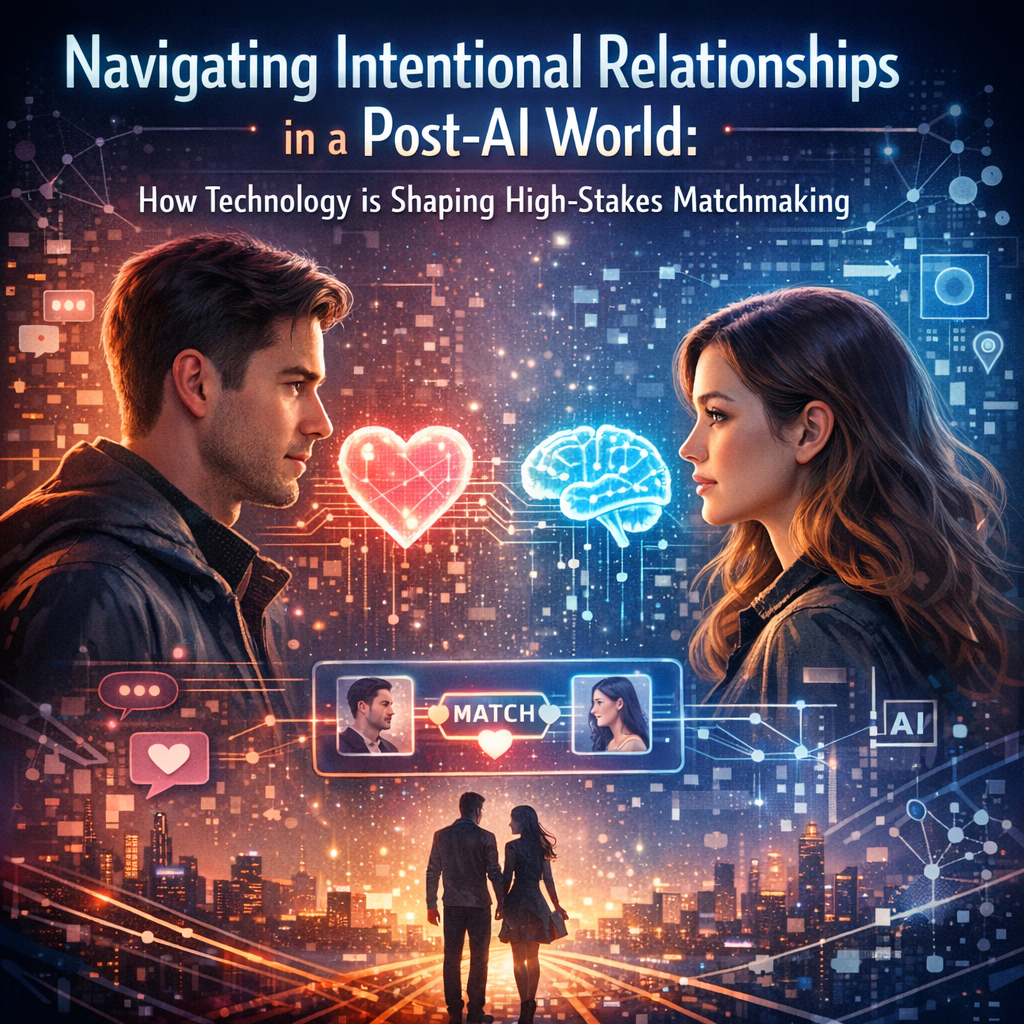
Navigating Intentional Relationships in a Post-AI World: How Technology is Shaping High-Stakes Matchmaking
Introduction:
In today’s rapidly evolving digital landscape, the way we find, assess, and commit to relationships is undergoing a seismic shift. With artificial intelligence (AI) at the forefront of technology, the realm of dating is no longer just a social endeavor but a technological marvel. No longer are singles limited to meeting potential partners within their immediate social circles or relying solely on serendipity. Instead, we’re witnessing the rise of intentional relationships facilitated by AI-driven platforms that are not only matching potential partners based on interests and preferences but are also learning from individual behaviors to suggest highly compatible matches.
This transformative effect of AI in dating is remarkably suited for navigating intentional relationships—those founded on clarity, purpose, and mutual objectives rather than mere convenience or chance encounters. As more singles across ages transition to using technologies for dating, AI is fostering high-stakes matchmaking by employing algorithms that analyze vast amounts of data, from personalities and values to past relationship patterns. Add to that the increasing use of machine learning, which continually refines its matching methods, ensuring that the recommendations it provides are not just based on stagnant profiles but are evolving alongside individual users.
Moreover, AI-integrated platforms like [HitchMe.com](https://hitchme.com) are going beyond superficial attributes and are emphasizing emotional intelligence and compatibility, which are pivotal in sustaining long-term relationships. They utilize advanced AI analytics to understand personal emotional cues and stress levels, guiding users to partners who have complementary emotional profiles. This sophisticated approach helps in reducing the overwhelming nature of online dating and increases the likelihood of forming meaningful connections that align with one’s life goals and values.
Features:
The integration of AI in online dating platforms has been the subject of numerous professional and scientific inquiries. Studies have shown that AI’s ability to analyze and learn from human interaction data can significantly improve the matchmaking process. According to a study published in the [Journal of Social and Personal Relationships](https://journals.sagepub.com/home/spr), machine learning algorithms can predict relationship longevity with a considerable degree of accuracy by analyzing communication patterns and engagement levels between partners.
Additionally, research from [Stanford University](https://stanford.edu/news/ai-partner-compatibility) highlighted how AI could identify compatible partners by analyzing not just user-provided data but also subconscious cues derived from users’ online interactions. This is particularly useful in gauging how two potential partners could navigate challenges, a critical aspect of high-stakes matchmaking. For instance, the study found that AI could identify signs of emotional compatibility by examining the sentiment and emotional tone used in interactions, aiding in predicting the potential success of a relationship.
Moreover, the adoption of AI-driven matchmaking facilitates inclusivity and diversity by breaking down geographical and cultural barriers that traditionally impeded diverse connections. A report by the [Pew Research Center](https://www.pewresearch.org/internet/fact-sheet/online-dating/) underscores that modern dating platforms, powered by AI, allow users to explore and connect beyond their immediate environments, increasing the pool of potential partners. This not only maximizes the chances of finding a match but also enriches cultural understanding and acceptance among singles worldwide.
While AI offers several benefits, it’s not without its ethical considerations. As these technologies permeate deeper into the personal aspects of life, questions around data privacy, emotional manipulation, and the inherent biases programmed into algorithms are legitimate concerns that users and developers need to address continuously. Ensuring transparency and fostering trust between users and platforms will be critical as we move forward in refining AI’s role in intentional matchmaking.
Conclusion:
In the post-AI world, technology is revolutionizing how we approach relationships, offering unprecedented precision in matchmaking and fostering intentional connections. AI is reshaping high-stakes matchmaking by focusing on compatibility and emotional intelligence, paving the way for meaningful, long-lasting relationships. As technology continues to evolve, it is essential for both users and creators to remain mindful of the ethical implications and work collaboratively to harness AI’s potential positively.
Summary:
AI is transforming the way relationships are formed by enabling intentional connections, focusing on emotional compatibility and mutual objectives. Through AI-driven platforms, singles can access a broader and more diverse pool of potential partners and refine matches based on evolving personal behaviors. Although AI offers enhanced precision in matchmaking, it raises ethical concerns such as data privacy and algorithmic biases. Ensuring transparency and trust is crucial as we continue integrating technology into dating, thereby reshaping our approach toward meaningful relationships.