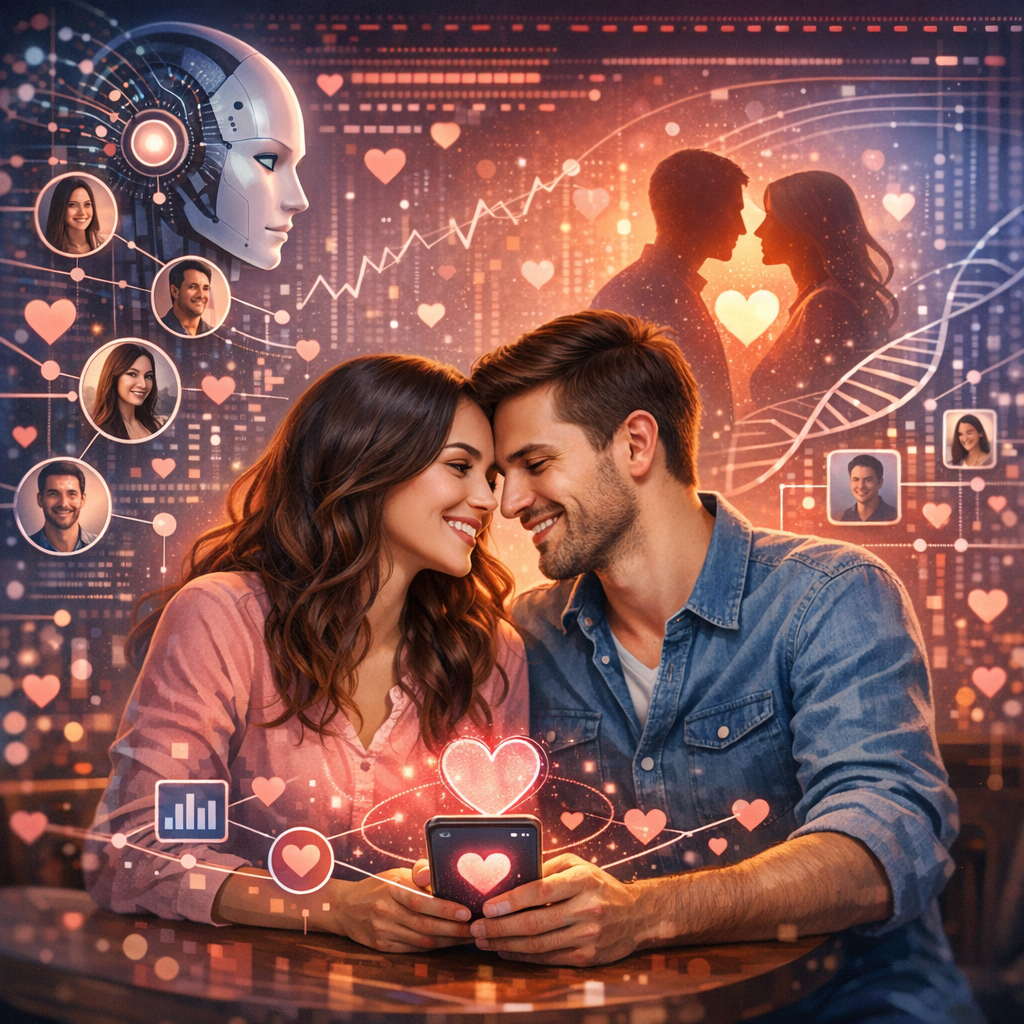
Algorithmic Love: How AI and Data Science Are Revolutionizing Modern Matchmaking for Intentional Relationships
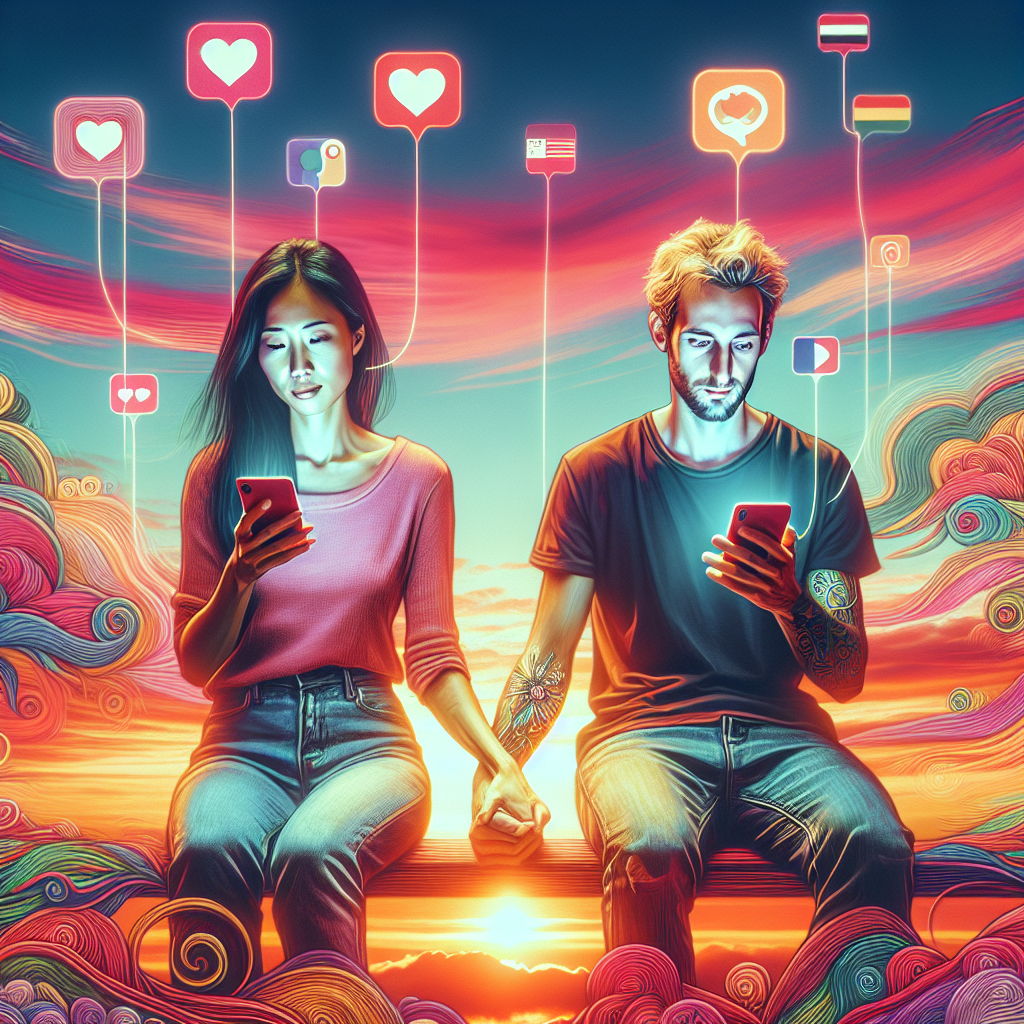
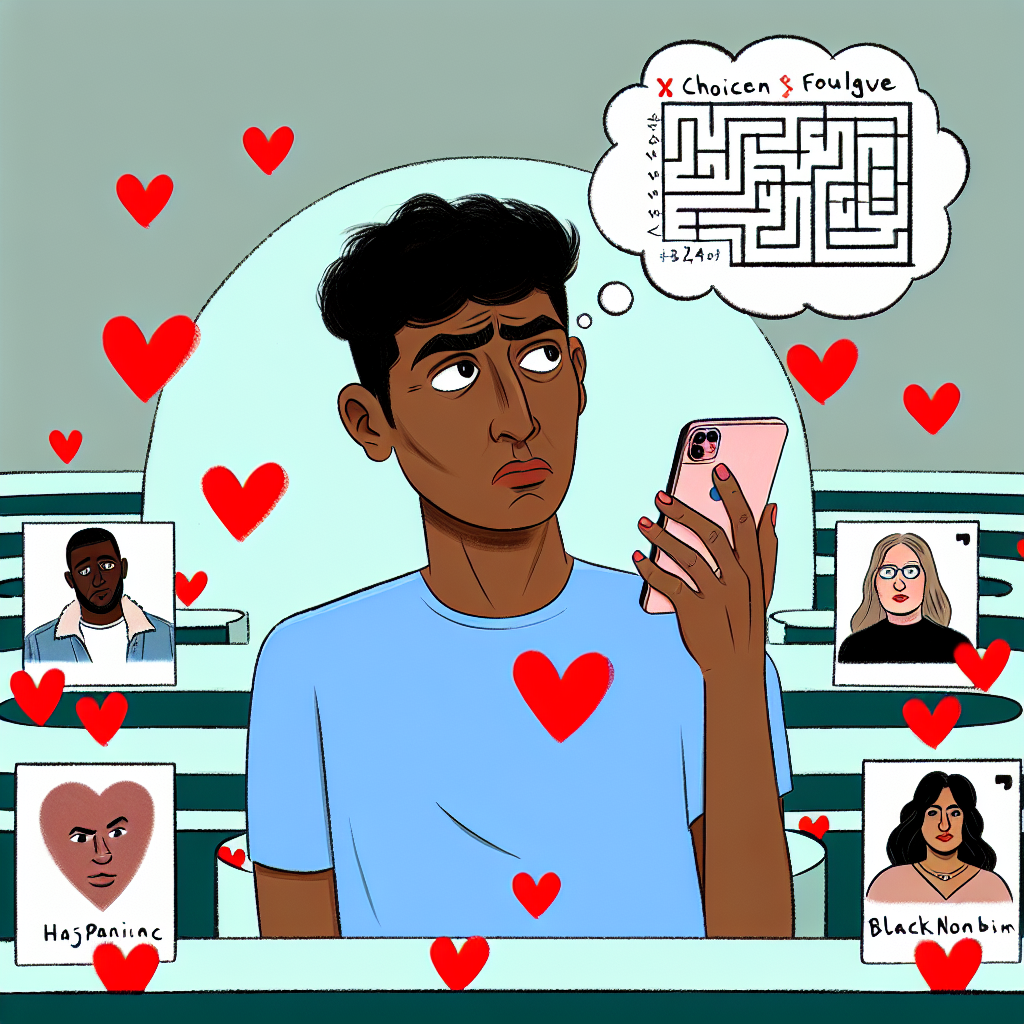
In an era defined by digital landscapes and technological leaps, the age-old quest for love and connection is experiencing a transformation as profound as it is promising. Online dating, once a novel concept, has now entered a stage where artificial intelligence (AI) and data science are critical drivers of innovation, shaping the future of matchmaking. The digital era has democratized the search for romantic partners, eliminating geographical constraints and exponentially expanding the dating pool. Yet, this abundance of choices can be overwhelming, leaving many singles feeling lost in an endless sea of options. This is where AI and data science come into play, refining the online dating experience by making it more efficient, personalized, and intentional.
At the heart of this transformation is the concept of algorithmic matchmaking. Platforms like Tinder, Bumble, and match.com have been pioneers in using algorithms to suggest potential matches. With the advent of AI, these platforms have evolved to not only process user data but to learn from it, recognizing patterns and preferences at an intricate level. AI-driven matchmaking systems analyze vast amounts of data—from user interactions and preferences to even linguistic nuances in communication—to create a comprehensive understanding of what users desire in a potential partner. This sophisticated use of data science allows for a more precise matching process, shifting the focus from superficial characteristics to deeper compatibility.
Moreover, AI’s ability to process and learn from data in real-time enhances user experiences by providing personalized interactions. It can suggest matches unique to individual tastes, adapting quickly to changes over time. This dynamic adaptability ensures that users are not just randomly paired based on mere proximity or a few selected interests, but are matched on deeper, more meaningful levels that align with personal values and long-term relationship goals. By embracing technology, singles from all age groups, spanning from 18 to their 80s, can cultivate relationships that are thoughtful, fulfilling, and intentional.
Features
Scientific studies and professional insights validate the transformative potential of AI and data science in the realm of matchmaking. A notable study conducted by [Stanford University](https://news.stanford.edu/2019/07/10/online-dating-marriage/) and the University of New Mexico examined the effectiveness of online dating algorithms and found that couples who met online had lower rates of breakups compared to relationships formed offline. This suggests that algorithmic matchmaking could be more effective in pairing compatible couples.
Moreover, research carried out by the [Pew Research Center](https://www.pewresearch.org/fact-tank/2020/02/06/5-facts-about-online-dating/) highlights how digital platforms are fostering diverse connectivity. According to their findings, a significant majority of online daters feel that these platforms have expanded their dating opportunities, providing access to a broader array of potential partners. This democratization of choices allows for more inclusive and intentional relationships, as individuals are not restricted by social circles or geographical barriers.
Medical professionals have also begun to explore the psychological impact of algorithmic matchmaking. A study published in the [Journal of Social and Personal Relationships](https://journals.sagepub.com/doi/abs/10.1177/0265407517739190) examined how algorithm-based recommendations affect self-esteem and relationship satisfaction. The findings suggested that the validation received from a well-matched pair boosts confidence and encourages more genuine, long-lasting connections.
AI-driven matchmaking platforms, such as those incorporating machine learning algorithms, can continuously update and refine their matching criteria based on user feedback and behavior, thereby enhancing relationship outcomes. This scientific backing offers a promising perspective on the future of digital dating, suggesting that AI could play a crucial role in fostering connections that are not only intentional but also deeply harmonious.
Conclusion
As we immerse ourselves further into the digital age, AI and data science stand as pivotal forces in reshaping the landscape of romantic matchmaking. They provide a bridge connecting personal desires with technological capabilities, promoting an era where intentional, meaningful relationships are more attainable than ever. By highlighting compatibility through comprehensive data analysis, these technologies illuminate the path towards finding enduring love in today’s fast-paced world.
Summary
The integration of AI and data science transforms modern matchmaking by offering personalized, intentional connections through platforms like Tinder and Bumble. By analyzing vast data, AI enhances match precision, focusing on deep compatibility over superficial traits. Studies from [Stanford University](https://news.stanford.edu/2019/07/10/online-dating-marriage/) and the [Pew Research Center](https://www.pewresearch.org/fact-tank/2020/02/06/5-facts-about-online-dating/) validate the effectiveness and inclusivity of online dating. Emphasizing compatibility, these technologies present a promising shift towards fulfilling, long-term relationships in the digital age, emphasizing thoughtful connections across diverse demographics.