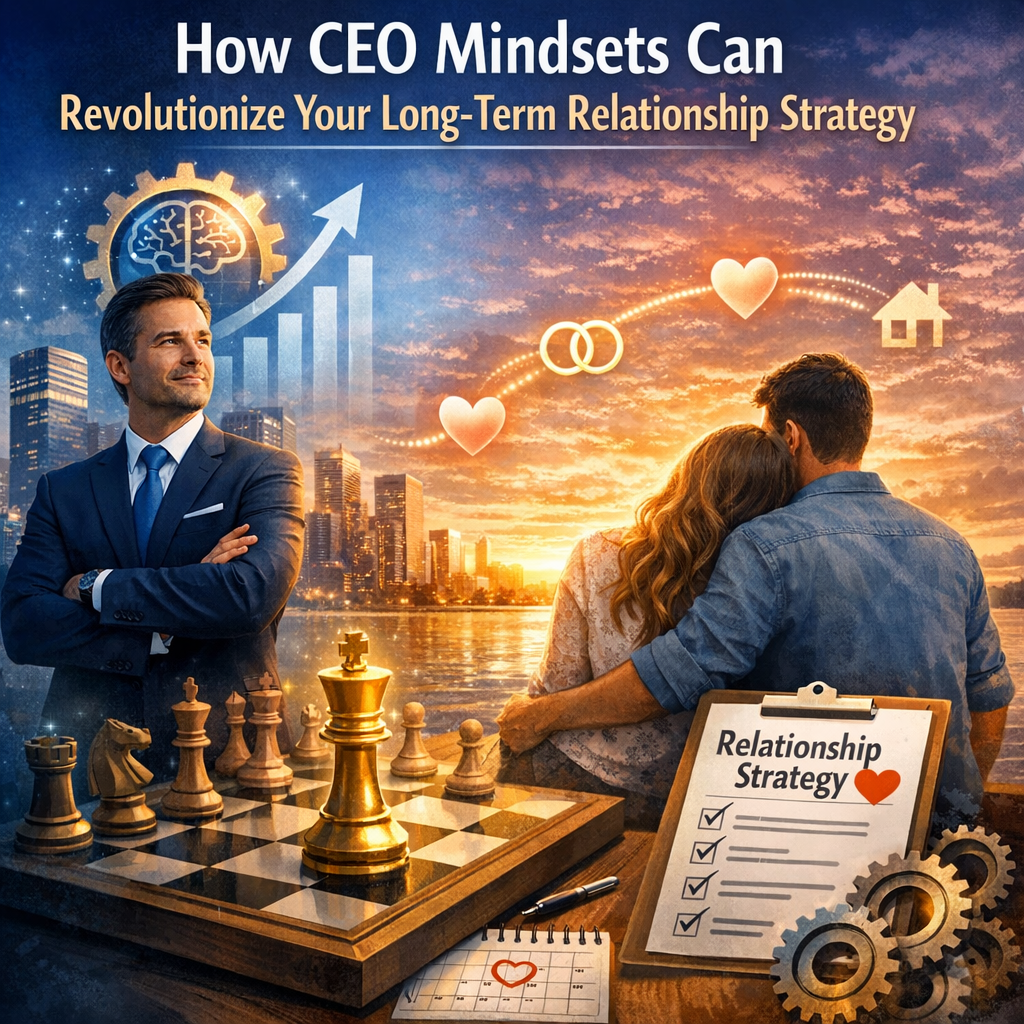
How Behavioral Economics Can Hack Your Love Life: Strategic Decision-Making for Lasting Relationships
In the age of swipes and likes, dating might appear at first glance to be a straightforward pursuit driven purely by emotions and attraction. However, beneath the surface lies a complex interplay of decisions, behaviors, and strategies that impact our search for love. That’s where behavioral economics—a field that combines insights from psychology and economics to understand how people make decisions—comes into play. For singles from ages 18 to 80, understanding the principles of behavioral economics can be a game-changer when it comes to forming lasting and meaningful relationships.
Behavioral economics suggests that our choices in the dating world aren’t as rational as we’d like to think. Instead, they’re often influenced by biases, heuristics (mental shortcuts), and other psychological factors. Imagine trying to choose the perfect date spot from an overwhelming list of options. You might fall prey to the ”paradox of choice,” where having too many options actually leads to less satisfaction and more indecision. By recognizing this bias, you can streamline your decision-making process and enhance your dating experiences.
One powerful concept in behavioral economics is ”loss aversion,” where people fear losses more than they enjoy gains. In dating, this can explain why someone might stay in an unsatisfying relationship simply because the idea of being single is perceived as a loss. On the flip side, understanding loss aversion can also help recognize moments where past negative experiences color the potential of new, positive relationships.
”Anchoring” is another relevant principle. It’s the tendency to rely heavily on an initial piece of information (the “anchor”) when making decisions. If your last relationship ended poorly because your partner was emotionally unavailable, you might automatically anchor this trait as a red flag, possibly overlooking other important qualities in a new partner. By becoming aware of these cognitive biases, you can make more informed, strategic decisions about whom to date and how to nurture your relationships.
Ultimately, employing strategies from behavioral economics can provide valuable guidance in everything from navigating first dates to fostering long-term partnerships. By blending emotional intelligence with decision-making heuristics, singles of all ages can better navigate the complex landscape of modern dating, building connections that are fulfilling and sustainable.
Features:
Numerous professional and academic studies have delved into the intersection of behavioral economics and relationship dynamics, offering a treasure trove of insights. A key study by Dan Ariely, a prominent figure in behavioral economics, examined the effects of cognitive biases on romantic decision-making. His research found that we often let irrational fears and misjudgments influence whom we choose to date and how we handle subsequent relationship challenges. This highlights the role of behavioral economics in identifying and overcoming these pitfalls.
Another study, published in the [Journal of Economic Behavior and Organization](https://www.sciencedirect.com/science/article/pii/S0167268117301798), explored the ”sunk cost fallacy” in relationships. This bias occurs when individuals continue investing in a relationship due to past investments (time, emotions, resources) despite current dissatisfaction. Understanding this can empower singles to make decisions that align more closely with their future happiness, rather than clinging to unproductive partnerships out of a false sense of obligation.
Additionally, the work of Nobel laureate Richard Thaler has implications for dating. His book, [*Nudge: Improving Decisions About Health, Wealth, and Happiness*](https://www.nudgebook.com/), discusses how subtle changes in choice architecture can significantly influence decision-making processes. Applying these principles, singles can modify their dating profiles or communication styles to attract partners who align with their relationship goals, thus “nudging” themselves toward healthier interactions and improved matching outcomes.
Furthermore, a study from the [Behavioral Scientist](https://behavioralscientist.org/dating-apps-are-using-behavioral-economics-to-redesign-romance/) journal focused on ”choice architecture” in dating apps. The findings suggested that altering defaults or the order in which options are presented can dramatically impact dating decisions. By being mindful of how choices are framed, individuals can better manage their expectations and avoid biases that might lead them astray.
These studies collectively emphasize the profound impact behavioral economics has on romantic relationships. By harnessing these insights, singles can refine their dating strategies, leading to more informed decisions and increased satisfaction in their love lives.
Conclusion:
Incorporating behavioral economics into your dating life doesn’t mean you have to strip away the romance or spontaneity of relationships. Instead, it offers valuable tools for making more strategic, informed decisions that enhance your quest for lasting love. By understanding cognitive biases and employing choice architectures, singles from 18 to 80 can transform how they approach dating, building connections that are both emotionally and intellectually fulfilling.
Concise Summary:
Incorporating behavioral economics into your love life offers strategic insights to navigate dating more effectively. The field reveals how biases and heuristics influence romantic choices, explaining phenomena like the ”paradox of choice,” ”loss aversion,” and ”anchoring.” Key studies, including those by Dan Ariely and Richard Thaler, show the impact of biases on romantic decisions and how subtle changes can improve outcomes. By understanding and applying these principles, singles can make more informed decisions, fostering more meaningful, fulfilling relationships.