Redefining Compatibility: The Science of Cognitive Diversity in Long-Term Relationships
In the ever-evolving landscape of romantic relationships, traditional ideas of compatibility are being challenged by insights into cognitive diversity. While common wisdom has long suggested that compatibility in relationships depends largely on shared interests and similar backgrounds, recent studies suggest that cognitive diversity may play a more significant role in the success of long-term partnerships.
Cognitive Diversity in Relationships
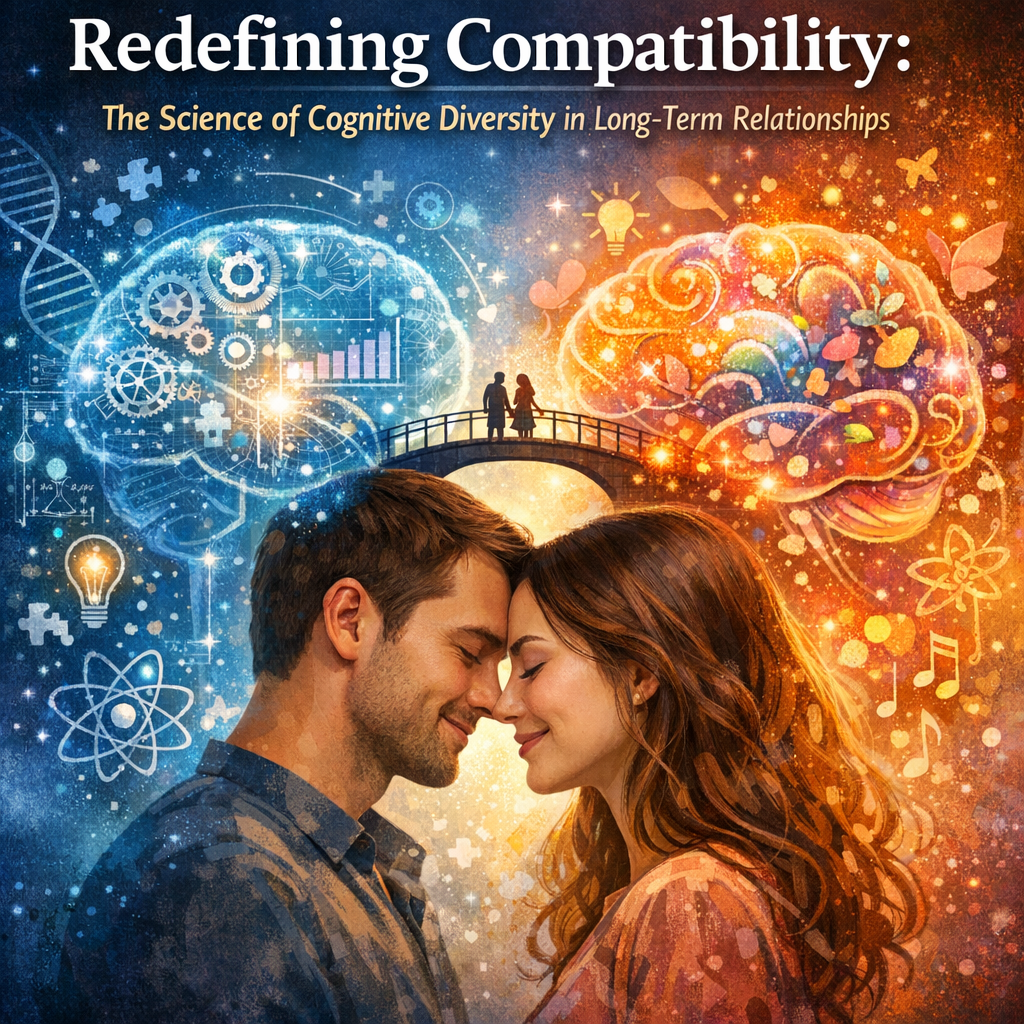
Cognitive diversity refers to the variety of thought processes, knowledge, perspectives, and problem-solving abilities that individuals bring into a relationship. This aspect of compatibility is not limited to intellectual prowess; it encompasses a broad spectrum of cognitive styles shaped by cultural, educational, and personal experiences. Essentially, cognitive diversity is about how people think rather than what they think.
The significance of cognitive diversity in romantic relationships becomes particularly important as couples navigate complex life events and challenges. When partners bring diverse perspectives and cognitive approaches to problem-solving, they are more likely to derive well-rounded solutions to issues. Unique cognitive styles can spark creativity, foster deeper understanding, and strengthen the bond between partners by valuing each other’s differences. This blend of different thought processes requires excellent communication skills, openness to learning, and the ability to appreciate and celebrate cognitive diversity.
For singles between 18 to 80, understanding the value of cognitive diversity in relationships can be a game-changer. Embracing cognitive differences not only enriches personal lives but also offers the potential to cultivate relationships that are more resilient, dynamic, and fulfilling. Although the initial appeal of a partner may stem from common interests or physical attraction, recognizing and valuing cognitive diversity can lead to sustained harmony and growth over time. As society progresses, redefining compatibility in the realm of love and relationships, focusing on cognitive diversity is a promising path forward for those seeking enduring connections.
Research and Insights
In exploring the role of cognitive diversity in long-term relationships, various studies highlight its positive impacts. A notable study conducted by researchers at [Princeton University](https://www.princeton.edu) found that working in cognitively diverse teams leads to enhanced problem-solving and creativity. Though this research predominantly focuses on workplace environments, its principles can be effectively applied to personal relationships.
Another pertinent study published in the [*Journal of Personality and Social Psychology*](https://www.apa.org) delves into the dynamics of diverse cognitive processing in relationships. It emphasizes how cognitively diverse couples often experience a strengthened relationship quality due to increased empathy and better communication.
Furthermore, research from the [Gottman Institute](https://www.gottman.com) underscores the importance of appreciating different cognitive styles in the success of long-term relationships. Their studies show that couples who embrace and nurture cognitive diversity tend to have more resilient relationships during times of stress and change.
In practice, cognitive diversity might manifest in scenarios where partners approach financial management differently—one might be a meticulous planner, while the other is more spontaneous. While these differences can initially cause friction, they can eventually lead to a balanced financial strategy by combining caution with flexibility. Similarly, in decision-making, a methodical partner paired with an intuitive thinker can result in more balanced outcomes.
The correlation between cognitive diversity and relationship satisfaction is not merely psychological but also neurological. Studies suggest that diversity in thought can stimulate neural plasticity, enhancing the brain’s ability to adapt and grow through new experiences [source](https://www.ncbi.nlm.nih.gov).
As empirical evidence continues to support the advantages of cognitive diversity, traditional perceptions of compatibility are being reshaped to accommodate a broader, richer understanding of what constitutes a successful relationship. In essence, compatibility in contemporary relationships might be less about mirroring each other and more about complementing each other’s cognitive landscapes.
Conclusion
As we redefine compatibility for modern relationships, embracing cognitive diversity emerges as a compelling factor for long-term success. By acknowledging and celebrating diverse cognitive styles, couples can foster deeper connections and navigate life’s complexities with resilience. For singles seeking meaningful relationships, prioritizing cognitive diversity opens doors to a dynamic and thriving partnership.
References
1. [Princeton University](https://www.princeton.edu)
2. [Journal of Personality and Social Psychology](https://www.apa.org)
3. [Gottman Institute](https://www.gottman.com)
4. [National Center for Biotechnology Information](https://www.ncbi.nlm.nih.gov)
Concise Summary:
Cognitive diversity, the variety of thought processes within romantic relationships, plays a crucial role in long-term success by enhancing problem-solving, empathy, and adaptability. Unlike traditional compatibility focused on shared interests, it values diverse cognitive styles shaped by experiences. Studies, including those from Princeton and the Gottman Institute, highlight its benefits, such as creativity and resilience. Embracing cognitive diversity can lead to more fulfilling partnerships and redefine relationship success in modern society by focusing on complementing, rather than mirroring, cognitive landscapes.