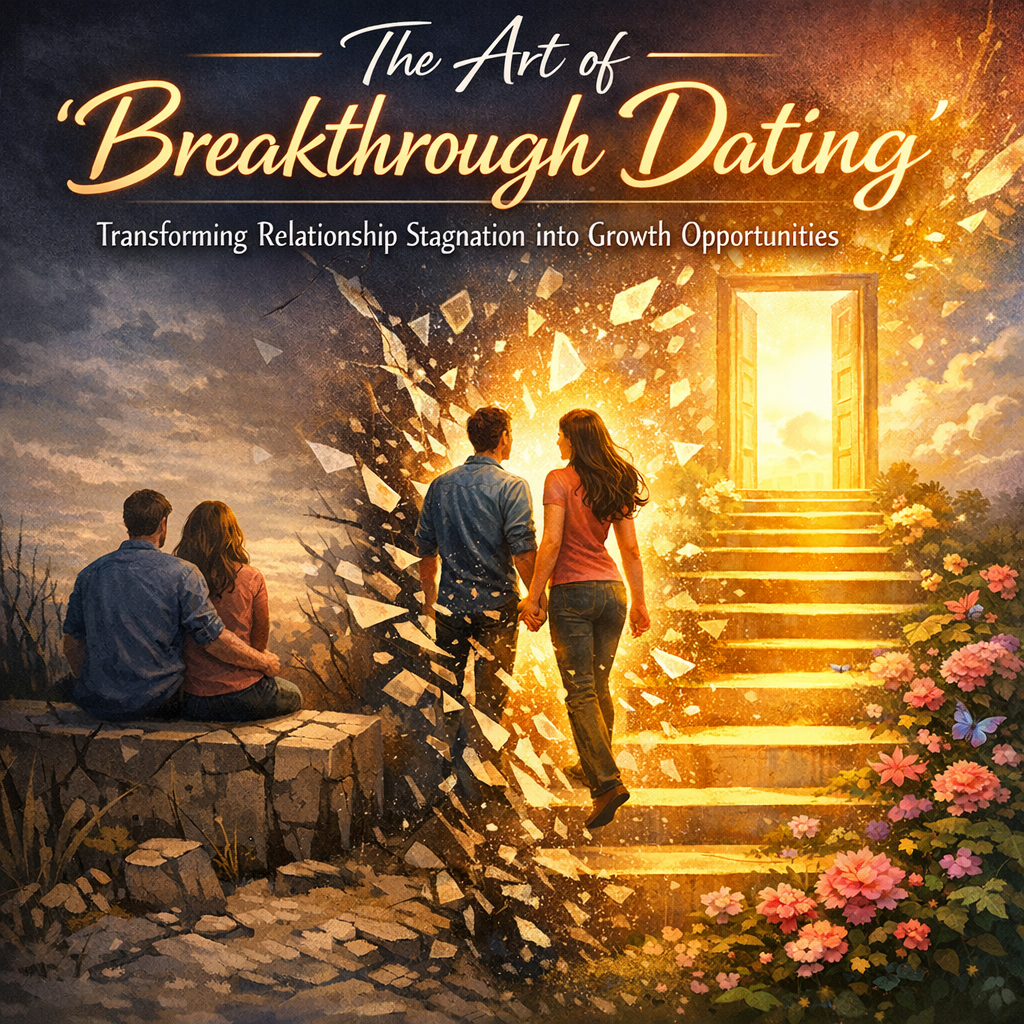
The Art of ‘Breakthrough Dating: Transforming Relationship Stagnation into Growth Opportunities
Building a meaningful and fulfilling romantic partnership can be a transformative journey at any age. Often, however, couples find themselves caught in a phase of relationship stagnation—a rut where routines override romance, and communication stalls out. This stagnation affects not just those in long-term relationships but also new couples or even singles trapped by a cycle of unfulfilling dating endeavors. Recognizing stagnation as a pivotal moment rather than a path to decline is a vital first step toward revitalizing or rekindling those sparks that lead to growth and deeper intimacy.
Stagnation can occur for various reasons: busy life schedules, lack of communication, unmet needs, or even unaddressed personal growth issues. The art of breakthrough dating is about navigating these patterns, turning obstacles into opportunities, and viewing stagnation not as a relationship pitfall but as a platform for potential expansion. It’s about shifting the mindset from settling or enduring to exploring and evolving.
Manifesting breakthrough moments requires awareness, willingness, and, often, outside support—be it from friends, relationship coaches, or therapists. According to [Psychology Today](https://www.psychologytoday.com/us/blog/the-heart-matters/201905/relationship-stagnation-a-different-kind-of-journey), stagnation is commonly perceived as boredom or fatigue in relationships, but it is also a sign that something new is waiting to be discovered or explored. This phase can be transformed into an opportunity for growth if approached with both partners embracing curiosity, innovative thinking, and mutual effort to evolve together.
Recent studies have shown that communication and mutual goal setting are crucial elements to break through this kind of relational pause. These studies highlight the importance of recognizing underlying issues, such as unmet emotional needs or mismatched expectations, and encourage couples to engage with evidence-based strategies like active listening or relationship workshops. By fostering environments where each partner feels heard and valued, the stagnation phase becomes less about what isn’t working and more about what could work, advancing relationship dynamics.
Features: Transformative Strategies and Insights
Numerous professional and academic studies underline the transformative power of targeted interventions in relationships experiencing stagnation. For instance, research published in the [Journal of Marriage and Family](https://onlinelibrary.wiley.com/journal/17413737) highlights how couples who engage in guided relationship-building exercises can accrue lasting benefits, including heightened empathy, improved communication skills, and increased relationship satisfaction.
Dr. John Gottman, a prominent researcher in relationship psychology, discovered that couples who dedicate time to ‘reignite the flame’ by exploring new interests together or redefining relationship goals often evolve past stagnation with a stronger bond. His recommendations suggest periodic “relationship check-ins” where partners openly discuss their relationship dynamics, hopes, and aspirations. By prioritizing these discussions, latent issues surface more organically, allowing partners to address them constructively ([Gottman Institute](https://www.gottman.com/blog/)).
Another significant contributor, Dr. Sue Johnson, developed Emotionally Focused Therapy (EFT), which is shown to enhance emotional understanding and secure bonds in romantic partnerships. Her work suggests that by delving into the emotional layers of their relationship, couples can better understand and articulate their emotional responses, paving the way for empathetic and supportive interactions that help break cycles of stagnation ([Sue Johnson EFT](https://iceeft.com/what-is-eft/)).
On the medical front, the American Psychological Association (APA) has published guidelines emphasizing the importance of mental health maintenance for individuals in relationships. Stress and mental health issues can often spill over into relationships, causing unintended stagnation. The APA advocates for self-care and mindfulness practices as means to empower individuals. Such practices provide the mental clarity needed to recognize and step beyond the limiting patterns of stagnancy ([APA](https://www.apa.org/topics/relationships/family-couples)).
By integrating these insights into everyday interactions, singles and couples can transform relationship stagnation into opportunities for personal and joint growth, thus redefining their relationship trajectories toward more fulfilling outcomes.
Conclusion
The art of breakthrough dating is both a challenge and a triumph. Recognizing relationship stagnation as a period ripe with potential rather than a dead-end requires commitment and introspection. By engaging innovative communication strategies, leveraging proven methods from relationship experts, and fostering an environment of ongoing personal development and open dialogue, singles and couples can transform these moments into meaningful growth opportunities. Embracing change with intention and mutual support can lead to deeper, more satisfying connections that defy the limitations of stagnation.
Concise Summary:
The art of breakthrough dating involves recognizing relationship stagnantion as an opportunity for growth rather than a decline. This transformation requires awareness, communication, and sometimes external support. Techniques like guided relationship exercises and methods from experts such as Dr. John Gottman and Dr. Sue Johnson can foster a stronger bond. Leveraging emotional understanding and maintaining mental health are crucial for breaking cycles of stagnation. By embracing change with mutual support, couples and individuals can transform relational pauses into meaningful growth opportunities for a more fulfilling connection.