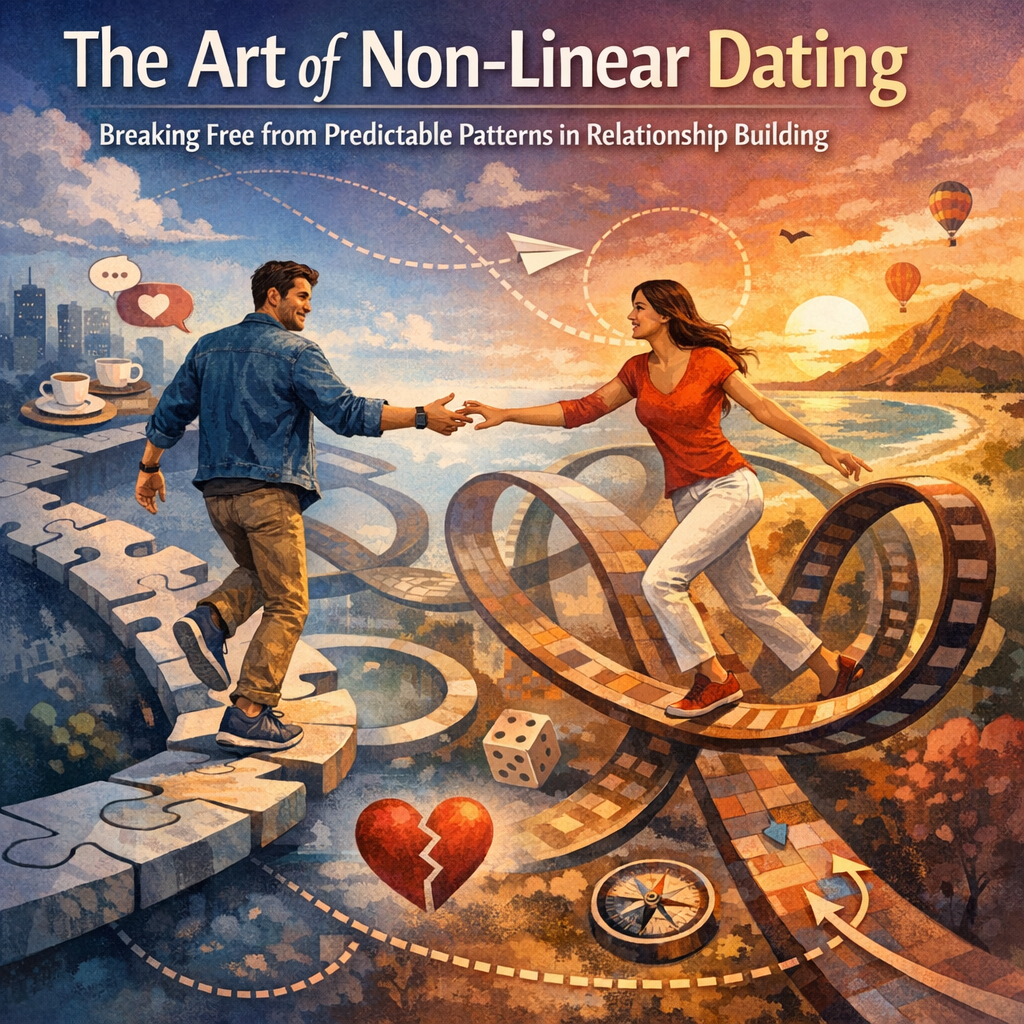
The Art of Non-Linear Dating: Breaking Free from Predictable Patterns in Relationship Building
Introduction
In today’s fast-paced digital world, singles are encountering new paradigms in romantic engagements. While the traditional stages of dating typically follow a linear trajectory—such as first meeting, dating, engagement, and marriage—this predictable blueprint doesn’t always resonate with everyone. Singles, from energetic 18-year-olds to wise 80-somethings, feel that linear dating patterns lack the nuance and flexibility needed to forge meaningful connections. Thus, the art of non-linear dating is gaining traction, inviting individuals to explore love and companionship in more dynamic, personalized ways.
Non-linear dating offers a refreshing divergence from conventional romance, enabling individuals to foster relationships that align with their unique life goals and stages. For example, some find joy in starting relationships by living together instead of dating first; some return to lost loves rather than seeking new partners, and others opt for open or polyamorous relationships that allow for multiple connections. This new approach promotes authenticity, emphasizing the importance of personal growth and mutual understanding over social expectations or timelines.
This shift away from linear dating is partly influenced by globalization and technology. Platforms like texting, video calls, and social media allow for deeper, quicker connections than ever before. Cultural diversification has also challenged longstanding societal norms about dating and marriage. The reality is clear: individuals today are no longer shackled by predetermined sequences when it comes to love.
This article aims to unravel the myriad benefits and challenges of non-linear dating while drawing from professional insights to offer a more expansive view on this freeing relationship paradigm. As you dive into non-linear dating, embrace the unpredictability—rediscover dating as an art, where your palette of experiences is as varied and unique as you are.
Features
The embrace of non-linear dating isn’t just a cultural leap; it’s supported by various professional and psychological studies. According to a [study published in the Journal of Social and Personal Relationships](https://journals.sagepub.com/home/spr), non-linear dating aligns well with the increasing preference for personalized life choices. Research suggests that non-linear dating encourages higher satisfaction rates as it allows couples to prioritize important aspects like communication and mutual respect over regimented milestones.
Additionally, a study from [Psychological Science](https://journals.sagepub.com/home/pss) suggests that non-linear dating can enhance personal growth and emotional intelligence. As individuals break free from the constraints of linear dating, they foster resilience and adaptability—qualities increasingly essential in our unpredictable world. By learning to navigate non-linear pathways, singles can effectively manage relationship dynamics as they evolve, ensuring sustained harmony and deeper connections.
Interestingly, the concept of non-linear dating is supported by Attachment Theory, which provides insights into how diverse attachment styles affect relationships. Psychologists like Dr. Amir Levine and Rachel Heller emphasize that understanding your attachment style can lead to more creative solutions for love, encouraging a non-linear approach to dating. Such insights empower singles to sidestep conventional pitfalls and embrace relationships that truly reflect their comfort zones and emotional needs.
Furthermore, non-linear dating has gained recognition in sociology through discourse on polyamory and alternative relationship styles. Non-monogamous setups are increasingly explored, challenging rigid notions that equate romantic success solely with monogamy. As elucidated in the [Journal of Sex Research](https://www.tandfonline.com/toc/hjsr20/current), many individuals in non-traditional setups report higher levels of relationship satisfaction and personal intimacy.
By considering these diverse insights from professional and medical studies, non-linear dating emerges not merely as a trend, but as an enlightened approach to fulfilling human connection. It compels us to question traditional schemas and reimagine what authentic romance can look like for us, individually and collectively.
Conclusion
Embracing non-linear dating lets individuals liberate themselves from societal expectations and outdated norms. This unconventional path demands creativity but offers boundless opportunities for personal growth and genuine connection. Regardless of age, the art of non-linear dating celebrates transformational relationships that honor your true self. As you navigate this rich, unpredictable journey, remember: in love, the beauty lies in its artful imperfection.
References
1. [Journal of Social and Personal Relationships](https://journals.sagepub.com/home/spr)
2. [Psychological Science](https://journals.sagepub.com/home/pss)
3. [Journal of Sex Research](https://www.tandfonline.com/toc/hjsr20/current)
Concise Summary
In today’s digital world, traditional linear dating patterns feel restrictive for many singles. Non-linear dating encourages more personalized and authentic connections by allowing individuals to follow their unique paths rather than a predetermined sequence. Influenced by globalization and technology, this approach emphasizes personal growth and mutual understanding, supported by psychological and sociological studies. Through non-linear dating, individuals explore diverse romantic setups like polyamory, challenging traditional norms. This evolving landscape invites singles to redefine romance according to their terms, celebrating flexibility, creativity, and deeper emotional connections.