The Intersection of Neuroscience and Love: How Brain Waves Predict Long-Term Relationship Success
Introduction
The beautiful complexity of love has long baffled poets, philosophers, and lovers alike. What makes one relationship thrive while another fades into the annals of heartbreak? While countless theories have been proposed, modern science is turning to an unexpected source for answers: the human brain. By exploring the intricate dance of neurons and synapses, researchers are unveiling how our brain waves might hold the key to predicting long-term relationship success.
Neuroscience, the study of the nervous system, is shedding new light on how love manifests not just emotionally, but also physically. At the core of this investigation are brain waves, the electrical patterns resulting from the collective activity of millions of neurons communicating within our brains. These brain waves are typically categorized into different frequencies: delta, theta, alpha, beta, and gamma. Each frequency band is associated with different aspects of cognition and emotion, such as deep thinking, relaxation, focus, and emotional regulation.
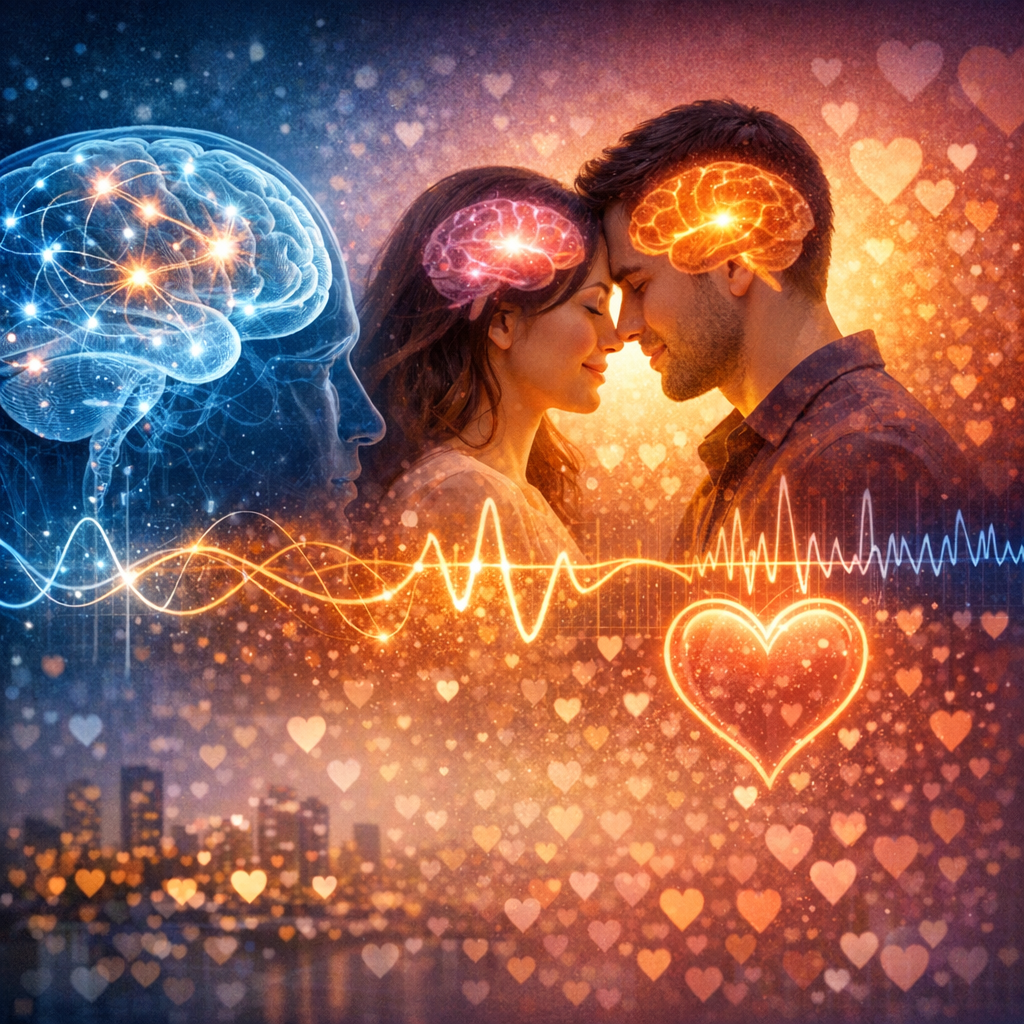
Emerging research suggests that these brainwave patterns can offer insights into how individuals in romantic relationships connect and communicate. For example, studies have indicated that people in successful long-term relationships often show synchronous brainwave activity, a phenomenon where two individuals’ brain waves align in frequency and phase. This synchronization may reflect an enhanced emotional and cognitive connection, facilitating understanding and empathy between partners.
As we navigate an era where technology and neuroscience are increasingly intertwined, the ability to measure and interpret brainwaves offers promising new tools for understanding love’s impact on the brain. Such insights not only advance our knowledge of human relationships but also hold the potential for improving matchmaking strategies and relationship counseling. By examining the intersection of neuroscience and love, we can uncover the unseen forces that might predict whether a relationship will stand the test of time.
Features
Several key studies have paved the way for understanding how brain waves might predict relationship success. One landmark study conducted by researchers at the [Max Planck Institute for Human Cognitive and Brain Sciences](https://www.mpg.de) investigated the neural synchronization between couples. They used electroencephalography (EEG) to record the brain waves of couples in love and found that those who had higher interpersonal synchronization—where their brain waves aligned in frequency—reported stronger emotional bonds and higher relationship satisfaction. This phenomenon suggests that the ability to “sync up” with a partner may play a crucial role in relationship longevity.
Furthermore, a study published in the journal “[Social Cognitive and Affective Neuroscience](https://academic.oup.com/scan)” explored how specific brainwave patterns correlate with emotional empathy, a critical component of successful relationships. The researchers found that couples who exhibited high alpha wave connectivity had greater empathy for each other’s feelings, leading to more effective communication and conflict resolution.
Additionally, the effects of oxytocin, commonly known as the “love hormone,” have been examined in conjunction with brain wave patterns. Research published in “[Nature](https://www.nature.com)” highlighted that oxytocin release during positive interactions between partners increases synchrony in gamma waves, which are high-frequency brain activities associated with cognitive processes and emotional regulation. This finding underscores the biochemical interplay that complements neural synchronization in fostering relationship stability.
These studies contribute to a growing body of evidence that brainwave analysis can offer significant insights into relationship dynamics. By understanding and potentially even harnessing this knowledge, therapies could be developed for couples struggling with disconnection or misunderstanding, using brainwave feedback to promote greater alignment and emotional connection.
Conclusion
The intertwined realms of neuroscience and love reveal that our brain waves might be more influential in relationship success than previously imagined. As science continues to unravel these mysteries, we stand on the brink of harnessing these insights not only to understand love’s profound effects on the brain but also to foster more meaningful and enduring connections. Such groundbreaking discoveries hold the promise of transforming not only how we perceive relationships but also how we nurture them for a shared future.
Concise Summary
The intersection of neuroscience and love is unveiling how brain waves might predict long-term relationship success. Research reveals that synchronous brainwave activity, where two individuals’ brain waves align, enhances emotional and cognitive connection, leading to stronger bonds. Key studies underscore the significance of brainwave patterns and empathy in couples, highlighting the influence of synchrony on relationship satisfaction. Additionally, oxytocin heightens gamma wave synchrony, supporting relationship stability. As technology advances, understanding brainwaves may improve matchmaking strategies and relationship counseling, potentially transforming how we perceive and nurture relationships for enduring connections.