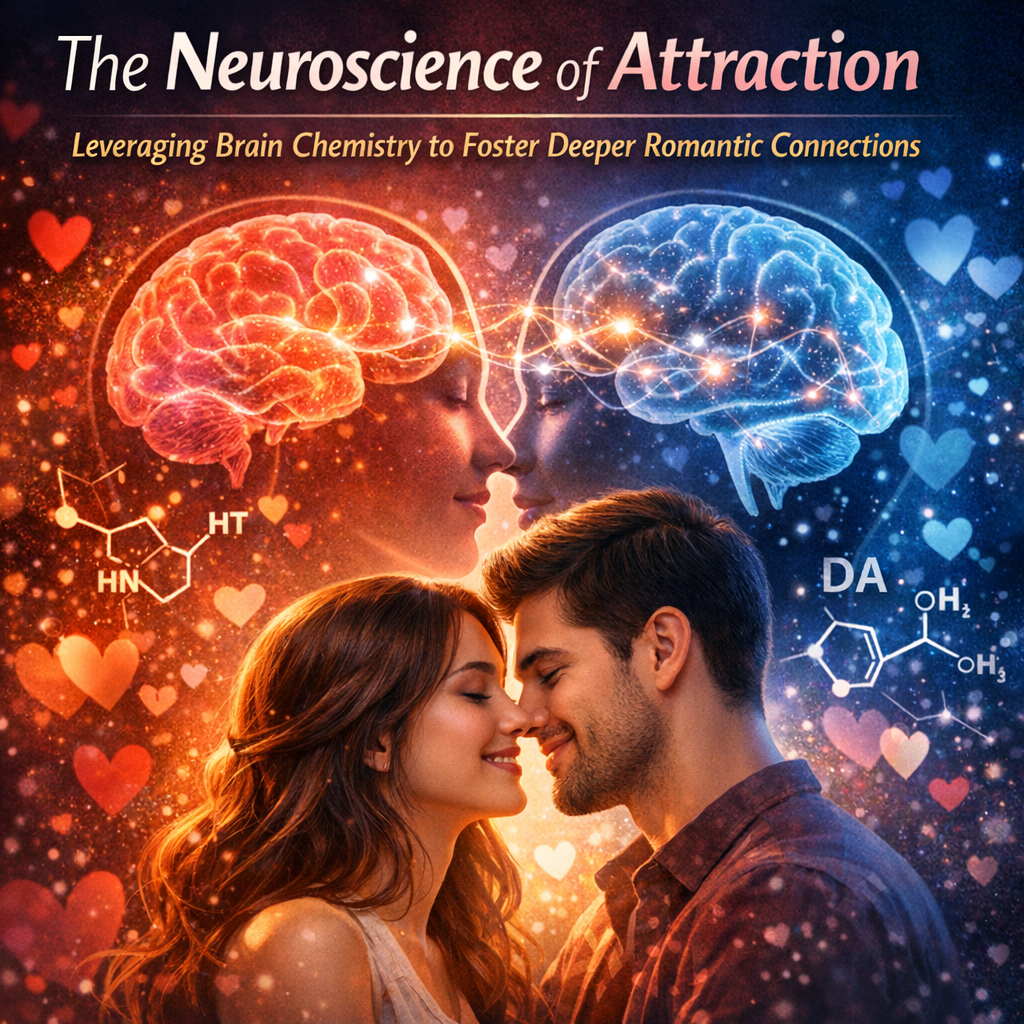
The Neuroscience of Attraction: Leveraging Brain Chemistry to Foster Deeper Romantic Connections
Introduction
In the world of dating and romance, much effort is put into enhancing attraction and building deeper connections. While there is a plethora of advice on behavior, communication, and compatibility, a fascinating angle to consider is the neuroscience behind attraction. Dating singles from 18 to 80 can benefit from understanding how brain chemistry plays a crucial role in whom we find appealing and how we connect with potential partners.
Attraction is not purely an act of the heart; it is, in many ways, a science driven by brain chemistry. When you meet someone, your brain embarks on a complex journey. This journey is influenced by several neurotransmitters that dictate your feelings and responses. Dopamine, oxytocin, and serotonin are central players in the chemistry of attraction. Dopamine, often referred to as the “pleasure chemical,” is linked to the reward system of the brain, providing feelings of joy and excitement. When you find someone attractive, dopamine levels rise, creating a sense of euphoria.
Oxytocin, commonly known as the “love hormone,” fosters intimacy and bonding. It’s released during physical touch and increases feelings of trust and empathy. This hormone is especially significant when relationships move toward deeper connections, such as long-term partnerships. Serotonin, which affects mood regulation, can influence how someone perceives another person in terms of their attractiveness and compatibility.
Understanding these chemicals not only illustrates why opposites sometimes attract or why a certain scent can kindle passion—it offers a roadmap for enhancing romantic experiences. By being aware of factors that can boost these neurotransmitters, singles can practically engage in activities that foster not just initial attraction but sustained romantic interest.
Features
Research in the field of neuroscience offers compelling insights into how and why we connect with certain people. A study by Fisher, Aron, and Brown (2005) utilized functional magnetic resonance imaging (fMRI) to observe the brains of individuals who were in the early stages of romantic love. It was found that the brain areas rich in dopamine receptors, especially those associated with the reward system, were significantly more active in these individuals. This explains the euphoric sensation commonly experienced during the initial phases of love. [Read more](https://www.ncbi.nlm.nih.gov/pmc/articles/PMC1867210/)
Another notable study, conducted by Gonzaga, Turner, and Keltner (2006), explored the role of oxytocin in long-term relationships. Their findings assert that consistent physical touch, such as holding hands or hugging, significantly boosts oxytocin production, leading to deeper emotional bonds and creating a sense of loyalty and trust between partners. For singles seeking long-lasting connections, incorporating regular, appropriate physical touch can be essential in cultivating a strong relationship foundation. [Explore the study](https://onlinelibrary.wiley.com/doi/abs/10.1111/j.1545-5300.2006.00131.x)
Serotonin’s role in attraction has also been widely studied. Research published in the journal *Biological Psychiatry* highlights that lower levels of serotonin are linked to obsessive thinking about a romantic partner, a common trait in the early stages of romantic relationships. This can enhance focus and admiration but can also lead to unhealthy attachments if not balanced over time. [Explore more](https://www.sciencedirect.com/science/article/pii/S0006322308005228)
Additionally, pheromones, chemical signals released by the body, have been shown to play a role in attraction. Studies, such as the one by Grammer and Fink (2005), suggest that pheromones can subconsciously influence attraction and mate selection. However, their effectiveness varies among individuals, making personal chemistry a unique and intricate puzzle. [Read study](https://www.ncbi.nlm.nih.gov/pmc/articles/PMC2581786/)
Conclusion
Understanding the neuroscience of attraction reveals the delicate interplay of chemicals that guide our hearts and minds toward each other. By recognizing how dopamine, oxytocin, serotonin, and even pheromones contribute to attraction and connection, singles across all ages can strategically enhance their dating experiences. Leveraging this knowledge not only enriches personal connections but also paves the way for more fulfilling and enduring romantic relationships.
Concise Summary:
The neuroscience of attraction underlines how dopamine, oxytocin, serotonin, and pheromones influence whom we are drawn to and how we bond with others. Studies demonstrate the role of these neurotransmitters in driving initial desires, forming deep connections, and maintaining long-term relationships. Employing this brain chemistry knowledge, singles can actively engage in behaviors that enhance both initial and sustainable romantic interests, fostering more meaningful and lasting connections.
References:
1. [Fisher, H. E., Aron, A., & Brown, L. L. (2005). Romantic love: a mammalian brain system for mate choice.](https://www.ncbi.nlm.nih.gov/pmc/articles/PMC1867210/)
2. [Gonzaga, G. C., Turner, R. A., & Keltner, D. (2006). Romantic love and sexual desire in close relationships.](https://onlinelibrary.wiley.com/doi/abs/10.1111/j.1545-5300.2006.00131.x)
3. [Biological Psychiatry. (Serotonin in Romantic Attachment).](https://www.sciencedirect.com/science/article/pii/S0006322308005228)
4. [Grammer, K., & Fink, B. (2005). Human pheromones and sexual attraction.](https://www.ncbi.nlm.nih.gov/pmc/articles/PMC2581786/)