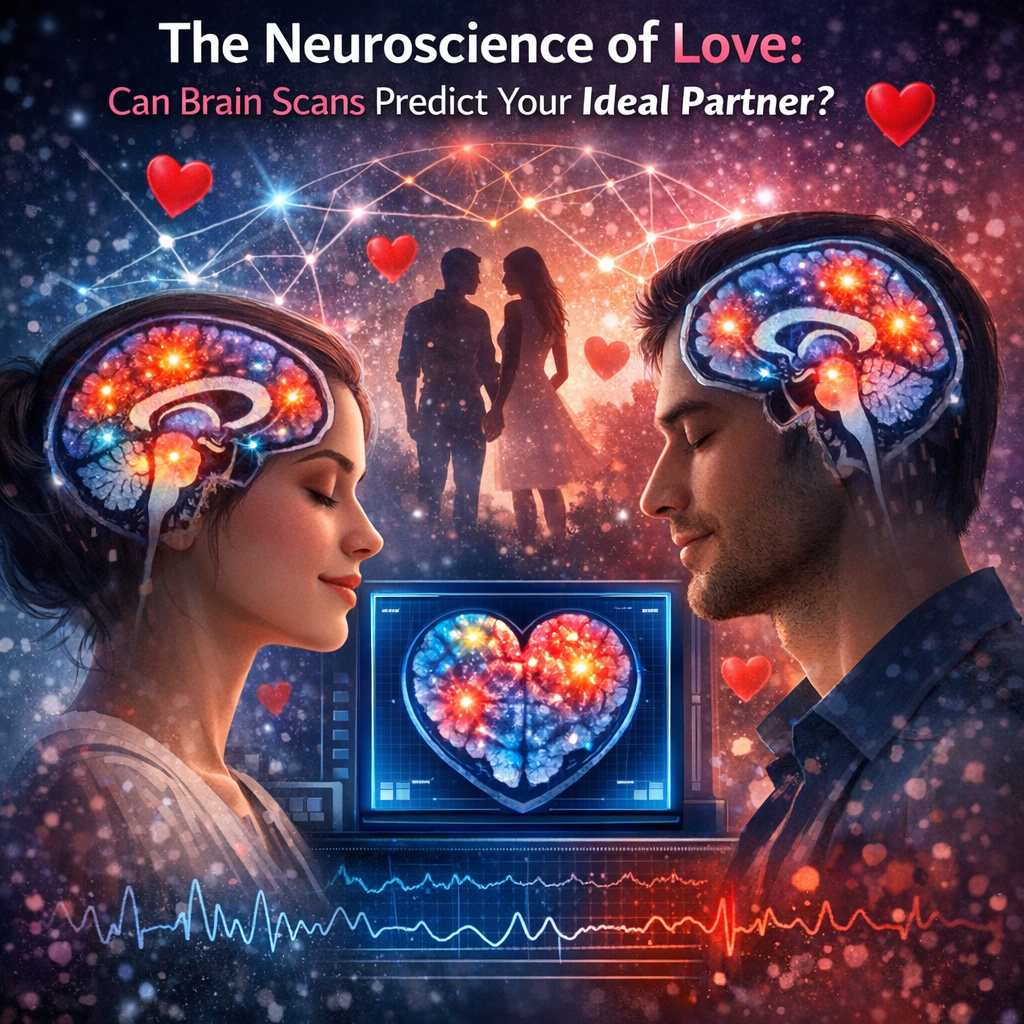
The Neuroscience of Love: Can Brain Scans Predict Your Ideal Partner?
Introduction
Love, that intoxicating emotional cocktail, has been the subject of fascination and speculation for centuries. From poets to philosophers, countless individuals have tried to decode the mysteries of love. But today, with advances in neuroscience, we might be closer than ever to unraveling this enigma. The possibility that our brains could hold the key to predicting our ideal partners is tantalizing, and the science behind it is both astonishing and complex.
Brain scans and various neuroimaging techniques like fMRI (functional Magnetic Resonance Imaging) have allowed scientists to peer into the mysteries of the mind. In recent years, these tools have been employed in attempts to understand romantic attraction and compatibility. At the core of these studies is the hypothesis that the way our brains respond to certain stimuli can provide clues to our romantic preferences.
Our brains are a complex network of cells and synapses, making billions of connections. When we meet someone new, especially someone we’re attracted to, specific regions of our brain light up in response. These reactions are not random; they are the result of neurological pathways shaped by genetics, experiences, and psychological factors. Could it be that these neurological responses are so predictable that they might help in finding the perfect romantic match?
Understanding this at a deeper level involves delving into how chemicals, such as dopamine and oxytocin, and neural activities influence our feelings towards others. Interestingly, different relationships activate specific patterns of brain activity. It’s almost as if our brains are built to recognize and respond differently based on the type of relationship we’re engaging in.
Neuroscientists suggest that by examining these patterns and brain activities, we might better understand compatibility. Imagine a future where matchmaking is no longer the realm of chance alone, but informed by brain scans that reveal deep-seated preferences and connection potentials. This provocative possibility poses fascinating implications for the world of dating and relationships. However, it’s not without its ethical considerations, challenges, and controversies. How would such discoveries be used or misused? And do they reduce the magic and mystery of love to mere data points and neural activations?
Features
Understanding romantic attraction through neuroscience is a burgeoning field. Pioneering studies are providing intriguing insights into how our brains influence our romantic decisions. One seminal study conducted by neuroscientist Dr. Helen Fisher at Rutgers University sought to understand the neurobiological underpinnings of love. Her work utilized fMRI scans to observe brain activity in individuals who were deeply in love. The study revealed increased activity in brain areas associated with rewards, such as the caudate nucleus and the ventral tegmental area, both of which are rich in dopamine receptors. This indicates that love can evoke a feeling similar to addiction, emphasizing the role of neurotransmitters in attraction and bonding.
Another significant study conducted at Emory University explored neural responses to romantic partners compared to acquaintances. The research demonstrated that certain brain regions, specifically those involved in memory and emotion processing, showed more synchronicity in couples who reported higher relationship satisfaction and longevity. This implies that successful partnerships might share neural compatibility, a synchronistic firing of neural circuits that underscores emotional bonding and understanding.
In a more novel approach, a study led by Stanford University examined whether machine learning algorithms combined with brain scans could predict romantic compatibility. Participants were shown pictures of various individuals while undergoing brain scans. By analyzing the brain’s response patterns, the algorithm could predict, with surprising accuracy, the participants’ romantic interests, highlighting the potential for technology-assisted matchmaking.
However, it’s important to note the complexity and individuality involved in human relationships. Factors like upbringing, personal values, and life experiences cannot be discounted. While neuroscience offers promising insights, predicting love solely through brain scans might oversimplify the intricacies of human connection.
Conclusion
The intersection of neuroscience and love is opening new doors to understanding one of humanity’s most profound experiences. While brain scans may provide valuable insights into compatibility, they cannot replace the myriad factors that contribute to a successful relationship. As we venture further into this scientific frontier, it’s essential to balance our newfound insights with the timeless beauty and unpredictability of human connection. Love, after all, may indeed be a matter of the heart as much as it is of the mind.
References
1. Helen Fisher’s study on love and the brain: [Science Daily](https://www.sciencedaily.com/releases/2005/02/050223100432.htm)
2. Emory University’s study on brain synchrony in couples: [Emory University](https://news.emory.edu/stories/2018/02/as_empathy_couples/campus.html)
3. Stanford University research on machine learning and romantic predictions: [Stanford News](https://news.stanford.edu/2020/02/13/machine-learning-romantic-match/)
Concise Summary
Advancements in neuroscience are helping unravel the complex emotional cocktail of love. Brain scans reveal insights into romantic attraction, highlighting regions like the caudate nucleus involved in pleasure and reward. Studies show that successful relationships may share synchronous neural patterns. Emerging methods using machine learning and fMRI scans demonstrate potential for predicting compatibility. However, love encompasses more than neural responses; factors such as personal values and experiences remain crucial. While this research opens new understanding, it is essential to balance it with the unpredictability of human connection and emotion.