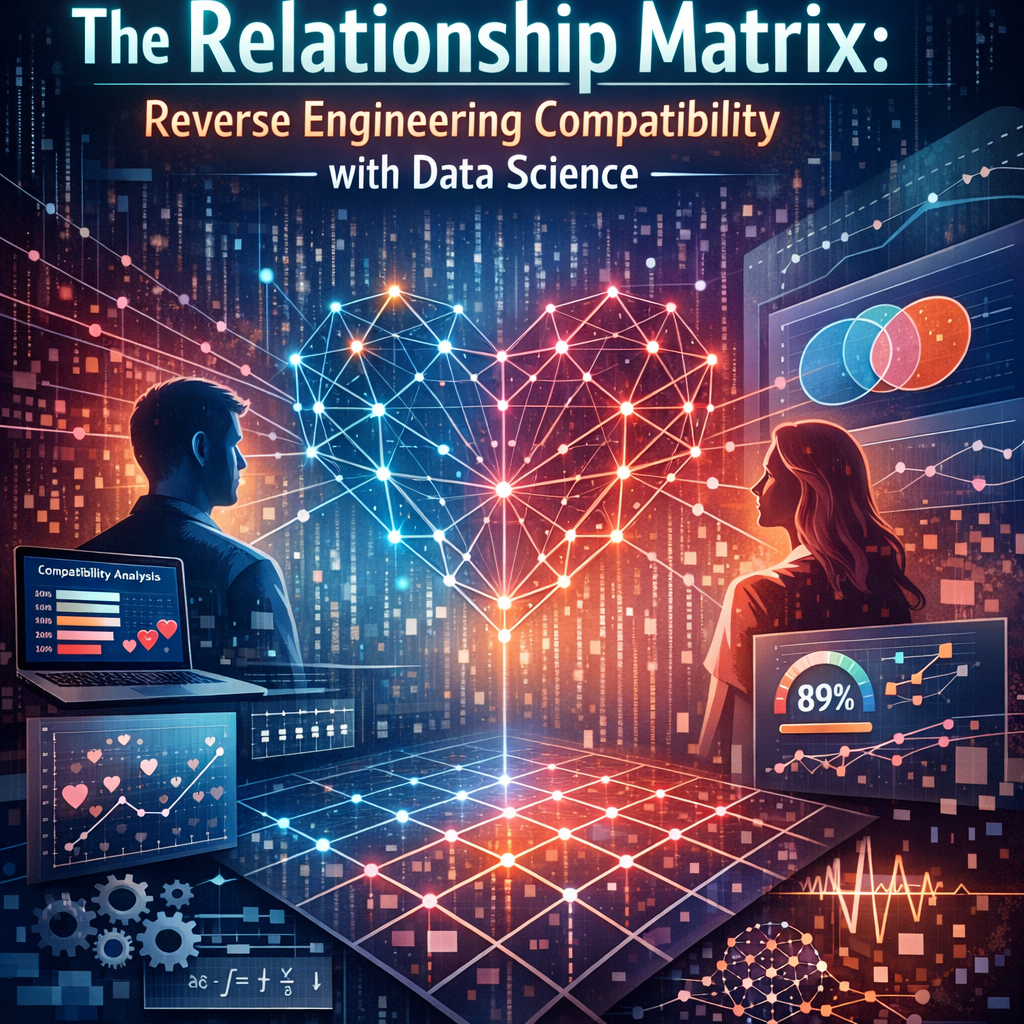
The Relationship Matrix: Reverse Engineering Compatibility with Data Science
In today’s digital age, the search for love transcends traditional boundaries. Gone are the days when compatibility was assessed solely based on intuition or a shared love of Italian food. Instead, data science is emerging as a groundbreaking tool in the realm of matchmaking, offering singles a chance to pinpoint compatibility with almost mathematical precision. This approach isn’t just a trend; it’s a transformative shift that leverages the power of algorithms, statistics, and big data to reimagine how we connect romantically.
Data science, in its essence, is the interdisciplinary field that uses scientific methods, processes, algorithms, and systems to extract insights from structured and unstructured data. Its application in the dating world is akin to creating a “relationship matrix,” where compatibility isn’t left to chance but is reverse-engineered from vast quantities of information. By analyzing patterns in preferences, online behavior, and even psychological profiles from users aged 18 to 80, dating platforms are fine-tuning their algorithms to predict matches with startling accuracy.
The allure of such precision is clear. For singles, especially the tech-savvy generations who grew up with digital devices in hand, using data science results in deeper connections than blind dates or chance encounters. Imagine, for instance, being paired with someone whose communication style, values, and life goals have been matched to yours using insights drawn from millions of data points. The Relationship Matrix taps into digital footprints, creating a sophisticated picture of potential partners. This matrix doesn’t merely suggest partners; it informs singles about potential obstacles and highlights the areas of potential conflict.
But why is this approach catching on? As dating grows more complex, singles value efficiency. They want to replace hours swiping on apps with meaningful interactions. As data science evolves, it reads patterns, nudges individuals towards those patterns, and offers a deeper understanding of what historically matters in successful relationships. The implications are profound as data technologies continue to evolve, with future advancements promising even more personalized matchmaking experiences. The question is not whether data will continue to influence dating, but how deeply data will endear itself into the core of our romantic decision-making processes.
Features: The Science Behind the Match
The power of data science in dating isn’t just theoretical; it’s rooted in extensive research and empirical studies. For example, a renowned study by Stanford University explored the psychology behind romantic choices and advanced algorithmic matchmaking ([Stanford University](https://www.stanford.edu)). Their work lent credibility to the idea that relationship compatibility can be scientifically approximated, suggesting that data-driven approaches can indeed shape personal choices and predict relationship viability.
Moreover, a significant investigation published in the academic journal, “Computers in Human Behavior,” evaluated the effectiveness of algorithmic matching in improving dating outcomes ([Computers in Human Behavior](https://www.journals.elsevier.com/computers-in-human-behavior)). Its findings emphasized that while no algorithm is infallible, those that integrate behavioral and psychological analyses tend to yield the most significant positive results. By incorporating these factors, data science doesn’t merely facilitate meeting potential partners but actively influences the quality and durability of relationships.
Furthermore, companies like eHarmony and Match.com have invested heavily in artificial intelligence, utilizing data science to hone in on relationship success predictors. eHarmony claims that its compatibility algorithms are built upon a foundation of 29 dimensions of compatibility that include values alignment, emotional temperament, and physical appearance preferences ([eHarmony](https://www.eharmony.com)).
Lastly, insights from neuroscience have begun to merge with data science to create even more nuanced relationship models. Studies have shown that understanding the brain’s hedonic hotspots and decision-making processes can help tailor more effective dating algorithms ([Neuroscience News](https://neurosciencenews.com)). This integration of neuropsychology with data science means that compatibility can now be measured not just by social preferences but by how our brains naturally respond to partners.
Conclusion: The Future of Dating
As data science continues to advance, its impact on matchmaking is only set to grow stronger. While love remains a uniquely human experience laden with unpredictability, the capability to enhance compatibility through data is a compelling proposition. For singles from 18 to their 80s, the fusion of data science and romance offers an exciting frontier, where every click and swipe not only brings them closer to a match but also helps decode the enigmatic art of love, marrying the certainty of science with the mystery of the heart.
Concise Summary
In the digital era, data science revolutionizes dating by using algorithms to determine relationship compatibility with precision. By analyzing online behavior and psychological profiles, platforms like eHarmony deploy sophisticated algorithms to create a “relationship matrix” that predicts successful matches. This innovation shifts matchmaking from chance-based to data-driven, enhancing efficiency and connection quality. Studies from Stanford and journals like “Computers in Human Behavior” support the efficacy of such approaches. As data science advances, its role in dating deepens, promising increasingly personalized experiences while balancing the science of compatibility with the human element of love.