The Science of Love: Leveraging Data-Driven Relationship Strategies for High-Achieving Singles
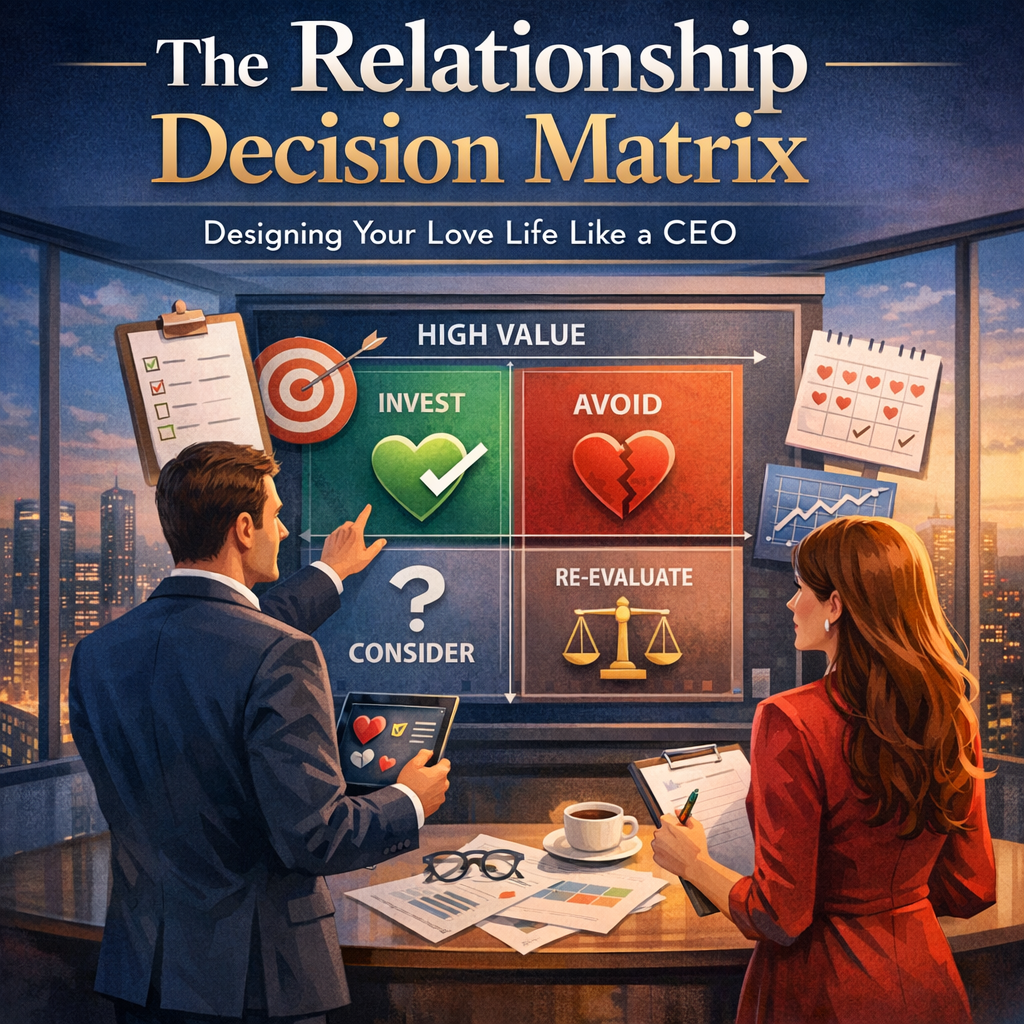
In the modern era of technology and data analytics, every aspect of our lives can be enhanced through a data-driven approach, even love. For high-achieving singles, characterized by ambition, intelligence, and a packed schedule, leveraging data-driven strategies is an exciting frontier that offers new avenues to explore in the quest for a meaningful romantic connection. But what precisely does the science of love entail, and how can it be applied to improve the dating adventures of career-focused individuals?
The concept of data-driven relationships may seem clinical at first glance; however, beneath the surface, it taps into the core of human connections by understanding behavior, preferences, and compatibility. Various apps and online platforms have already begun to integrate algorithms to predict compatibility based on a multitude of variables like interests, values, and personality traits. For busy professionals, this approach optimizes the time spent on finding suitable matches by sifting through data to highlight potential partners that align with their lifestyle and goals.
High-achieving singles often face the challenge of balancing demanding careers with personal lives, leaving limited time for traditional dating methods. This makes it essential to streamline the dating process. Data-driven strategies can cater to these needs by utilizing big data and machine learning to provide insights and strategies aimed at making the search for love more effective and efficient. Additionally, these systems can continuously learn and adapt based on user interactions, making them more attuned to individual preferences over time. This continuous feedback loop allows singles to navigate the complex world of dating with precision and care.
While traditional romantic notions might suggest that love is purely a matter of the heart, science uncovers that love can be nurtured by understanding the psychological and biological factors that influence attraction and attachment. By embracing the science of love, high-achieving singles can go beyond the limitations of time and chance, harnessing data to find deeper, more meaningful relationships tailored to their personal and professional aspirations.
Features: Applying Science to Love and Relationships
In exploring how data-driven strategies are being used in modern dating, it’s important to acknowledge the substantial role of professional and scientific studies in understanding human relationships. Research in psychology and neuroscience has provided valuable insights into how and why people form connections.
One standout study conducted by Dr. John Gottman, a renowned psychologist, elucidates how data can predict relationship success. Gottman’s research involves observing couples’ interactions and using statistical models to predict the long-term outcome of their relationships. His work highlights patterns such as communication styles and emotional interactions that are critical indicators of relational stability. Through such studies, singles can gain insights into effective communication and conflict resolution, enhancing their odds of success in partnerships. [Gottman Institute](https://www.gottman.com/)
Moreover, advancements in neuroscience have shed light on the complexity of love and attraction. Studies using functional MRI scans reveal that areas of the brain related to reward and happiness light up during feelings of love. This neural data helps in understanding the biological underpinnings of attraction and attachment. Knowing how the brain reacts to love could empower individuals to make mindful decisions about their relationships. [ScienceDirect](https://www.sciencedirect.com/science/article/abs/pii/S0149763413000406)
The algorithms behind dating platforms are also grounded in scientific research. For instance, the psychological concept of the “similarity-attraction effect”—the tendency for people to be drawn to others who are similar in attitudes, background, and interests—is often leveraged by dating apps to improve match quality. Studies have shown that shared values and similar personalities contribute to long-term relationship satisfaction, underscoring the rationale for algorithmic matching. [Psychology Today](https://www.psychologytoday.com/us/blog/the-attraction-doctor/201111/the-similarity-attraction-effect-among-interracial-couples)
In sum, professional and scientific studies offer critical insights that empower singles to harness data-driven strategies in their romantic pursuits. By tapping into these resources, high-achieving singles can better understand themselves and potential partners, leading to more fulfilling relationships.
Conclusion
The fusion of love and data science opens new possibilities for high-achieving singles seeking meaningful connections. By leveraging scientific insights and sophisticated algorithms, these individuals can navigate the complexities of modern dating with greater precision, fostering relationships that align with their personal and professional lives. In a world where efficiency and depth go hand in hand, understanding the science of love provides a powerful tool for crafting authentic and lasting connections.
References
1. [Gottman Institute](https://www.gottman.com/)
2. [ScienceDirect](https://www.sciencedirect.com/science/article/abs/pii/S0149763413000406)
3. [Psychology Today](https://www.psychologytoday.com/us/blog/the-attraction-doctor/201111/the-similarity-attraction-effect-among-interracial-couples)
Concise Summary:
The article explores how data-driven approaches improve dating for high-achieving singles. By leveraging algorithms and scientific insights, dating apps predict compatibility for those with limited time for traditional methods. Research by Dr. John Gottman helps predict relationship success through communication patterns. Advances in neuroscience reveal the brain’s response to love, guiding informed relationship choices. By incorporating data analysis in dating, singles can find partners aligned with their personal and professional goals, making modern dating both efficient and meaningful.