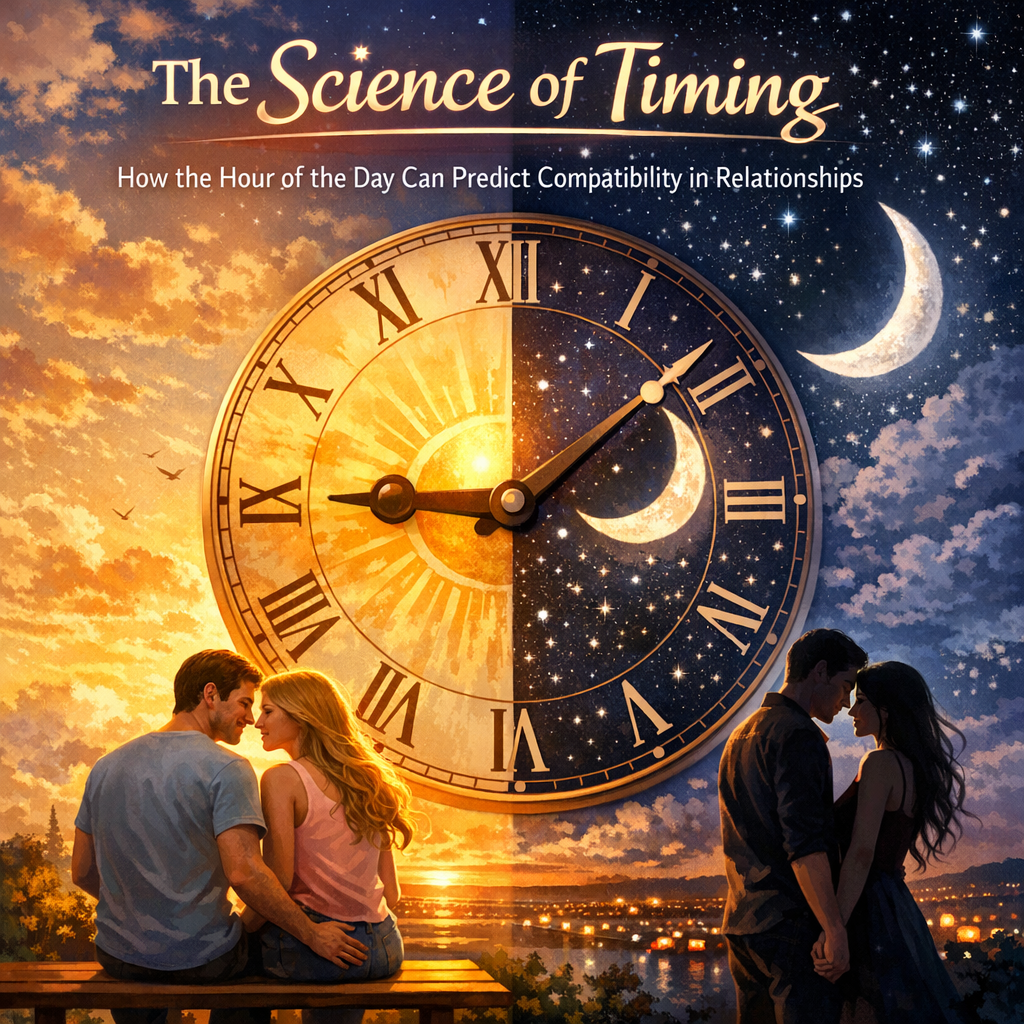
The Science of Timing: How the Hour of the Day Can Predict Compatibility in Relationships
Introduction
In the fast-paced tapestry of modern life, the gears of time are ceaseless, constantly influencing our thoughts, actions, and emotions. But did you know that these temporal rhythms might also predict compatibility in relationships? The science of timing, particularly the hour of the day, profoundly impacts human interaction and relationships.
Our chronological preferences, influenced by our body’s circadian rhythms, shape much of our world perception. Circadian rhythms are natural processes regulating the sleep-wake cycle and repeating approximately every 24 hours. These rhythms dictate not only our sleep patterns but also when we’re most alert, creative, and social. If two people share similar circadian rhythms, they might navigate relational waters more smoothly, as their peaks of energy, focus, and emotional availability align.
Consider a relationship between an early bird and a night owl. One partner rejuvenates and enjoys early mornings, while the other thrives in late-night hours as their counterpart winds down. While “opposites attract,” differing intrinsic rhythms can create friction. Timing, it seems, is crucial—not just in comedy but in romance too.
Research suggests that these unique rhythms influence not only personal productivity but also emotional states, decision-making processes, and how we engage with others. Partners with aligned schedules may enjoy a synchronized emotional life, enhancing understanding and empathy just by being on the same temporal page. Singles should consider their day’s rhythm and how it complements or clashes with a potential partner’s schedule for a harmonious match.
Features
Medical and psychological research provide extensive insights into how circadian rhythms affect behavior. A study published in Nature Communications highlights genetic influences on our sleep patterns, classifying major circadian typologies: morning types (larks), evening types (owls), and more adaptable intermediates. These typologies are ingrained in our genetic makeup, affecting sleep and psychological and social functions. [Nature Communications](https://www.nature.com/articles/s41467-018-08259-5).
The University of Surrey’s Sleep Research Centre found a significant correlation between circadian rhythms and interpersonal attraction. Couples with similar circadian alignment reported higher relationship satisfaction due to enhanced empathy and understanding, fewer conflicts over schedules, and more time spent together. [University of Surrey](https://www.surrey.ac.uk/surrey-sleep-research-centre).
Moreover, time-of-day preferences affect work-life balance and mental health. The Journal of Biological Rhythms discusses how misaligned social and work schedules increase stress and reduce overall well-being, indirectly affecting romantic relationships. Singles should not overlook their rhythms when seeking a partner for a harmonious, less stressful life. [Journal of Biological Rhythms](https://journals.sagepub.com/home/jbr).
Circadian rhythms influence hormone release, eating habits, digestion, and metabolism, shaping mood and energy levels. These physiological processes dictate everything from morning disposition to nighttime tranquility, underscoring why compatibility in these rhythms is as vital as shared interests or attraction.
Conclusion
Understanding the science of timing fosters successful relationships. By attuning ourselves to our and our partner’s circadian rhythms, singles can enhance compatibility and emotional connectivity, surfing the tides of relationships with empathy and synchronization. As we align with our internal clocks, we may find that the secret to lasting love lies not just in the heart but in the hours of our day.
Concise Summary
This article explores how circadian rhythms influence relationship compatibility. Our bodies’ natural sleep-wake cycles affect our energy, productivity, and social interactions. Couples with aligned rhythms experience higher satisfaction, as they navigate relational challenges more smoothly. Studies from journals like Nature Communications and the University of Surrey reveal that similar rhythms enhance empathy and understanding, while misalignments increase stress and impact overall well-being. Recognizing and aligning these rhythms can significantly enhance emotional connectivity, emphasizing the importance of timing in romantic compatibility.