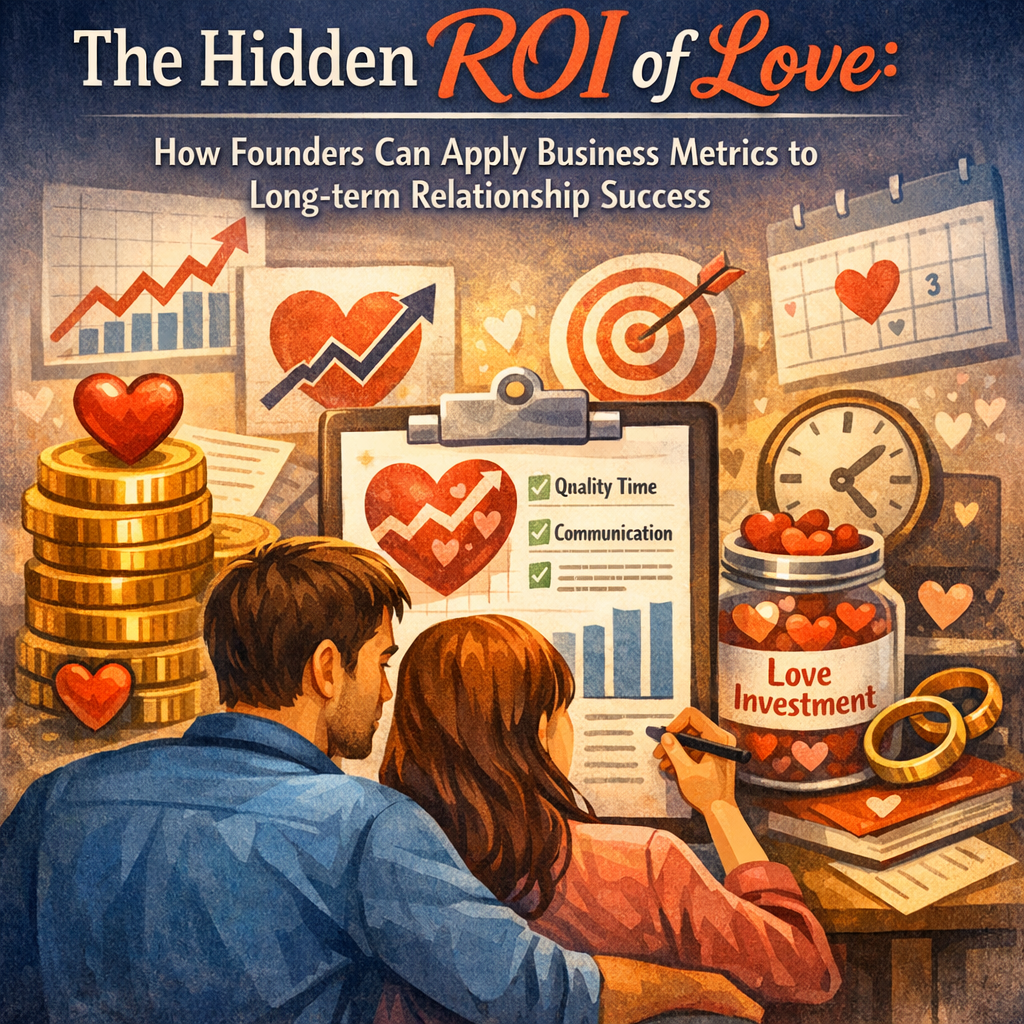
The “Emotional Due Diligence” Framework: How High-Achievers Vet Relationships Like Startups
In an era where efficiency and effectiveness reign supreme, high-achievers bring a unique perspective to the dating world. Just as they scrutinize potential investments with a keen eye for detail, high-achievers apply similar principles when evaluating relationships. Enter the concept of ”Emotional Due Diligence,” a framework inspired by startup vetting processes that assist individuals in making thoughtful, informed decisions about their romantic engagements.
High-achievers, often juggling demanding careers and personal development pursuits, value efficiency in every facet of life, including their relationships. Just as in a business, where every investment must be thoroughly vetted for risks and potential returns, these individuals approach relationships with similar meticulousness. ”Emotional Due Diligence” is an in-depth assessment that assesses compatibility, long-term viability, and alignment of personal goals and values.
In practice, Emotional Due Diligence involves several strategic steps. Initially, high-achievers outline their relationship objectives, much like defining outcomes for a business investment. They identify key attributes they seek in a partner, analogous to creating a startup’s ideal investor profile. Next, they dive into intensive data gathering—akin to market research—where they evaluate compatibility, shared values, and mutual interests through meaningful conversations and shared experiences.
Beyond initial assessments, this framework emphasizes ongoing evaluation, just as a startup continually assesses its market position. Regular check-ins ensure the relationship aligns with evolving personal and collective aspirations. This approach not only minimizes emotional risk but also cultivates a relationship dynamic built on clarity, understanding, and mutual growth.
As more people recognize the value of Emotional Due Diligence, this method stands to redefine modern dating by transforming it into a deliberate, thoughtful process leading to healthier, more sustainable connections. The contrasts between a high-stakes business world and personal relationships begin to blur, with the core commonality being the pursuit of meaningful and rewarding engagements.
Features and Studies on Emotional Due Diligence in Relationships
The concept of Emotional Due Diligence is steadily gaining empirical support from professional research, aligning closely with findings in psychology and relationship science. Studies underscore the importance of intentional decision-making and compatibility vetting reminiscent of business practices that high-achievers can effectively implement in their personal lives.
Research in the [Journal of Personality and Social Psychology](https://www.apa.org/pubs/journals/psp/) highlights that individuals with a clear understanding of their personal values and long-term goals tend to experience more satisfying and enduring relationships. This finding aligns seamlessly with the Emotional Due Diligence framework, where prioritizing personal objectives, similar to business KPIs, can facilitate harmonious relationships.
Another pivotal study conducted by [Dr. John Gottman](https://www.gottman.com/), renowned for his groundbreaking work on marital stability, reinforces the practicality of due diligence in relationships. Gottman’s research found that the most successful couples were those who continually evaluated and communicated about their relationship goals, much like a business adapting to market feedback. High-achievers can draw on these insights, regularly revisiting their relationship dynamics as they would reassess a startup’s strategy.
Additionally, the emotional intelligence aspect—central to Emotional Due Diligence—is substantiated by [Daniel Goleman’s work](https://www.danielgoleman.info/) on emotional intelligence, which posits that self-awareness and empathy are crucial for relationship prosperity. High-achievers, who typically display heightened levels of self-discipline and awareness, are already equipped with the skills necessary to excel in this framework, translating their professional strengths into personal relationship prowess.
Cognizance of potential red flags through this model is similar to risk management in investment, where recognizing challenges early allows for preventive measures rather than reactive solutions. Research by [Dr. Terri Orbuch](https://www.researchgate.net/profile/Terri-Orbuch), a prominent psychologist, finds that addressing relationship concerns proactively leads to increased longevity and satisfaction. Implementing such strategic foresight can significantly enhance the relationship outcomes for high-achievers.
Conclusion
The Emotional Due Diligence framework transcends the traditional, often chaotic, landscape of dating by introducing a structured, strategic approach to relationship building. By drawing parallels between startup vetting processes and relationship assessment, high-achievers are equipped with a powerful tool to navigate romantic engagements effectively. Such a disciplined focus not only mitigates emotional risk but also cultivates deeper, more meaningful connections, demonstrating that the principles of success in business can indeed enhance personal relationship fulfillment.
Concise Summary
The “Emotional Due Diligence” framework equips high-achievers with a structured method for evaluating relationships, akin to vetting startups. It involves outlining relationship objectives, assessing compatibility, and maintaining ongoing evaluations. Supported by psychological research, this approach emphasizes clarity and mutual growth, minimizing emotional risks. As this method gains traction, it offers a deliberate and strategic process for building meaningful, sustainable connections, illustrating that professional success principles can enhance personal relationship fulfillment.