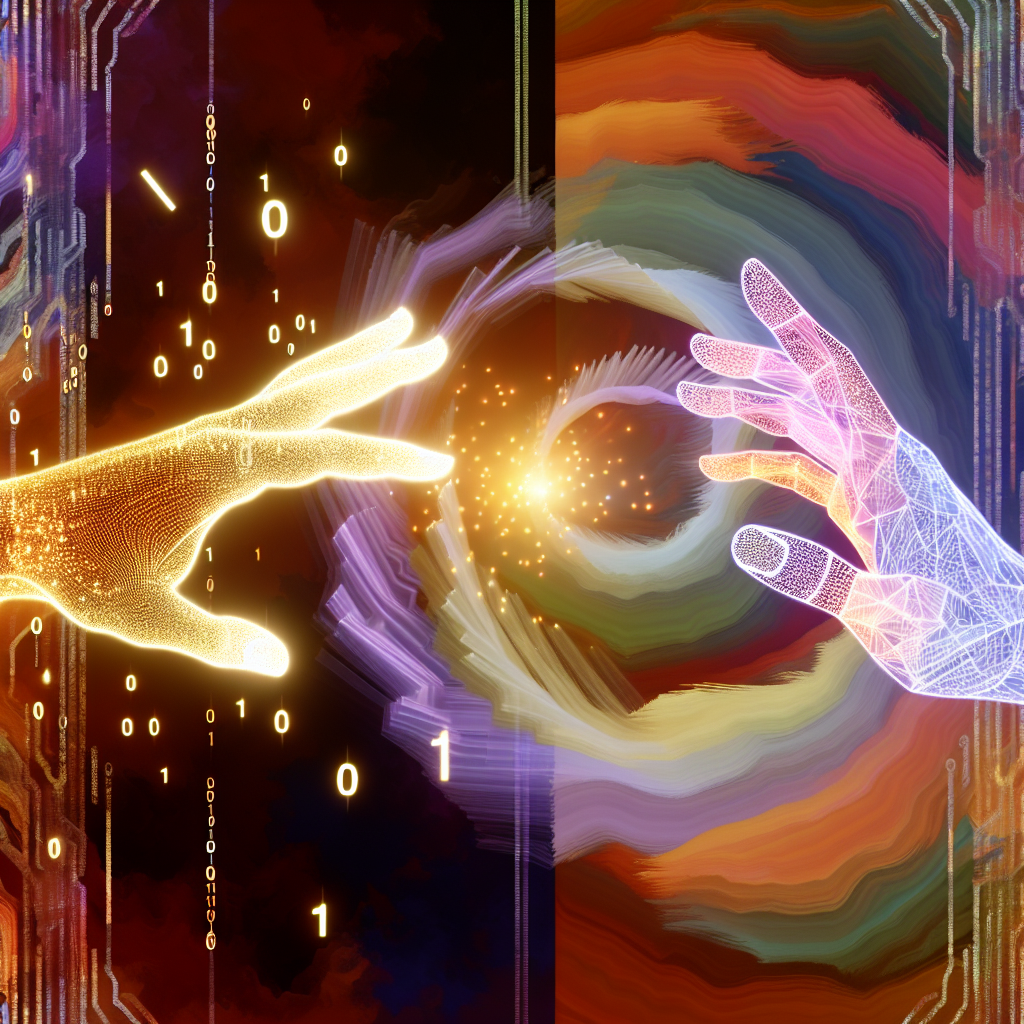
Leveraging AI-Powered Matchmaking: Can Algorithms Predict Lifetime Compatibility Better Than Intuition?
In the fast-paced digital age, where everything from banking to booking a table at a restaurant can be done online, it’s no surprise that the quest for love has also ventured into the realm of technology. With online dating now being a billion-dollar industry, the integration of Artificial Intelligence (AI) into matchmaking systems has marked a new chapter in seeking romantic connections. This article explores whether AI-powered matchmaking can predict lifetime compatibility better than intuition—a question that is becoming increasingly relevant as technology advances.
Imagine a world where finding a perfect partner is no longer left to the whims of fortune but is rather systematically arranged by sophisticated algorithms. The cell-phone in your pocket, the computer in your lap, these are not just modes of communication but are now instruments of fate, rich with data that can analyze, learn, and predict human behavior and desires. AI is actively shaping our perceptions and interactions, bringing a scientific approach to what has long been considered an art.
AI-powered matchmaking leverages vast quantities of data from users—responses to personality quizzes, engagement patterns on dating apps, and personal preferences—and processes these using complex algorithms to predict compatibility. The primary aim is to cut through the ambiguity and uncertainty that often characterize human intuition in dating, ultimately enhancing the likelihood of finding a long-term partner. It’s the intricate dance between technology and emotion, logic and impulse, calculation and chemistry.
The technology behind AI-powered matchmaking isn’t just science fiction but practical application in the making. Advanced algorithms are programmed to recognize patterns, assess user data, and predict likely successful pairing outcomes. Popular dating platforms have integrated AI-driven features like chatbots for improved user interaction, personality matching based on machine learning, and even offering relationship advice by processing vast datasets from successful relationships. The AI behind these platforms constantly learns and updates from new data inputs, promising an exciting future where machines might outperform human intuition in the dating sphere.
However, it begs an important question: Can algorithms truly replace the nuances of human intuition in predicting the road map to a fulfilling relationship? While intuition embodies a mystical and often unpredictable element of human nature—perhaps influenced by past experiences, subconscious biases, and the ineffable connection of souls—the reliance on AI introduces a systematic, formulaic means of deciphering love’s complex equation.
Features:
Research and professional studies in the realm of AI and relationship compatibility have carved paths into understanding how effective these technologies might become. A study conducted by Stanford University and the University of Chicago in 2019 highlights that people who meet online tend to have relationships that yield higher satisfaction. The study emphasized the efficiency of algorithms in filtering potential matches based on compatibility factors that would otherwise take extensive time and effort to evaluate personally ([Stanford University Study](https://www.sciencedaily.com/releases/2019/07/190710092026.htm)).
Additionally, in 2021, researchers at the University of Rochester utilized machine learning to predict relationship satisfaction and stability. Their findings, published in the journal “Computers in Human Behavior,” demonstrated that algorithm-based assessments could accurately predict the couple’s likelihood of happiness, noting a significant correlation between algorithmic suggestions and eventual relationship satisfaction ([University of Rochester Study](https://www.sciencedirect.com/science/article/pii/S0747563221002243)).
Moreover, AI’s ability to process big data enables it to evolve and refine its algorithms over time, increasing its predictive accuracy. The insights offered by data-driven services often reveal overlooked compatibility markers, factoring in not just personality matches but lifestyle habits, relationship goals, and even socio-economic factors. The precision offered by data-driven matchmaking holds the potential to lead to safer choices and more compatible pairings than those made purely on instinct or superficial attraction.
Platforms like eHarmony and Match.com have long pioneered algorithm-driven matchmaking services that famously boast significant success rates. These platforms often collect data through lengthy questionnaires aimed at capturing the essence of a person’s values, beliefs, and preferences. Machine learning algorithms then process this information, identifying compatibility markers that might escape the human eye ([eHarmony and Match.com Algorithmic Matchmaking](https://www.psychologytoday.com/us/blog/meet-catch-and-keep/202001/what-makes-eharmony-work)).
Conclusion:
While AI offers a promising enhancement to the dating landscape, it is crucial not to overlook the richness of human intuition and emotion in relationships. AI systems provide data-driven accuracy and are increasingly adept at recognizing patterns of compatibility. However, love remains as unpredictable as ever, reliant on the human heart’s complexities. What AI promises is not a replacement of intuition but a valuable tool, enhancing the matchmaking process by providing insights that better inform our choices in love.
Concise Summary:
AI-powered matchmaking leverages data from users to predict compatibility, enhancing chances of finding long-term partners. Studies, such as those from Stanford University and the University of Rochester, highlight higher satisfaction in online relationships powered by algorithms. These algorithms process vast data, considering factors like personality, lifestyle, and socio-economic background, thus refining match accuracy over time. Platforms like eHarmony use machine learning to identify matches beyond human intuition. Yet, while AI introduces precision, the unpredictability of love remains, positioning AI as a complement to human intuition rather than a replacement.

Dominic E. is a passionate filmmaker navigating the exciting intersection of art and science. By day, he delves into the complexities of the human body as a full-time medical writer, meticulously translating intricate medical concepts into accessible and engaging narratives. By night, he explores the boundless realm of cinematic storytelling, crafting narratives that evoke emotion and challenge perspectives. Film Student and Full-time Medical Writer for ContentVendor.com