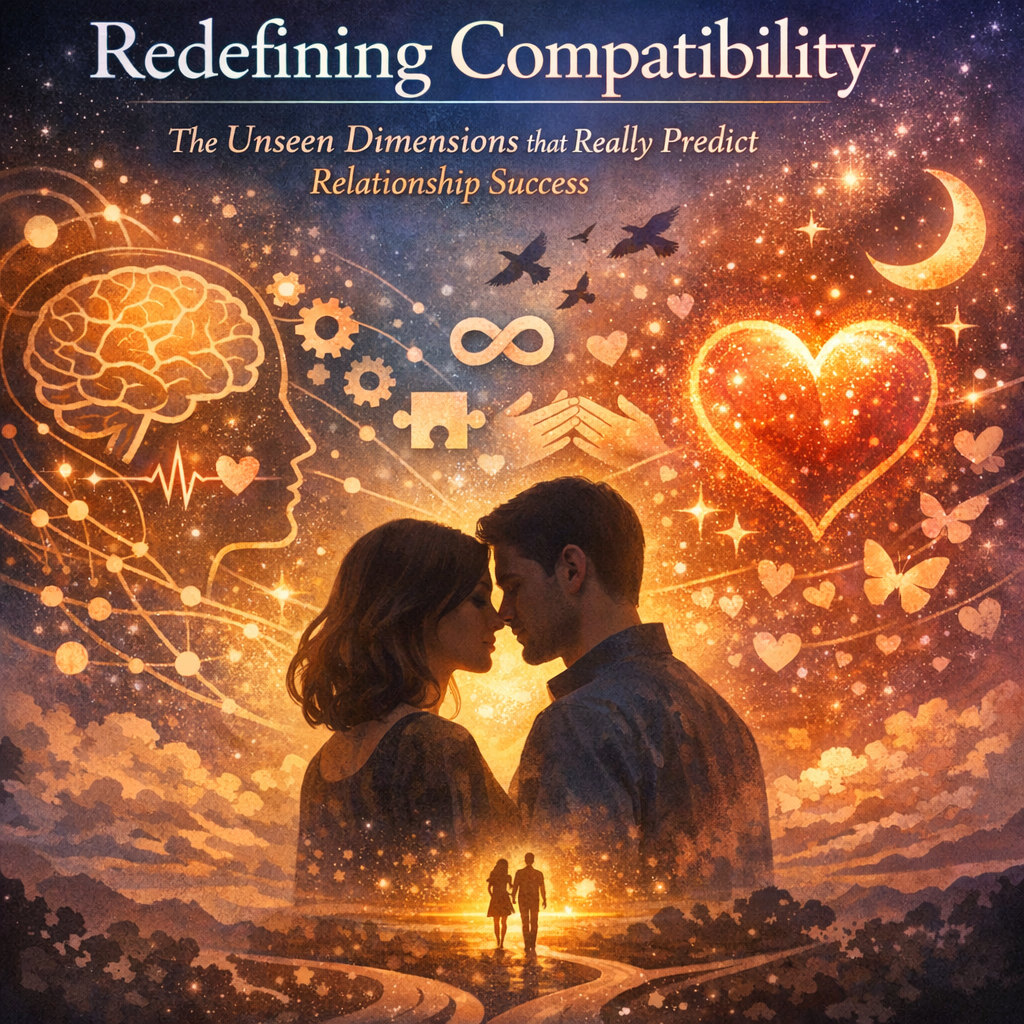
Redefining Compatibility: The Unseen Dimensions that Really Predict Relationship Success
In a world where technology plays an increasingly significant role in how we connect, finding that special someone has never felt more complex. Dating apps, match algorithms, and online profiles promise the age-old quest for love, but do they truly address what lies at the heart of lasting relationships: compatibility? Traditional metrics such as interests, hobbies, and demographic similarities have long been heralded as essential ingredients. Yet, as couples therapists and relationship coaches delve deeper, it’s becoming clear that true compatibility surpasses superficial commonalities to encompass more profound dimensions.
For singles aged 18 to the 80s, redefining compatibility involves understanding the essence behind genuine connections. The alchemy of enduring partnerships often lies not in shared tastes but in how partners approach life’s myriad challenges together. A secure emotional attachment, flexibility in resolving conflicts, and shared values have surfaced as pillars of relationship success. These unseen dimensions foster resilience against the inevitable hurdles that life throws at couples.
Moreover, emotional intelligence is proving to be a game-changer. This trait, involving the ability to understand and manage one’s own emotions and comprehend the emotional states of others, significantly influences how partners navigate the emotional intricacies of romantic relationships. When both partners exhibit high emotional intelligence, they can empathize better, communicate more effectively, and resolve disagreements amicably, creating a nurturing environment where both can thrive.
Also critical—yet often overlooked—is the role of complementary personality traits. While opposites may attract, partners who balance and enhance each other’s temperaments bring a dynamic stability to relationships. One partner’s inclination toward detail-oriented planning can harmoniously coexist with another’s penchant for spontaneity, weaving a rich tapestry of shared life experiences.
Though online platforms capture a semblance of compatibility, focusing on these deeper, unseen qualities can lead to more meaningful connections. As you navigate the dating landscape, pay attention to how potential partners respond to life’s turns, view the world, and, crucially, understand themselves and others. Understanding these dimensions could unlock the door to authentic and fulfilling relationships for singles of all ages.
Features
The exploration of these crucial relationship factors is supported by various professional and academic studies. For instance, the significance of emotional intelligence in relationships is well-documented. According to a study published in the *Journal of Social and Personal Relationships*, couples with higher levels of emotional intelligence report greater relationship satisfaction and better conflict resolution skills. The study underscores emotional intelligence as a predictor of relationship longevity and fulfillment, as partners better navigate emotional climates and misunderstandings.
Additionally, a focus on attachment styles—a key dimension of compatibility—reveals that secure attachments foster healthier relationships. Researchers Hazan and Shaver highlight in their landmark study that relationships where partners exhibit secure attachment styles experience less anxiety and more trust, leading to greater stability and satisfaction. You can view this study in detail here.
Personality traits are equally essential in determining relationship success. According to the Five-Factor Model, cited in various psychological studies, complementary personality traits bolster compatibility. Married couples who balance traits like openness, conscientiousness, and agreeableness tend to enjoy longer-lasting partnerships, as they mitigate potential areas of conflict while maximizing shared strengths. Explore this further through the study by Costa & McCrae (1992).
Finally, the notion of shared values cannot be overstated. A study conducted by the Pepperdine University in Los Angeles finds that couples with aligned core values report greater relationship quality, as they make major life decisions together with a unified front. These aligned values guide couples through pivotal decisions and help maintain mutual respect and understanding over time.
Conclusion
Redefining compatibility involves looking beyond surface-level commonalities to explore deeper emotional, psychological, and value-based dimensions that truly predict relationship success. By prioritizing emotional intelligence, secure attachment styles, complementary personalities, and shared core values, singles across the ages can navigate toward more fulfilling, enduring partnerships. Understanding these unseen dimensions may just be the key to unlocking lasting love.
Concise Summary
Redefining Compatibility: The Unseen Dimensions that Really Predict Relationship Success challenges the traditional metrics of compatibility and highlights the importance of deeper aspects like emotional intelligence, secure attachment, and shared values. Delving into research-backed insights, it emphasizes the significance of aligning compatibility with psychological and emotional dimensions for meaningful relationships across all ages. Studies suggest that successful partnerships rely more on managing emotions, balancing personality traits, and mutual value alignment, rather than just shared interests or demographics. These insights hold the promise of guiding singles towards fulfilling, long-lasting romantic connections.