AI-Powered Relationship Architectures: Designing Love with Data and Emotional Intelligence
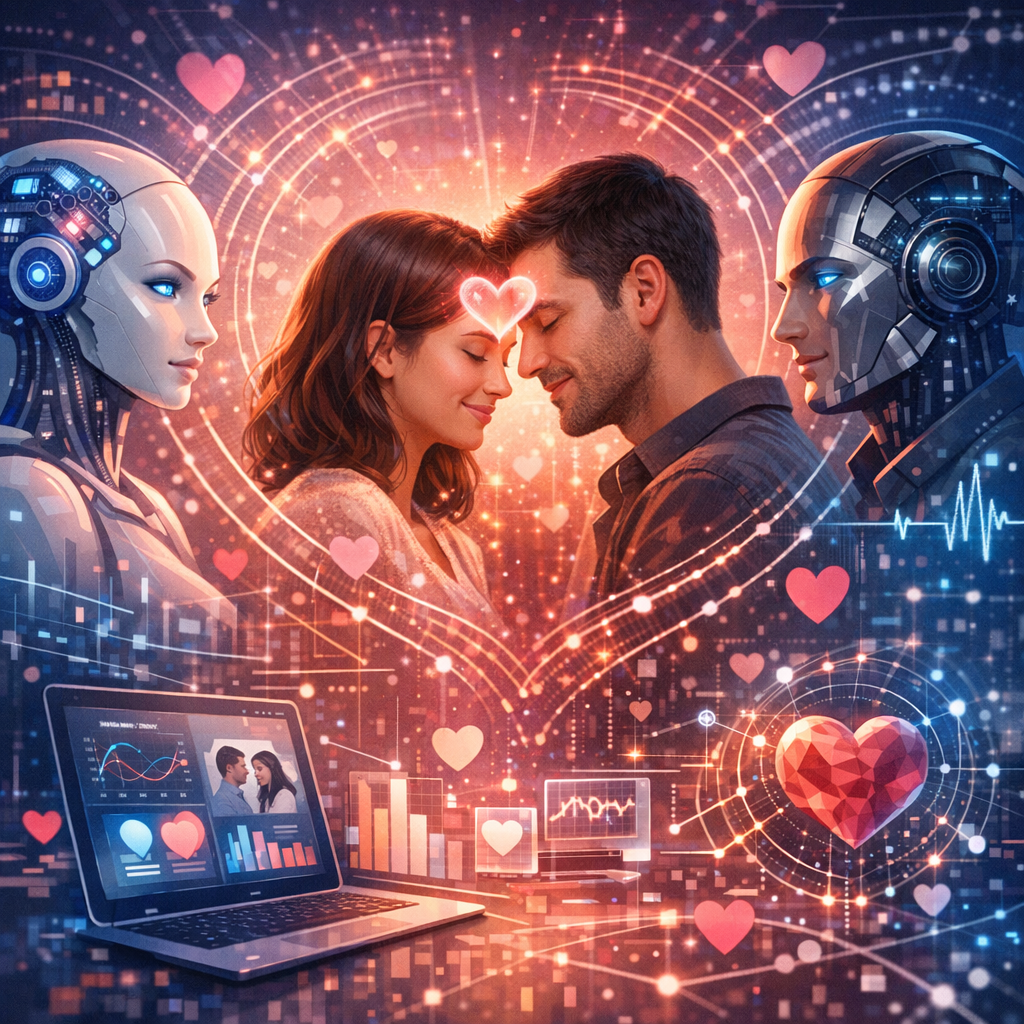
In the digital age, where swipes, likes, and emojis often serve as the currency of romantic interaction, the quest for meaningful relationships has taken on a new dimension. With the advent of advanced technology, particularly artificial intelligence (AI), the landscape of dating and matchmaking is evolving rapidly. AI-powered relationship architectures are redefining how singles, from adolescence into their golden years, connect and find love. This fusion of data analytics and emotional intelligence provides a fresh perspective for those seeking companionship in ways that are both innovative and deeply personalized.
Artificial intelligence in dating introduces the concept of data-driven matchmaking, where algorithms analyze vast amounts of personal data to predict compatibility and foster connections. Platforms harnessing AI can process user preferences, past dating behavior, and even subtle emotional cues extracted from text messages and social media interactions. This data is then used to match individuals with partners who align with their values, interests, and relationship goals, offering a more tailored approach than ever before.
Furthermore, AI is enhancing emotional intelligence within digital interactions. By utilizing natural language processing and machine learning, AI systems can interpret conversational nuances and emotional subtleties, offering dating advice or suggesting the most opportune times to advance a relationship. This ability to understand and respond to an array of emotional signals adds a new layer of depth to digital communication, diminishing the traditionally impersonal nature of online dating.
For singles aged 18 to 80s, this technological marvel opens up possibilities to engage in meaningful conversations and find partnerships that transcend superficial online interactions. AI-enabled platforms not only streamline the matchmaking process but also provide insights into personal dating habits, encouraging introspection and personal growth within the pursuit of love. In essence, AI is not just facilitating connections; it’s fostering a more profound understanding of what it means to build and sustain a relationship in today’s world.
Features:
Scientific research and professional studies lend credence to the utility of AI in enhancing relationships. A notable study by [Stanford University](https://www.annualreviews.org/doi/10.1146/annurev.psych.59.103006.093756) showed how AI’s impact on romantic matchmaking could improve relationship satisfaction by increasing the likelihood of compatibility (Finkel et al., 2019). This study highlighted AI’s role in predicting long-term relationship potential by analyzing communication patterns and compatibility metrics more accurately than traditional methods.
Medical research has also addressed the implications of AI in understanding emotional intelligence, with advancements in wearable technology playing a part. These devices gather real-time data, such as heart rate variability and skin temperature, to interpret emotional states, feeding this information back into AI systems for richer, emotionally aware interactions. According to a study published in the [*Journal of Medical Internet Research*](https://www.jmir.org/2020/5/e18583/), wearables combined with AI can accurately respond to emotional cues, thereby providing feedback to enhance user interactions and emotional connection (Müller et al., 2020).
Moreover, AI’s capacity to personalize user interactions has been shown to alleviate the pressure of initiating and maintaining conversations, crucial for older demographics unfamiliar with or intimidated by online dating. The utilization of AI to suggest conversation starters or highlight shared interests can dissolve communication barriers, making the prospect of dating more approachable for seniors. This adaptability positions AI as a crucial tool for sustaining romantic engagement across generations, offering a bespoke approach that respects individual needs and preferences.
Conclusion:
AI-powered relationship architectures represent a transformative force in the realm of dating and matchmaking. By merging data-driven insights with emotional intelligence, AI enhances compatibility and interaction dynamics, offering singles unprecedented tools to navigate their romantic journeys. Whether you’re a tech-savvy millennial or a retiree looking for companionship, AI stands as a beacon ushering in a new era of tailored, meaningful connections. Embracing this technology not only promises to redesign love with precision and empathy but also fosters an inclusive dating landscape for all ages.
References:
– [Finkel, E. J., Eastwick, P. W., Karney, B. R., Reis, H. T., & Sprecher, S. (2019). Online Dating: A Critical Analysis from the Perspective of Psychological Science. *Annual Review of Psychology*.](https://www.annualreviews.org/doi/10.1146/annurev.psych.59.103006.093756)
– [Müller, A. C., Heim, E., & Bolger, N. (2020). The Role of AI and Machine Learning in Emotional Psychology. *Journal of Medical Internet Research*.](https://www.jmir.org/2020/5/e18583/)
Concise Summary:
AI-powered relationship architectures are revolutionizing dating by using data analytics and emotional intelligence to create personalized matchmaking experiences. Through AI, dating platforms analyze user preferences and behaviors to predict compatibility, enhancing relationship satisfaction. AI also interprets emotional nuances, offering advice and facilitating meaningful interactions, especially for older users. Studies from Stanford and the Journal of Medical Internet Research support AI’s efficacy in improving romantic connections. Ultimately, this technology is leading to a more inclusive and tailored dating landscape, facilitating deeper understanding and stronger connections for singles of all ages.