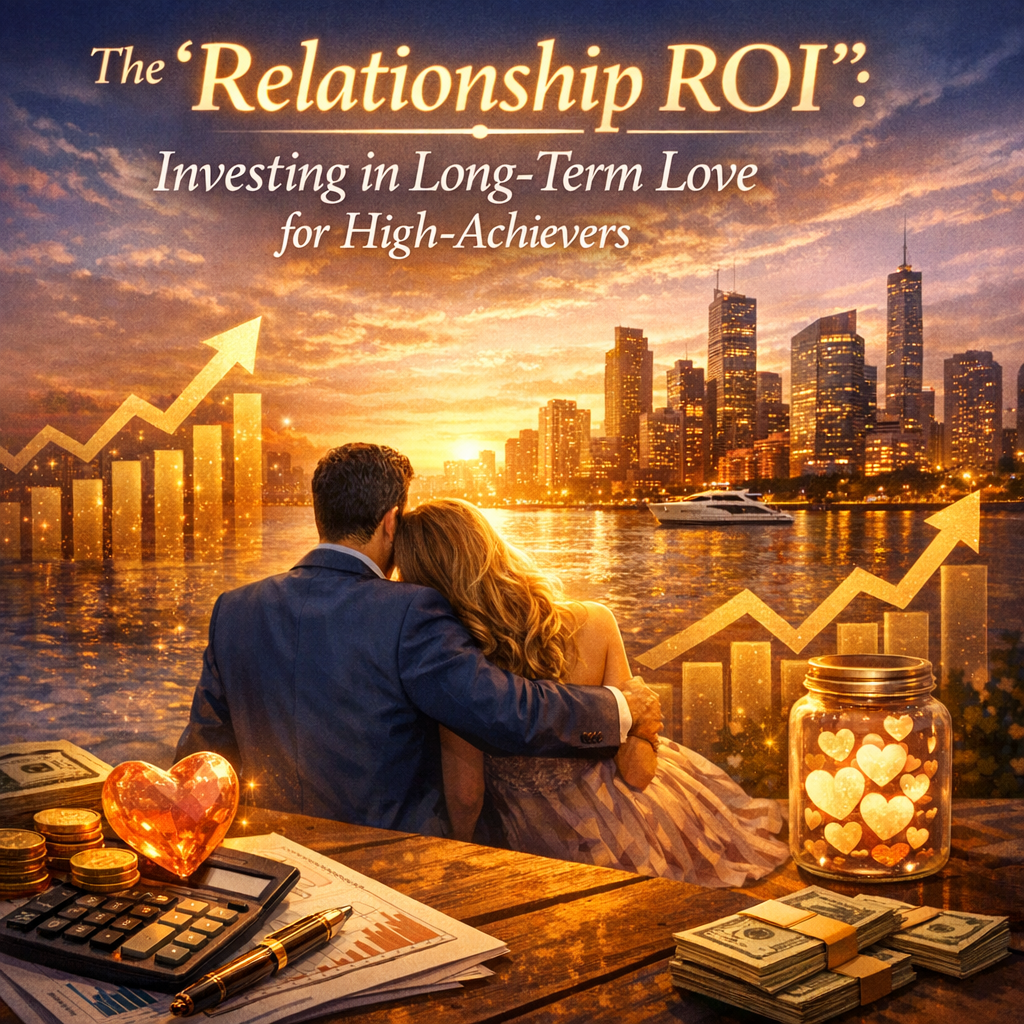
The ‘Relationship ROI’: Investing in Long-Term Love for High-Achievers
In the fast-paced, goal-oriented world of high-achievers, every decision is evaluated through the lens of return on investment (ROI). While the concept of ROI is typically associated with business ventures or personal development endeavors, it can also be applied to personal relationships, particularly long-term romantic partnerships. For singles ranging from ages 18 to their 80s, understanding the ‘Relationship ROI’ is crucial for investing in a love that not only complements but also enhances their high-achieving lifestyles.
High-achievers, whether young professionals at the beginning of their careers or seasoned veterans looking back on decades of accomplishments, often prioritize their professional goals. The drive to succeed can be all-consuming, leaving little room for relationship-building. However, investing in a meaningful, long-term romantic relationship can offer multi-faceted benefits that extend beyond the typical parameters of personal interaction. For instance, a supportive partner can provide valuable emotional support, reduce stress, and enhance one’s overall quality of life, contributing to greater career success and life satisfaction.
Moreover, a committed relationship requires the same type of investment one might make in other facets of life: time, energy, and focus. This notion of ‘Relationship ROI’ takes into account the emotional currency exchanged between partners. The key is learning to balance professional aspirations with personal ones and recognizing that the dividends from a thriving relationship may present as increased emotional well-being and mutual personal growth, thereby supporting high-achievers in reaching their fullest potential in all areas of life.
Features
The science behind successful relationships for high-achievers is supported by various studies that highlight the benefits of a committed partnership. Research conducted by Harvard Medical School has shown that individuals in long-term, satisfying relationships have lower levels of such stress markers as cortisol, which is known to hinder professional productivity and cognitive function. Consequently, managing stress through a supportive partnership can lead to better decision-making and enhanced focus in high-pressure environments [Harvard Health Publishing](https://www.health.harvard.edu/mind-and-mood/).
Additionally, studies published in the “Journal of Happiness Studies” have demonstrated that individuals in stable relationships report higher levels of happiness and life satisfaction compared to their single counterparts. This boost in personal happiness not only improves one’s overall quality of life but can also spill over into professional pursuits, driving innovation and motivation [Journal of Happiness Studies](https://link.springer.com/journal/10902).
The ‘Relationship ROI’ concept is also reinforced by a study in the “Journal of Marriage and Family,” which found that individuals who prioritize and nurture their relationships, alongside their careers, experience increased longevity and lower incidences of mental and physical health struggles [Journal of Marriage and Family](https://onlinelibrary.wiley.com/journal/17413737). The emotional and practical support provided by a partner can enhance organizational skills and work-life balance, leading to not only a healthier personal life but also a more successful career.
Investing in a long-term relationship is not without its challenges, especially for high-achievers accustomed to viewing life through a transactional lens. However, by recognizing the invaluable support, immense joy, and personal fulfillment that a committed partner can provide, high-achievers can fully appreciate the multifaceted returns of their relational investments.
Conclusion
Understanding the ‘Relationship ROI’ invites high-achievers to view long-term love through a strategic lens, where personal and professional aspirations align. By prioritizing meaningful connections, individuals can enhance their life satisfaction, reduce stress, and cultivate an enriched environment where both personal and career ambitions thrive. Embracing the balance between love and achievement ultimately leads to a life marked by not just success, but also profound fulfillment.
Concise Summary:
In a high-achiever’s world, investing in a long-term romantic relationship offers a beneficial return on investment by enhancing emotional well-being, reducing stress, and boosting career success. Studies show that those in stable partnerships experience greater happiness and longevity. The ‘Relationship ROI’ lies in balancing personal and professional goals, thus fostering both personal and career growth. By viewing relationships strategically, high-achievers can cultivate enriched environments, harmonizing their life and work for profound fulfillment and success.