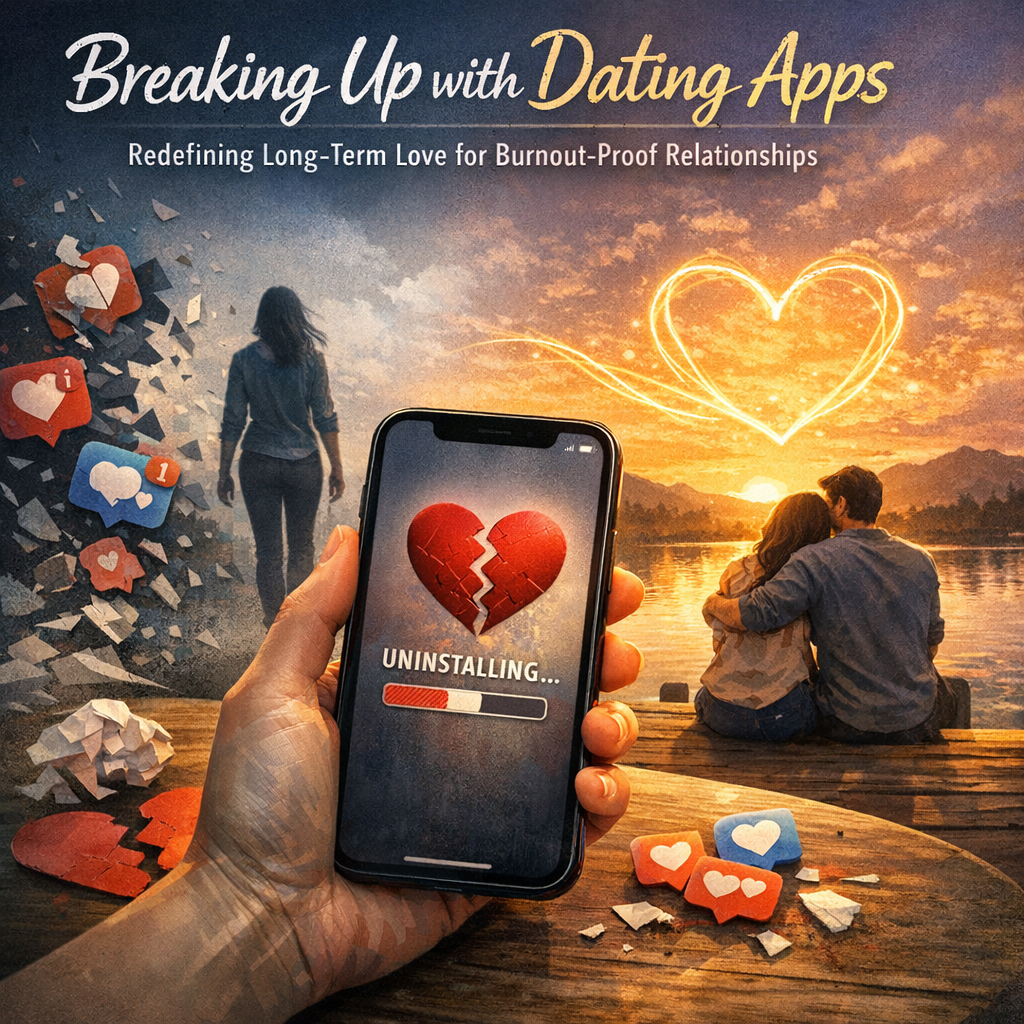
Breaking Up with Dating Apps: Redefining Long-Term Love for Burnout-Proof Relationships
In today’s digital age, the pursuit of love has ventured into the virtual realm. Dating apps are now the primary method for singles to connect, offering a vast selection and the promise of matching algorithms that seem to know us better than we know ourselves. However, as the initial novelty of swiping fades, many singles experience dating app burnout—a state of mental exhaustion and disenchantment with the endless cycle of profiles and superficial connections. This modern dating malaise often leaves individuals feeling overwhelmed, discouraged, and questioning if their soulmate is just a swipe away or potentially lost in an algorithmic haze.
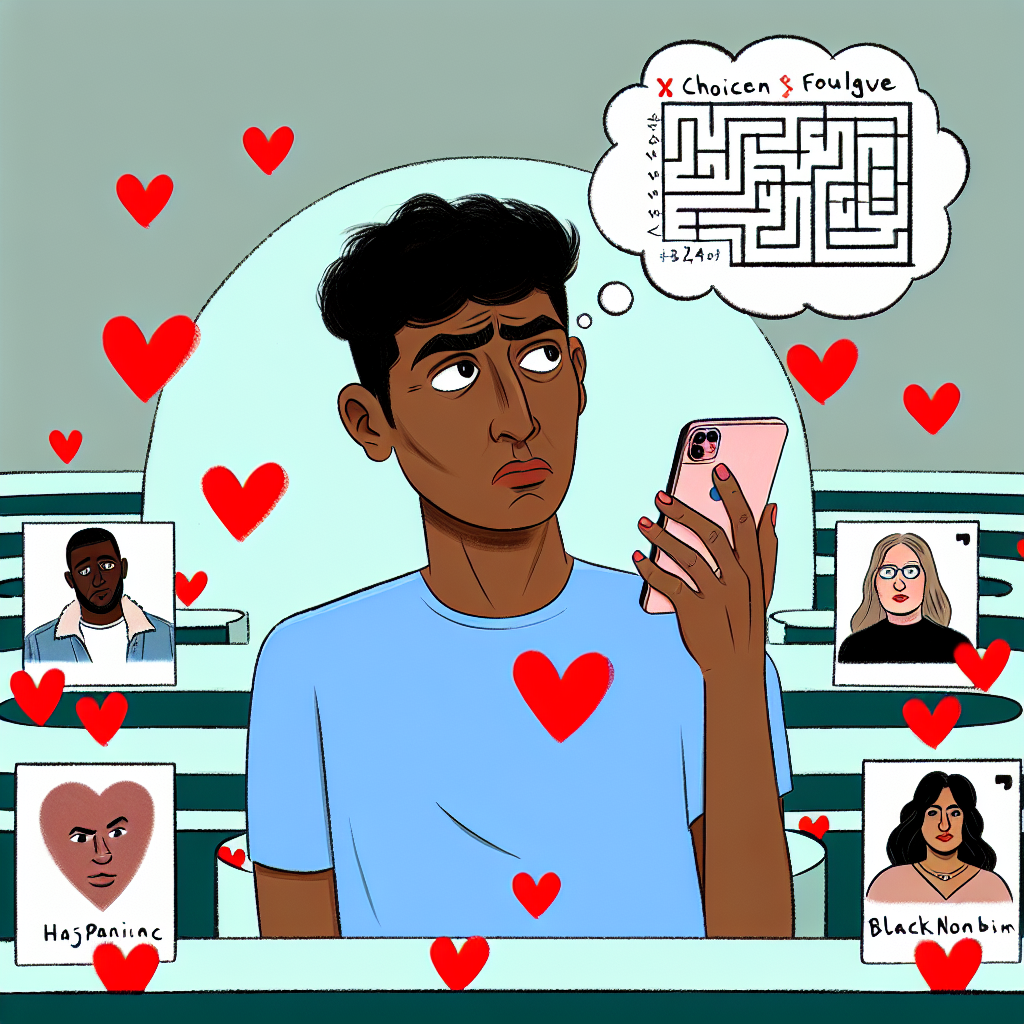
The trouble begins with the sheer volume of choice. Applications that boast endless matches can lead users to develop a paradox of choice, causing them to continually search for someone better rather than investing deeply in one connection. This can exacerbate feelings of dissatisfaction and promote a more transactional view of relationships. Moreover, the constant, addictive swiping can contribute to anxiety, feeding the fear of missing out when others appear successfully coupling up.
Statistics indicate that a significant number of dating app users don’t find true satisfaction through these platforms. A Pew Research Center study found that 45% of online daters report feeling frustrated by their experiences on dating apps. Many users also report encountering dishonesty and misrepresentation, adding to dating fatigue.
These frustrations have led some singles to consider an alternative approach: redefining long-term love offline. By stepping away from dating apps, individuals can refocus their efforts on forming meaningful, face-to-face relationships grounded in authenticity, shared values, and genuine companionship. Offline dating strategies encourage patience, presence, and perseverance, essential ingredients in fostering a burnout-proof relationship.
Features: Studies on the Impact of Digital Dating Interfaces
Recent research offers valuable insights into the psychological and relational impacts of dating app usage. Studies published by the [Journal of Social and Personal Relationships](https://journals.sagepub.com/home/spr) highlight an important phenomenon known as “choice overload,” which affects online daters. Choice overload occurs when people are confronted with too many options, leading to decreased satisfaction and difficulty making decisions. This is particularly damaging in the context of dating, where the idea of a perfect partner is constantly reshaped by fleeting interactions and idealized profiles.
Furthermore, a study from the [University of Wisconsin-Madison](https://news.wisc.edu/study-shows-how-internet-dating-is-changing-the-dynamics-of-modern-romance/) found that dating apps emphasizing physical appearance through swipes can skew user perspectives, encouraging them to value superficial traits over meaningful compatibility. This study suggests that the design of many dating apps contributes to a cycle of short-lived relationships, where physical attraction is prioritized above emotional and intellectual connection.
Psychiatrists and psychologists increasingly recognize these patterns, warning of potential risks such as decreased self-esteem and increased social anxiety due to a lack of genuine connection. A report in [JAMA Psychiatry](https://jamanetwork.com/journals/jamapsychiatry) highlights the negative emotional impact on users who experience repeated rejections or who are consistently “ghosted” by matches, contributing to feelings of loneliness and depression.
Some professionals advocate for more analog approaches to dating, encouraging individuals to engage in community-based activities or interest groups to meet potential partners. Such environments inherently promote deeper, more authentic interactions, helping to build robust, burnout-proof relationships that can weather life’s challenges. By prioritizing emotional and intellectual compatibility over instantaneous attraction, daters are more likely to develop meaningful, long-term relationships.
Conclusion
Breaking away from dating apps can be challenging, but it offers an opportunity to cultivate deeper, more fulfilling connections. By redefining how we pursue relationships, singles can embrace a more mindful and deliberate approach to love that fosters resilience against burnout. It’s time to step away from the screen, rediscover the joy of authentic human interactions, and build roots for lasting love.
References
1. [Pew Research Center: Online Dating](https://www.pewresearch.org/fact-tank/2020/02/06/5-facts-about-online-dating/)
2. [Journal of Social and Personal Relationships: Digital Dating’s Impact](https://journals.sagepub.com/home/spr)
3. [University of Wisconsin-Madison Study: Effects on Dating Perceptions](https://news.wisc.edu/study-shows-how-internet-dating-is-changing-the-dynamics-of-modern-romance/)
4. [JAMA Psychiatry: Emotional Impact of Digital Rejection](https://jamanetwork.com/journals/jamapsychiatry)
Concise Summary
In the era of dating apps, many singles experience burnout due to choice overload and superficial connections. Studies reveal that these platforms often prioritize physical attraction over genuine compatibility, contributing to short-lived relationships. To combat this, some individuals are turning to offline dating strategies, emphasizing deeper, face-to-face interactions grounded in authenticity and shared values. This approach aims to build burnout-proof relationships by focusing on emotional and intellectual compatibility, fostering more meaningful, long-term connections. By stepping away from the screen, singles can cultivate resilience in love and rediscover the joy of authentic interactions.