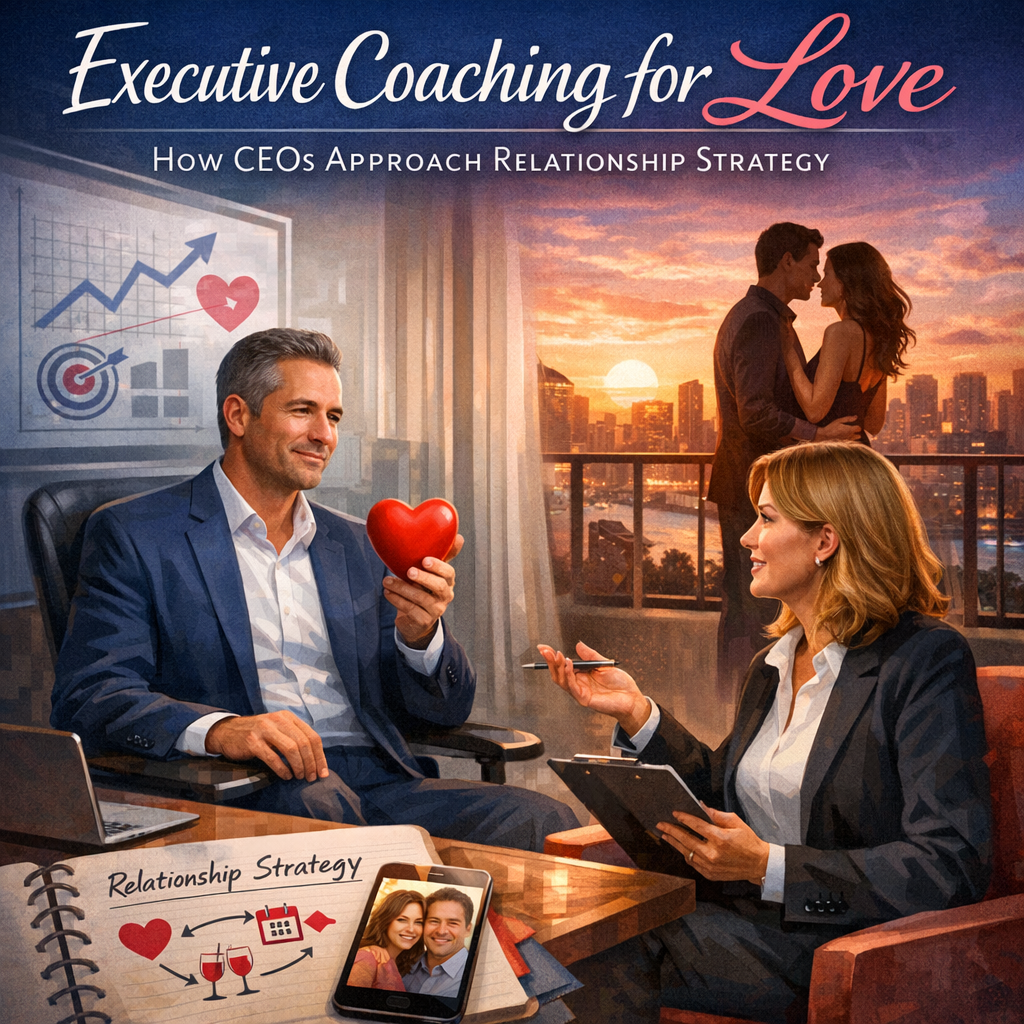
Executive Coaching for Love: How CEOs Approach Relationship Strategy
In the high-stakes world of business leadership, executives rely on strategic planning, emotional intelligence, and effective communication to guide their companies toward success. However, when these captains of industry turn their attention to the equally complex world of personal relationships, they discover that the skills they’ve honed in the boardroom can translate effectively into the realm of love and dating. This article explores how executive coaching principles can lead to more meaningful and successful partnerships.
The notion of employing executive coaching principles in personal relationships may seem novel, but there are parallels between running a successful business and nurturing a healthy romantic relationship, both requiring goal setting, effective communication, and ongoing commitment. CEOs are familiar with setting clear objectives and developing strategies to reach them. Translating this into the language of love involves identifying what one truly seeks in a partner and crafting a plan to attract and maintain that relationship. By applying tools like SWOT analysis (Strengths, Weaknesses, Opportunities, Threats) to their romantic endeavors, individuals can gain deeper insights into their dating lives and make more informed decisions about potential partners.
Emotional intelligence plays a crucial role in executive success and is equally vital in building a lasting relationship. CEOs, having cultivated high levels of self-awareness and empathy to manage teams effectively, can apply these skills to understand their partners’ emotional needs and foster intimacy. Executive coaching often emphasizes the importance of active listening and authentic communication—skills critical in maintaining a healthy dialogue within a romantic relationship. Additionally, executives adept at handling conflicts and negotiating solutions can significantly improve relationship dynamics.
Moreover, the idea of employing metrics and data-driven analysis in relationships is gaining traction among business-minded individuals. Just as corporate leaders use key performance indicators (KPIs) to measure progress, singles can track aspects of their love lives, such as communication frequency or quality time spent together, to ensure they are meeting their relationship goals. This methodical approach provides clarity and direction, helping singles navigate the often-uncertain landscape of dating with confidence and purpose.
Features of Studies and Professional Insights
Research supports the idea that the skills executives use in their professional lives can be effectively adapted to their personal ones. A [2019 study](#) published in the *Journal of Management* highlighted the strong correlation between emotional intelligence in leadership and relationship satisfaction. It found that individuals who scored high in emotional intelligence were better equipped to manage personal relationships effectively, validating the transferability of these skills from the workplace to home life.
Furthermore, the practice of applying strategic frameworks to personal goals is not without precedent. Dr. [John Gottman](#), a renowned relationship researcher, has long advocated for the importance of structured approaches to relationship building, reminiscent of business planning. His research highlights that couples who engage in active, purposeful communication and who work together on relationship goals tend to experience more satisfying partnerships.
In addition, neuroscience has provided insights into how habitual behaviors, strategic thinking, and emotional regulation—skills sharpened in the boardroom—can be leveraged for relationship success. According to a study by the *Social Cognitive and Affective Neuroscience Journal*, the brain circuitries activated during strategic decision-making overlap substantially with those utilized in emotional processing. This neurological crossover suggests that strategic thinking in business can indeed positively impact one’s approach to love and dating.
These studies underscore the promising potential of adopting an executive mindset in personal relationships. By leveraging their natural organizational skills, data-driven mindset, and emotional intelligence, CEOs and business-minded individuals can create fulfilling, lasting partnerships that rival their professional triumphs.
Conclusion
Executive coaching principles offer a unique and effective framework for approaching personal relationships, especially for those accustomed to strategic planning in business. By applying emotional intelligence, strategic goal-setting, and data-driven insights, individuals from all walks of life can cultivate healthier, more satisfying relationships. As more people recognize the value of these skills beyond the boardroom, the strategy of leading with love becomes not only an aspiration but an attainable goal.
*References:*
1. [Journal of Management – Emotional Intelligence and Relationship Satisfaction](#)
2. [Dr. John Gottman – Structured Approaches to Relationship Building](#)
3. [Social Cognitive and Affective Neuroscience Journal – Strategic Decision-Making and Emotional Processing](#)
Concise Summary
The article discusses how CEOs can apply executive coaching principles to personal relationships using strategic planning, emotional intelligence, and data-driven insights. It explores research supporting the applicability of leadership skills in romantic partnerships, emphasizing goal setting, emotional intelligence, and problem-solving as key components for success in both the boardroom and love life. Studies suggest these skills improve relationship satisfaction and dynamics, demonstrating the potential of an executive mindset in personal relationships.