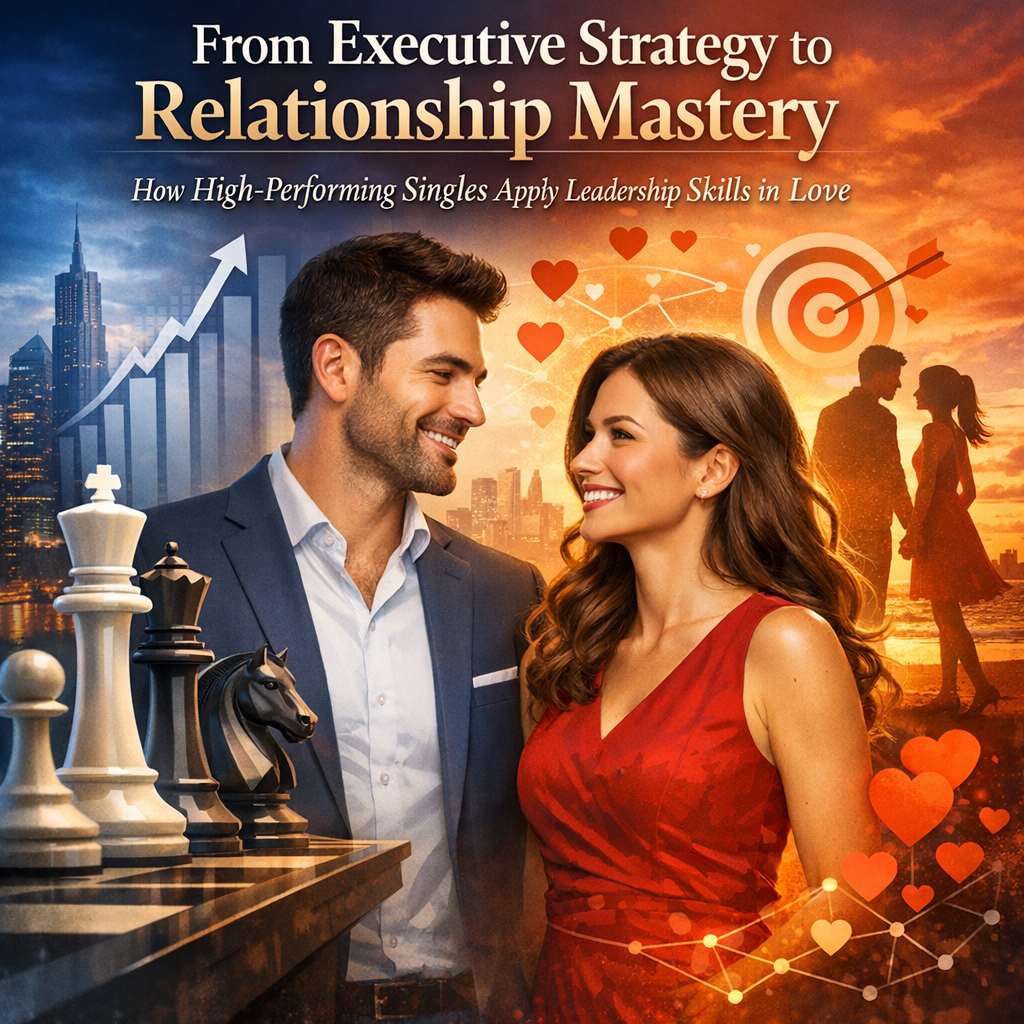
From Executive Strategy to Relationship Mastery: How High-Performing Singles Apply Leadership Skills in Love
Introduction:
In today’s fast-paced world, where professional achievements often extend one’s identity, high-performing individuals frequently face the challenge of translating their workplace success into personal satisfaction, especially in romantic relationships. For many singles aged 18 to 80s, the dedication they devote to achieving career goals often overshadows the time required to cultivate personal connections. Yet, what if the skills honed in the boardroom could also lay the foundation for a fulfilling love life? High-performing singles, whether seasoned executives or ambitious young professionals, inherently possess desirable qualities—resilience, adaptability, communication, and strategic thinking—that can be deftly redirected from corporate success to relationship mastery. The principle of leveraging these skills lies at the intersection of emotional intelligence and effective decision-making, both critical in nurturing meaningful connections.
The parallels between leadership and love are striking, as both domains prioritize vision, trust-building, and the capacity to inspire. Just as executives inspire teams to strive for collective success, singles can apply this leadership philosophy to foster open communication and understanding with partners. Consciously adapting leadership skills to personal relationships is not simply about imposing structure, but providing clarity, setting boundaries, and nurturing individual growth within a partnership.
By understanding and strategically applying leadership skills to dating and relationships, high-performing singles can transcend barriers such as time constraints, emotional unavailability, or the fear of vulnerability, which often hinder meaningful relationships. Instead, they can curate relationships that are rewarding and enriching as their professional accomplishments. Discover the art of transitioning from executive strategy to romantic success and learn how to harness the power of leadership skills in building long-lasting, fulfilling relationships.
Features:
The concept of applying leadership skills to romantic relationships is supported by several professional and psychological studies, which explore the intersection of leadership competencies and personal relationships. A study published in the [Journal of Business and Psychology](https://link.springer.com/journal/10869) highlights the role of emotional intelligence as a predictor of both professional success and personal relationship satisfaction. Emotional intelligence, or the ability to recognize and manage one’s emotions and the emotions of others, is a cornerstone of effective leadership and fruitful romantic relationships alike.
Further studies in the [Journal of Applied Psychology](https://www.apa.org/pubs/journals/apl/) reveal that effective workplace leaders often exhibit strong communication skills, which are critical in developing trust and intimacy in personal relationships. Clear, open communication helps foster understanding and conflict resolution between partners, an ability paramount in sustaining and nurturing long-term relationships.
Dr. John Gottman, a leading relationship researcher, emphasizes the importance of leadership strategies such as active listening, empathy, and mutual respect in romantic relationships. His research shows that couples who practice these strategies are more likely to experience successful, lasting partnerships. Gottman’s Four Horsemen model identifies critical communication pitfalls and redirects couples towards positive interaction patterns, often rooted in emotional intelligence and conflict management.
Another relevant study conducted at [Harvard University](https://hbr.org) explores the role of adaptability in leadership, noting that leaders who exhibit adaptability can better manage changing circumstances and unforeseen challenges. This adaptability is equally essential in romantic relationships, where the dynamics between partners continuously evolve, necessitating flexibility and resilience.
These studies underscore the significance of transferring leadership skills to personal relationships. By enhancing emotional intelligence, communication, and adaptability, high-performing singles can move beyond superficial interactions and cultivate deep, meaningful connections that parallel their professional achievements.
Conclusion:
High-performing singles possess a wealth of leadership skills that, when thoughtfully applied to personal relationships, can lead to fulfilling, enduring connections. By integrating emotional intelligence, clear communication, and adaptability into their dating lives, these individuals can overcome common relational challenges, transforming executive strategy into relationship mastery. Leveraging these skills not only enhances romantic success but also enriches one’s overall quality of life, establishing a harmonious balance between professional aspirations and personal joy.
Concise Summary:
High-performing singles often struggle to translate professional success into personal satisfaction, particularly in romantic relationships. Skills like resilience, communication, and strategic thinking, honed in professional settings, can enhance personal connections. Studies suggest emotional intelligence and adaptability in leadership also benefit personal relationships. By applying these skills, singles can overcome common relational barriers, leading to rewarding relationships. Integrating leadership competencies not only improves dating success but enriches overall life, balancing professional and personal fulfillment.