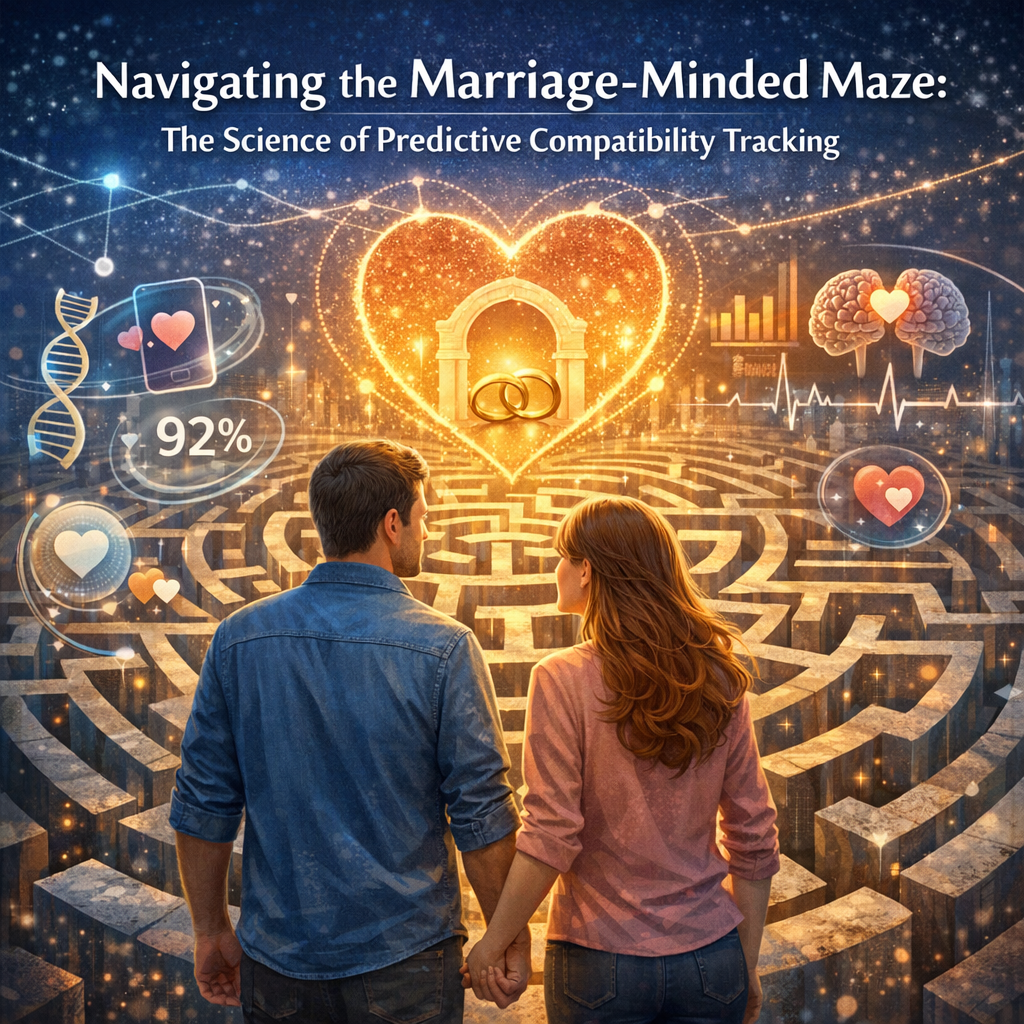
Navigating the Marriage-Minded Dating Maze: The Science of Predictive Compatibility Tracking
Introduction
In the digital age, where swiping right and left defines much of our romantic pursuits, singles from all walks of life are increasingly focused on finding meaningful, long-term relationships. For marriage-minded individuals, navigating the dating landscape can feel like a daunting maze. The desire to intersect compatibility with longevity has given rise to an intriguing crossroad—predictive compatibility tracking. This cutting-edge concept leverages data-driven approaches and psychological insights to enhance the odds of matrimonial success.
Compatibility has always been a cornerstone of successful marriages. Historically, cultural, religious, and familial factors significantly influenced matches. Fast forward to the 21st century, technology and scientific understanding have revolutionized how we approach compatibility. Today, dating platforms utilize algorithms designed to forecast potential relationship success. But what exactly fuels these algorithms? And more critically, can predictive tracking genuinely offer insight into long-lasting love?
Predictive compatibility tracking seeks to decipher the sometimes mysterious equation of love by analyzing user data to gauge personal compatibility. By collecting information related to personality traits, life goals, and emotional intelligence, these systems aim to provide users with matches that could lead to fulfilling partnerships. According to a report by Match.com, users are placing a premium on compatibility over mere attraction, indicating that superficial dating app swipes are giving way to more thoughtful engagements.
As you navigate the marriage-minded dating maze, understanding how predictive compatibility works can be instrumental. Instead of relying solely on gut feelings or initial chemistry, this approach provides a scientifically backed roadmap. While recognizing the impossibility of predicting every outcome, a data-backed pathway can illuminate potential red flags and highlight promising matches. As it reshapes the dating narrative, this science-driven practice offers a renewed sense of control and optimism in the quest for lasting love.
Features
Numerous studies in psychology and behavioral science underscore the potential of predictive compatibility tracking in forming enduring relationships. For instance, a study conducted by researchers at the [University of Kansas](https://www.ku.edu) highlighted how compatible personality traits greatly influence marital satisfaction. The study found that couples who shared similar levels of openness, conscientiousness, and emotional stability reported higher degrees of happiness and longevity in their marriages. These findings provide a psychological basis for compatibility algorithms that evaluate personality traits as a key factor for match success.
Moreover, professionals in the field of relationship science have emphasized the importance of values alignment and emotional intelligence. A study published in the [Journal of Social and Personal Relationships](https://journals.sagepub.com/home/spr) elaborates on how shared core values significantly impact the durability of romantic relationships. By analyzing couples over 13 years, researchers found that shared values on fundamental issues like work-life balance, parenting goals, and social views create a firm foundation for marriage.
Another pivotal element that predictive compatibility systems consider is emotional intelligence, a concept popularized by psychologist Daniel Goleman. Research from the [Emotion journal](https://psycnet.apa.org/journals/emo/) indicates that individuals with high emotional intelligence demonstrate better stress management, empathy, and conflict resolution skills—traits that are invaluable in maintaining a healthy marriage. In this light, dating platforms that measure and incorporate emotional intelligence data can potentially enhance the quality of matches.
Technology’s role in compatibility tracking is further underscored by the advent of machine learning. A study from [Stanford University](https://www.stanford.edu) has explored how machine learning algorithms can predict relationship success by analyzing various data points from communication patterns to past relationship histories. This groundbreaking application of technology emphasizes how digital tools can assist in predicting compatibility beyond traditional methods.
Conclusion
As the landscape of dating continues to evolve, predictive compatibility tracking offers a beacon of hope for marriage-minded singles. By marrying psychological insights with cutting-edge technology, this innovative approach aims to simplify the complex maze of dating. While no system can guarantee marital bliss, utilizing the science and data available today can empower singles to make more informed decisions in their quest for love. As you embark on this journey, embrace the blend of passion and precision for a future rich in both romance and reality.
Summary
Predictive compatibility tracking bridges the gap between data-driven approaches and psychological insights in the quest for long-lasting love. Utilizing personality traits, values alignment, and emotional intelligence, these systems aim to predict relationship success beyond traditional means. Studies emphasize the importance of shared values, emotional intelligence, and compatible traits in marital satisfaction. Integrating machine learning further enhances prediction capabilities. While it cannot guarantee marital bliss, this science-backed strategy empowers marriage-minded singles to make informed decisions, offering a hopeful outlook in today’s complex dating landscape.
References
1. University of Kansas study on personality traits: [University of Kansas](https://www.ku.edu)
2. Journal of Social and Personal Relationships study on values alignment: [Journal of Social and Personal Relationships](https://journals.sagepub.com/home/spr)
3. Emotion journal on emotional intelligence: [Emotion](https://psycnet.apa.org/journals/emo/)
4. Stanford University study on machine learning in relationships: [Stanford University](https://www.stanford.edu)