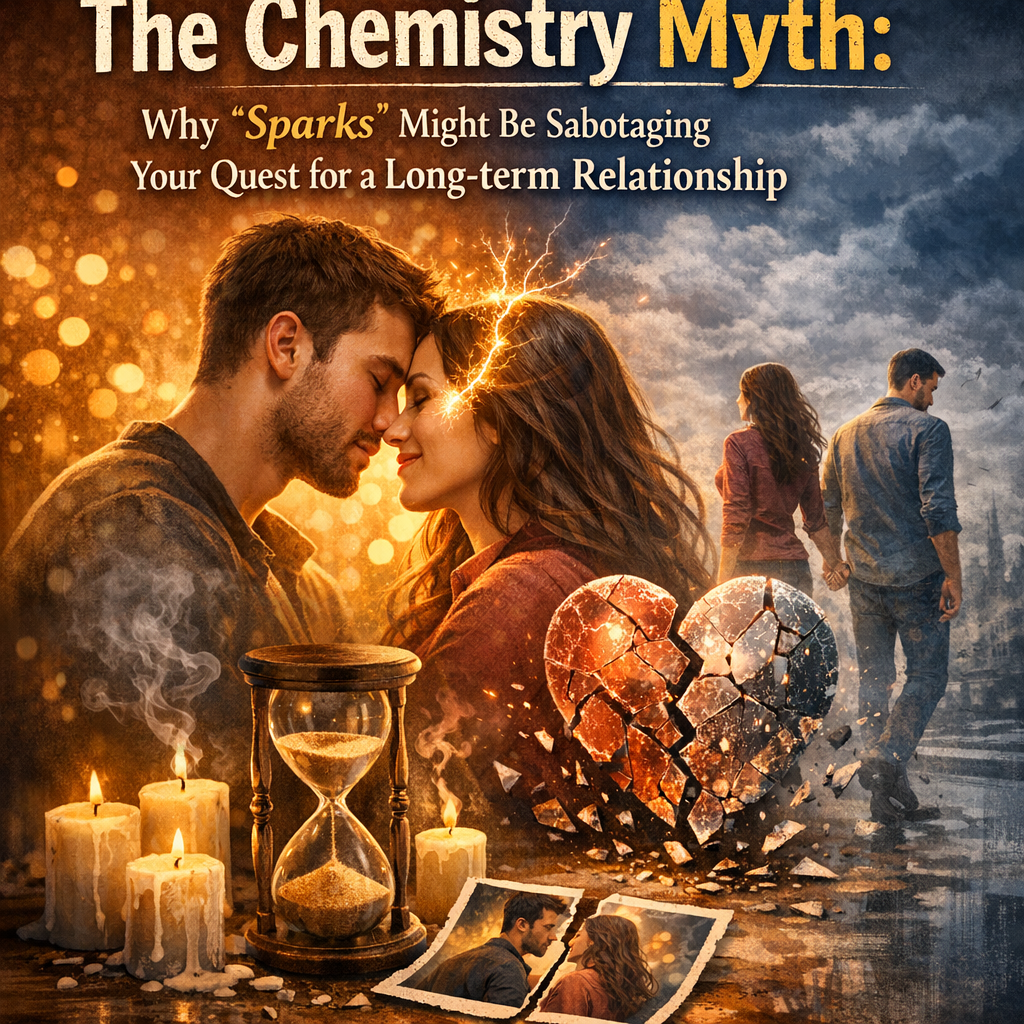
The Chemistry Myth: Why ‘Sparks’ Might Be Sabotaging Your Quest for a Long-term Relationship
In the world of dating, “sparks” are often perceived as the gold standard. The instant thrill, the magnetic pull, and that unexplainable chemistry—many singles chasing love are convinced that these fiery sensations are the true indicators of a promising relationship. But what if these sparks are leading you down the wrong path? What if the adrenaline rush and the butterflies in the stomach are not signals of a lasting connection but signs of fleeting infatuation?
The idea of chemistry suggests a physical and emotional connection that ignites at first sight or sparks over a first laugh. It’s an intoxicating notion often celebrated in romantic movies and lauded by love experts. However, relying solely on sparks can prove detrimental to those seeking long-term fulfillment. The allure of chemistry can overshadow the essential qualities that build a steady and durable partnership, such as shared values, mutual respect, and a commitment to growth.
Psychologists and relationship experts argue that the immediate attraction we label as chemistry can sometimes distort our judgment, blurring our perception of compatibility. Often, individuals become blinded by the dazzling allure of chemistry and overlook potential red flags or disregard deeper incompatibilities. Emotional intensity can be exciting but also misleading.
For many, believing in the myth of chemistry means rejecting otherwise promising partners who might not deliver the immediate fireworks. It creates an unrealistic standard that few can meet. Yet, the real work of love involves investing in the development of genuine connections, which requires time, effort, and communication.
Those in the 18 to 80 age range should reconsider the role of chemistry in their dating lives. While initial attraction can play a part in starting a relationship, true compatibility extends far beyond the surface level. Recognizing the myth of chemistry can empower individuals to make conscious dating choices that prioritize compatibility and long-term potential.
The Science Behind Chemistry and Relationships
A number of professional and medical studies explore the concept of chemistry in relationships, offering insights into why “sparks” may not be the reliable compass we believe them to be. Research indicates that chemistry is largely linked to our brain’s reward system. When we experience attraction, our brain releases dopamine, a neurotransmitter associated with pleasure and reward. This chemical reaction intensifies feelings of excitement and makes us believe in the idea of love at first sight.
However, the impression that sparks equate to long-term potential is questioned by relationship psychologists. According to a [study published in the Journal of Positive Psychology](https://www.tandfonline.com/doi/abs/10.1080/17439760.2015.1058977), happiness in long-term relationships stems more from friendship and mutual respect than from initial chemistry. The study suggests that couples who describe their partner as their best friend report higher satisfaction and longevity in their relationships.
Furthermore, anthropologist Dr. Helen Fisher, renowned for her work on the biological basis of love, suggests that the chemicals responsible for initial attraction can wane over time. She argues that lust and attraction are different from attachment, the latter being critical for long-term partnership. In her research available through [Rutgers University](https://www.rutgers.edu/about/people/helen-fisher), Dr. Fisher outlines how attachment, involving hormones like oxytocin, plays a crucial role in the stability and durability of relationships. As such, the initial thrill is a minor aspect in the vast landscape of a committed partnership.
Another intriguing perspective comes from neuroscientist Dr. Stephanie Cacioppo, who emphasizes the importance of slower, more deliberate connections. Her [research published by the American Psychological Association](https://www.apa.org/pubs/journals/releases/amp-amp0000417.pdf) suggests that love that develops over time, rather than being immediate, allows for a deeper understanding and a more secure bond. Deliberate love fosters an environment where partners can cultivate shared goals and support systems, elevating their relational satisfaction and commitment.
Conclusion
The myth of chemistry, while enticing, might be sabotaging your chances of finding a meaningful, long-lasting relationship. It’s crucial to look beyond the initial sparks and focus on deeper qualities that foster true compatibility and mutual growth. By understanding the limitations of chemistry, singles from all walks of life can make informed decisions that lead to fulfilling partnerships. Rethinking the importance placed on sparks may just uncover the hidden potential in relationships that promise endurance, depth, and genuine connection.
Concise Summary: The reliance on “sparks” or initial chemistry can mislead those seeking long-term relationships, as these sensations often overshadow important factors like compatibility, shared values, and mutual respect. Research suggests long-term satisfaction is more deeply linked to friendship and attachment, rather than initial attraction. By focusing on these deeper qualities rather than ephemeral chemistry, individuals can build more meaningful and lasting partnerships.