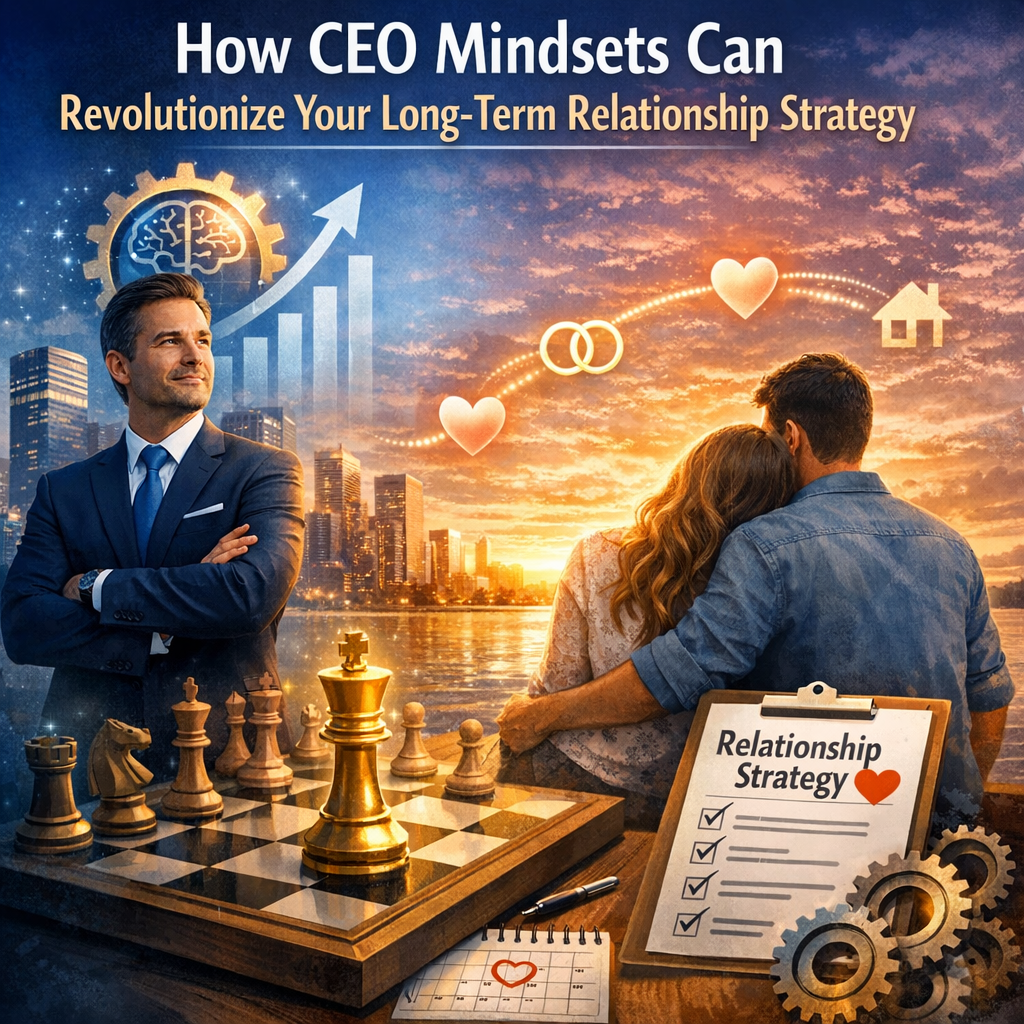
How CEO Mindsets Can Revolutionize Your Long-Term Relationship Strategy
Introduction
In the fast-paced journey of modern relationships, where texts replace love letters and emojis convey emotions, individuals often wonder how to build enduring partnerships that stand the test of time. While business and romance might seem worlds apart, adopting a CEO mindset can profoundly influence your relationship strategy. Being a CEO isn’t just about making executive decisions; it’s a strategic approach to leadership, vision, and growth. Similarly, applying these principles to your romantic life can enhance commitment, communication, and mutual growth, leading to a more fulfilling and sustainable relationship.
CEOs are renowned for their ability to create visionary goals, foster effective communication, and adapt to changing environments. By transferring these skills into the realm of dating and relationships, you’re well-equipped to build a partnership that thrives on collaboration. Just like CEOs steering their companies towards success, individuals in committed relationships can improve their “relational strategy” by setting clear, shared goals with their partners, accommodating differences, and valuing mutual growth.
At the heart of a successful CEO mindset is the ability to communicate effectively. According to [Harvard Business Review](https://hbr.org/2000/03/leadership-that-gets-results), communication is one of the essential skills for CEOs, enabling them to inspire their team and secure stakeholders’ buy-in. In relationships, open and honest communication forms the bedrock of understanding, allowing partners to express needs, resolve conflicts, and deepen intimacy.
Moreover, just as a CEO must anticipate market trends, partners must recognize and adapt to life’s inevitable changes. Whether it’s navigating career shifts or personal challenges, the ability to pivot and work through these changes collaboratively can strengthen the relationship’s foundation. By adopting a mindset of innovation and resilience akin to a business leader, partners can foster a relationship culture where challenges become opportunities for growth rather than obstacles.
Features
Research increasingly highlights the parallels between effective leadership principles and successful long-term relationships. A study published in the [Journal of Social and Personal Relationships](https://journals.sagepub.com/home/spr) found that couples who implemented strategic goal setting and decision-making had higher relationship satisfaction. By setting shared goals, partners create a sense of unity and purpose, which is pivotal in navigating life’s complexities together.
Furthermore, a report by the [American Psychological Association](https://www.apa.org) emphasizes the importance of adaptability in relationships. The study indicates that couples who demonstrate flexibility and open-mindedness are more likely to maintain satisfaction over time. This adaptability mirrors a CEO’s ability to pivot in a rapidly changing environment—whether in business or personal life—highlighting the value of resilience and innovation in fostering sustainable growth.
The concept of emotional intelligence, often cited as a critical trait for CEOs, also correlates with relationship success. A study in the [Journal of Applied Psychology](https://psychnet.apa.org/get-journal/article/jap-88-8-74) reveals that individuals who demonstrate high emotional intelligence are better equipped to navigate interpersonal relationships, resolving conflicts with empathy and understanding. By honing emotional intelligence, partners can enhance their relational dynamics, thus improving overall relationship quality.
Additionally, leadership research from the [International Journal of Leadership Studies](https://www.regent.edu/journal/journal-of-leadership-studies) suggests that successful CEOs balance optimism with realism. These leaders acknowledge challenges without succumbing to negativity, a skill equally important in relationships. By maintaining an optimistic yet realistic outlook, partners can address issues pragmatically and foster a positive environment for growth.
Lastly, the significance of continuous learning and development cannot be overstated. CEOs know the importance of staying informed and evolving with their industries. Partners who prioritize personal and relational growth share a similar advantage. They continuously seek knowledge, be it through therapy, workshops, or shared experiences, building a richer, more connected partnership.
Conclusion
Incorporating CEO mindsets into your relationship strategy can transform the way you build and maintain significant partnerships. By focusing on shared goals, effective communication, adaptability, emotional intelligence, and continuous growth, individuals can craft a resilient framework for long-lasting love. Embrace these business-inspired strategies, and revolutionize your approach to building a deep, meaningful, and enduring relationship.
Summary: Adopting a CEO mindset in relationships can revolutionize your long-term strategy. By focusing on leadership principles, including goal-setting, effective communication, adaptability, emotional intelligence, and continuous growth, couples can enhance their relational dynamics. These principles foster mutual growth, strengthen bond, and create a resilient foundation for long-lasting love. Embracing this strategic approach from business can lead to more meaningful and enduring relationships.