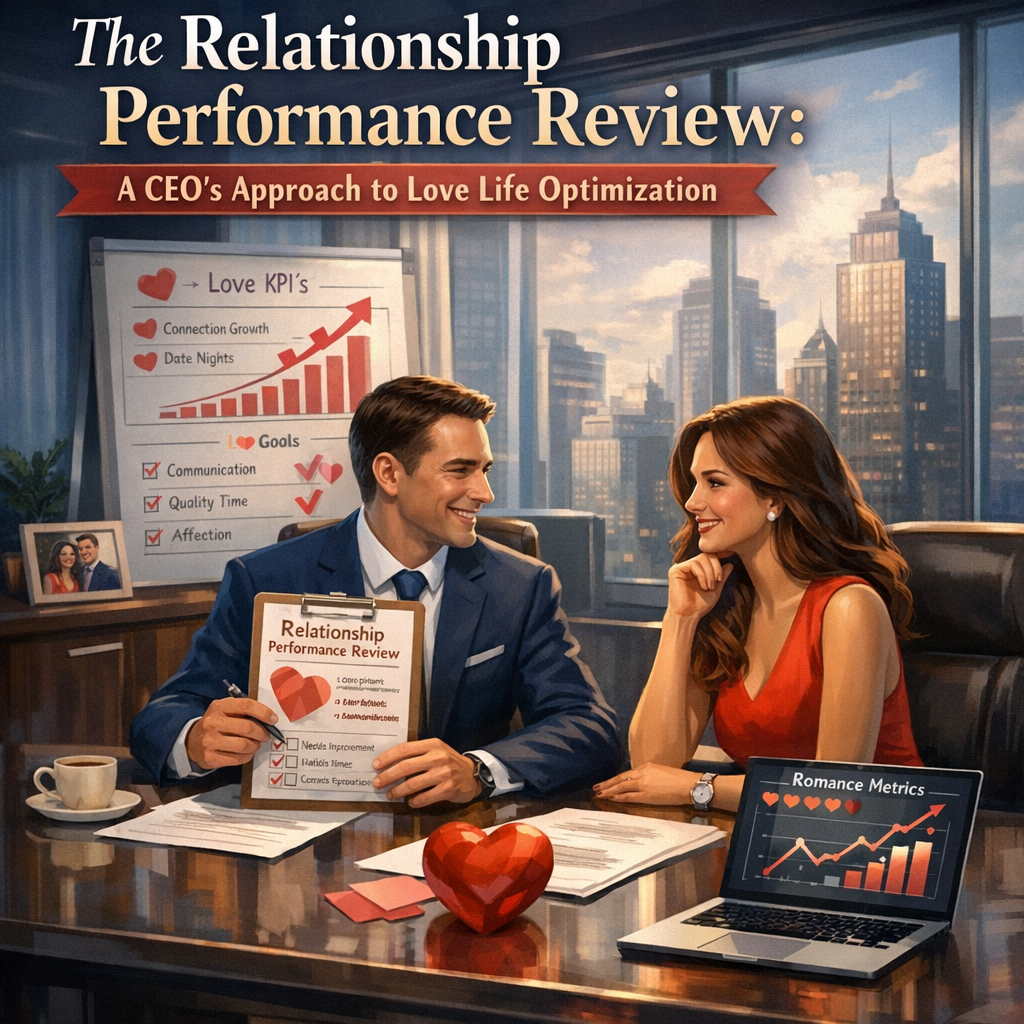
The Relationship Performance Review: A CEO’s Approach to Love Life Optimization
Introduction
In the realm of modern dating, where swipe culture and fleeting connections prevail, finding meaningful relationships that stand the test of time can be likened to running a successful business. Just as CEOs in the corporate world strive to optimize operations and maximize output, individuals seeking to enhance their romantic relationships can benefit from adopting a similar structured approach. Enter the concept of the “Relationship Performance Review.” This innovative method, traditionally reserved for evaluating employee performance and setting goals in leadership positions, can surprisingly be applied to nurturing and optimizing romantic partnerships.
At its core, the Relationship Performance Review is a systematic approach that emphasizes communication, goal alignment, and continuous improvement—three vital elements in both business and love. By leveraging analytical thinking and reflection practices commonly used by CEOs, singles and couples alike can identify strengths and weaknesses, establish clear relationship goals, and invest in personal growth and partner compatibility.
Communication, often heralded as the cornerstone of successful relationships, gets a strategic upgrade when examined through this lens. Like a business leader assessing organizational health, individuals should regularly assess the quality and effectiveness of their communication with partners. Open dialogues about expectations, desires, and boundaries foster transparency and trust—cornerstones essential for relationship optimization.
Moreover, aligning goals with a partner brings unparalleled clarity and direction to the relationship—a principle every CEO understands. This practice minimizes potential conflicts arising from misaligned aspirations, whether related to career ambitions, lifestyle choices, or personal growth trajectories. Partners are encouraged to conduct regular “review sessions” where both can openly share thoughts, reflect on past experiences, and set future goals collaboratively.
Finally, continuous improvement should be a shared commitment in any relationship striving for success. Just as businesses evolve with market demands, relationships should adapt to new challenges and opportunities. This involves not only enhancing personal traits but also expanding emotional intelligence and empathy, key components for healthy relationship dynamics.
Features
Several professional and academic studies have contributed to the understanding of this strategic approach to relationships. A study published in [Personal Relationships](https://onlinelibrary.wiley.com/journal/14756811) explored the concept of “relationship awareness” and found that couples who regularly engage in reflective dialogues report higher satisfaction levels and relational stability. This aligns with CEO practices of routinely assessing business outcomes and recalibrating strategies to enhance productivity and effectiveness.
Moreover, research from the [Gottman Institute](https://www.gottman.com/), a leading authority on marital stability and relationship analysis, supports the notion that structured communication techniques and periodic assessment significantly contribute to relationship health. Techniques such as the “State of the Union” meeting encourage couples to systematically discuss the relationship’s strengths and areas of improvement, much like a business review. These sessions can increase understanding, empathy, and collaboration between partners.
Additionally, studies in organizational psychology illuminate the power of goal alignment and feedback in enhancing performance. By applying these principles to romantic relationships, individuals can foster a growth-oriented dynamic. According to a paper in the [Journal of Applied Psychology](https://www.apa.org/pubs/journals/apl), setting specific, context-driven goals and actively seeking partner feedback can create a more adaptive and resilient partnership.
The continuous improvement model is mirrored in the therapeutic practice of ”Solution-Focused Brief Therapy,” which emphasizes building on existing strengths rather than solely addressing problems. The therapy’s principles align with relationship optimization, encouraging couples to define their ideal relationship vision and progress toward those aspirations collaboratively.
Conclusion
The Relationship Performance Review is a pioneering approach that merges corporate strategies with interpersonal relationships, ushering in a transformative era of *love life optimization*. By fostering open communication, aligning goals, and committing to continuous improvement, singles and couples can cultivate relationships that are not only sustainable but deeply enriching. Embracing this CEO-style approach might just be the innovative strategy needed to navigate the complexities of modern love.
References
1. Personal Relationships Journal: [Link](https://onlinelibrary.wiley.com/journal/14756811)
2. Gottman Institute: [Link](https://www.gottman.com/)
3. Journal of Applied Psychology: [Link](https://www.apa.org/pubs/journals/apl)
4. Solution-Focused Brief Therapy: [Link](https://solutionfocused.net/)
Concise Summary
The Relationship Performance Review applies corporate strategies to personal relationships, focusing on communication, goal alignment, and continuous improvement. By adopting CEO-style methods like regular review sessions and structured communication, couples can enhance trust and compatibility. Studies from institutions like the [Gottman Institute](https://www.gottman.com/) and journals such as [Personal Relationships](https://onlinelibrary.wiley.com/journal/14756811) and [Journal of Applied Psychology](https://www.apa.org/pubs/journals/apl) support the benefits of this approach, highlighting increased satisfaction and stability in relationships that embrace strategic reflection and alignment.